

new research shows racism during COVID is rarely reported
- Written by: Alanna Kamp, Lecturer in Geography and Urban Studies, Western Sydney University
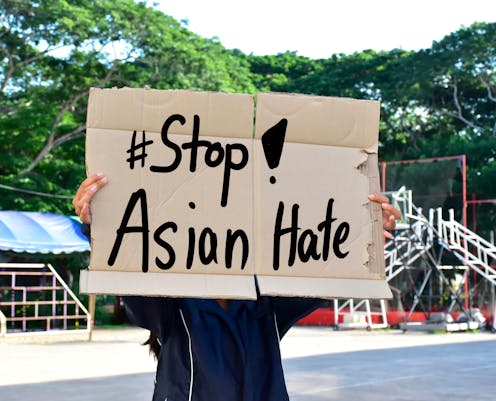
It’s not “new” news that Asian Australians are experiencing high rates of racism during the pandemic. However, existing data under-represent the true extent of COVID-related racism. The vast majority of cases aren’t being formally reported and official reporting processes aren’t capturing or addressing the impact of racism on Asian Australians.
Our recent national survey of 2,003 Asian Australians examined the nature, type and frequency of racist incidents they experience.
It also investigated changes over time (before and during the pandemic), the effects of such experiences on people’s mental health, wellbeing and sense of belonging, the reporting of racist incidents, and the actions (or inactions) of witnesses.
Our study found that four in ten Asian Australians experienced racism during the pandemic (and nearly the same number witnessed racism).
Of these, however, just 3% reported the incident to the Australian Human Rights Commission. Police received more reports (12%), as did bosses (7%) and teachers (6%). A much larger proportion (29%) of participants didn’t report the racism they experienced or witnessed (not even to friends or family).
Reporting to the AHRC appeared to be higher than usual at the start of the pandemic. In February 2020, the AHRC recorded the highest monthly number of racial discrimination complaints that financial year. And one in four people who reported racial discrimination to the commission in early 2020 linked those incidents to COVID-19.
Our findings worryingly suggest this is an under-representation of the racism that is occurring during the pandemic.
Read more: We know racism and recessions go together. Australia must prepare to stop a racism spike here
Why aren’t Asian Australians reporting racism?
According to our respondents, the barriers to formal reporting include a lack of trust in statutory agencies and the perception that racism reports would not be responded to.
For example, 63% agreed that the report would not be taken seriously, 60% agreed the incident would not be dealt with properly, and 40% did not trust the recipients of the report. As one participant said:
I don’t think the police would do much, they are always saying they are under-resourced so why would they spend time and resources trying to locate some hooligan who was being racist.
A more strident distrust of the recipients of formal reports was also voiced:
The perpetrator of the incident was a client of the company I am working for. I’m sure that if I reported the incident, it would have been ignored. Even worse, I feared that I would have to face ramifications for reporting the incident.
Feelings of hopelessness, shame or disempowerment were other barriers to reporting racist incidents: 63% said it would not help, 54% felt uncomfortable or embarrassed, and 50% wanted to forget about the incident.
One participant explained:
If there is a white person and an Asian person in Australia they always side with the white person even if the Asian is the victim.
Just over half of participants also did not know how to report an incident, while just under half did not know they could report one. Said one participant:
I don’t know who they were and how to report. Wherever this happened there was not security camera so that police could trace the person.
This is consistent with other studies that have found similar barriers to reporting racism, including a lack of knowledge about reporting and lack of trust in agencies to do anything about it.
Racism is having far-reaching consequences
In line with research on the effects of racism on people’s health and wellbeing, the racism experienced by Asian Australians in our study is linked to high rates of stress, depression, anxiety and “non-belonging”.
Worryingly, there are even wider consequences of the anti-Asian sentiments being expressed during COVID. A large majority of participants who haven’t experienced racism during the pandemic directly still have some anticipation (on a scale of rarely to very often) of someone saying or doing something racist.
And a significant number of respondents who haven’t experienced racism said they avoided places and situations because of an anticipation of racism.
Other research has found that experiences or anticipation of racism can impact a person’s mobility and feelings of safety. This, in turn, can limit access to essential services such as health care, employment and housing.
It is therefore a significant concern that anxiety, worry and avoidance of potential racism is so high during the pandemic, even among those who aren’t being directly targeted.
Read more: It's not surprising Indian-Australians feel singled out. They have long been subjected to racism
Why is anticipation and concern about racism so high?
These high rates of worry and anxiety about racism may be linked to two important factors.
First, there’s the racialisation of the pandemic in both the Australian and global media and public discourse, as well as reports of a rise in anti-Asian racism and xenophobia globally. This may be fuelling people’s concerns in Australia.
Second, previous experiences of racism and discrimination may be causing people to anticipate repeated incidents, particularly during a crisis like the pandemic. Before the pandemic, Asian Australians were twice as likely to experience racism than other Australians.
Read more: Asians out! Not in this suburb. Not in this apartment
But without trust in institutions or adequate data on reported incidents, the full impact of racism — and how it undermines social cohesion and individual health and wellbeing — remain hidden.
There is an urgent need for government and non-government agencies to develop tools that allow the reporting of incidents “without prejudice”, such as third-party reporting systems (this is also advocated by the Hate Crime Network). Examples of this include the UK’s True Vision reporting tool and the Islamophobia Support Service of the Islamic Council of Victoria.
As our research shows, reporting processes and responses need to be streamlined and made accessible to all communities, too. This will also lift confidence in reporting.
Authors: Alanna Kamp, Lecturer in Geography and Urban Studies, Western Sydney University


















