

We asked landholders how they feel about biodiversity offsets — and the NSW government has a lot to learn
- Written by Roel Plant, Adjunct Professor, University of Technology Sydney
When land is cleared to make room for urban growth, infrastructure, mining, and so on, developers are often required to “offset” their environmental damage by improving biodiversity elsewhere. This could mean, for example, planting trees along a river, or building shelters for animals that lost their habitats.
In New South Wales, one mechanism to fulfil this requirement is the Biodiversity Offsets Scheme, and a NSW parliamentary inquiry into this scheme is currently underway. The inquiry will look into the scheme’s administration, transparency and oversight, and will investigate the ability for private landowners to engage in it.
This is where our research comes in. We interviewed landholders in Greater Metropolitan Sydney during 2019 and 2020 to find out if they can — and want to — participate in biodiversity offsets.
Our findings suggest the NSW government would be wise to open up its offset scheme to make it more equitable, diverse and socially acceptable.
Recent controversies
Australia is considered an international forerunner when it comes to biodiversity offsetting, with all Australian states and territories having some form in place (complemented by federal provisions).
But over the years, biodiversity offset schemes have been marred with controversy, particularly recently.
In April, The Guardian Australia revealed a single company had made more than A$40 million by buying land and then selling offsets on that land to the state and federal governments. The new inquiry is a direct response to this news report.
 A NSW parliamentary inquiry is investigating the administration, transparency and oversight of the state’s biodiversity offsets scheme.
AAP Image/Joel Carrett
A NSW parliamentary inquiry is investigating the administration, transparency and oversight of the state’s biodiversity offsets scheme.
AAP Image/Joel Carrett
How landholders come into it
Landholders are essential to making biodiversity offsets successful. They play a pivotal role in how offsetting functions on the ground, and in safeguarding its outcomes.
For example, landholder work could involve removing stock, weed control, pest fauna management, fencing off the site or building nest boxes for birds whose trees were cut down.
To get involved in biodiversity offsetting in NSW, landholders must first enter an agreement with the government to enhance and maintain the biodiversity values of their land, in perpetuity.
They often generate a one-off profit when they enter the agreement, and receive yearly payments from the government to manage their land. These payments are funded by, for instance, developers and mining companies, who have been required under law to offset their developments.
But while it’s been shown biodiversity offsets readily meet developers’ needs, the diverse perspectives of landholders remain poorly understood.
This knowledge gap is what inspired us to undertake research with landholders in Greater Sydney. This included conducting interviews with landholders and land managers, both participants and non-participants in the scheme.
Can landholders participate?
Four factors determined whether landholders participated in the scheme: experience, financial and staff resources, access to information and technical support, and property size.
Several participants had a good understanding of the scheme because of prior experience or involvement. Some had access to financial and staff resources (such as lawyers and property managers), while others were given information and technical support.
Having support like this gave them confidence to enter into an agreement and manage the land appropriately. One landholder told us:
I think I knew enough people who’d done it to know that they’d got through all of that [management of the land] without too much concern.
In contrast, landholders unable to participate generally didn’t have experience, resources, support or large properties. They often relied on online information and had a poor understanding of the scheme. They had many concerns, especially financial. One barrier they identified, for example, is the cost of the initial ecological assessment of the land.
A non-participant said:
We don’t want to outline money for something that we don’t really understand or know anything about and might not happen.
Do landholders want to participate?
A variety of ethical, financial, technical and governance-related factors influenced a landholders’ willingness to participate in offsets. Some don’t consider nature as something that can be substituted, and fundamentally disagreed with the very principles of offsets:
We shouldn’t be clearing [t]here and then growing stuff here. We just shouldn’t be clearing there.
Others consider the rules of the scheme not stringent enough to achieve positive ecological outcomes. Some have reservations about their technical ability to do the conservation work, and question the likelihood of “nature complying” with stated ecological outcomes.
Some landholders seek compensation only for their conservation actions — in other words, making a profit isn’t their goal. For others, the prospect of a profit is a determining factor, with some hesitant to participate because it would take away from potentially more lucrative property development options:
I suspect there’ll be rezoning of land and all sorts of things, so if we do [offsetting] we’re going to lose that potential.
And some landholders perceive participation, in perpetuity, interferes with their right to sell their land. They see the scheme as potentially diminishing the land value, or putting unnecessary burden on the next landowner.
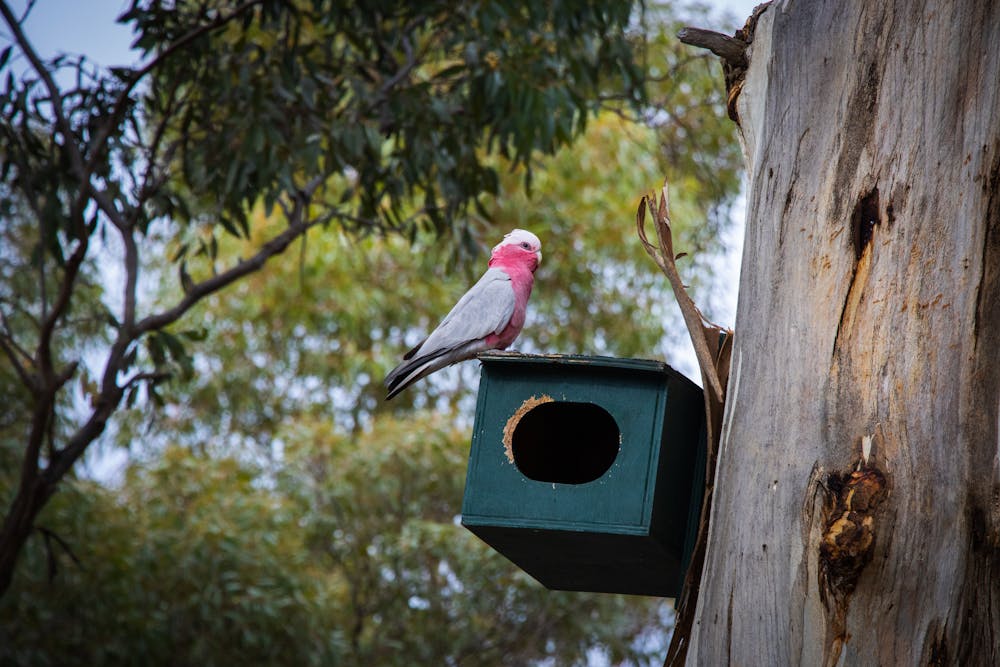 Building artificial refuges like nest boxes is a popular offsetting project.
Shutterstock
Building artificial refuges like nest boxes is a popular offsetting project.
Shutterstock
What needs to change?
These findings tell us two things about the current scheme:
- financial and information barriers create unequal opportunities across landholders
- the scheme doesn’t cater to diverse conservation perspectives.
The NSW government should loosen up the narrow neo-liberal market principles underpinning the scheme and open it up to a wider range of landholders. As an immediate first step, the government could introduce a more equitable model for sharing the costs of the initial ecological assessment.
It could also open the scheme to a wider range of conservation perspectives.
Offsetting is meant to be used as a last resort, according to globally accepted standards for development projects.
Read more: Can we really restore or protect natural habitats to 'offset' those we destroy?
If developers and the government clearly demonstrate habitat destruction is completely necessary and offsetting really is a last resort, then we expect broader acceptance among landholders. Further research is required to learn how the government could achieve this.
Such reforms would give the scheme a stronger social license to operate and ensure it meets its policy objectives better.
Importantly, opening up the scheme would make it more transparent, so that future excessive profit seeking, with questionable conservation outcomes, can be prevented.
Authors: Roel Plant, Adjunct Professor, University of Technology Sydney

















