

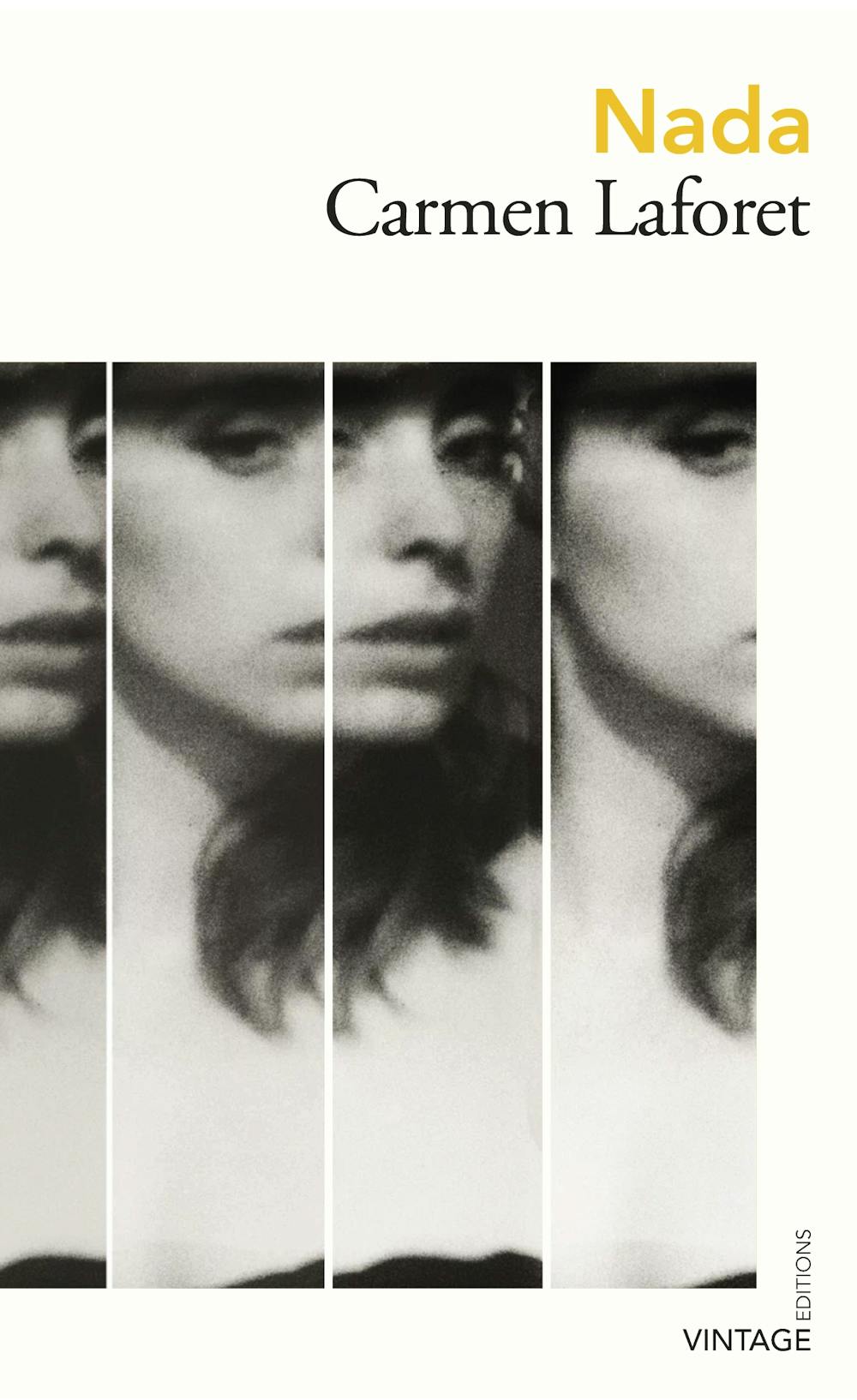
Carmen Laforet's Nada captures longing and desire in post-war Spain
- Written by Ruth McHugh-Dillon, Lecturer in European Languages (Spanish and Latin American Studies), Monash University
If you haven’t heard of Nada, one of the most important European novels of the 20th century, you’re not alone.
Written in a few short months by Carmen Laforet, it was originally published in Spain in 1944 to immediate acclaim. It won a wide readership and Spain’s inaugural Premio Nadal, now the country’s most prestigious literary prize. Yet Nada took more than 80 years to appear in English translation.
A classic in Spanish, it is still shamefully under-read in English.
In the 20th century, Spanish-language literature was dominated by groundbreaking international names from Latin America such as Gabriel García Márquez, Mario Vargas Llosa and Carlos Fuentes.
Several of these writers credit Nada with forcing them to reconsider writing from Spain. Until belatedly discovering Laforet’s novel, Vargas Llosa writes, he had believed “everything over there reeked of fustiness, sacristy and Francoism”.
The atmospheric and cruel Nada overturned this verdict. Laforet’s achievement is remarkable, given her age (just 23 when she wrote Nada) and the challenges she faced as a woman to overcome the sexist bias of her time and secure her place in the literary canon.
Even now, analysis frequently emphasises the autobiographical or semi-autobiographical elements of the novel, diminishing its feat of extraordinary imagination.
A family drama
Nada centres on Andrea, an orphan who arrives in Barcelona aged 18, to stay with relatives she hasn’t seen for years. Escaping to Barcelona to study literature has long been her dream. But the city Andrea encounters resembles nothing of her happy childhood memories.
 Once glorious, Barcelona is now defeated and dilapidated, “its silence vivid with the respiration of a thousand souls behind darkened balconies”. Arriving at her grandparents’ crumbling apartment, Andrea enters “what seemed like a nightmare”: a ragged array of relatives teetering between madness and starvation.
Andrea’s grandfather is dead and the household is under the command of her authoritarian aunt, Angustias, who promises to “mould” Andrea into obedience. Every day, the same violent dramas recur. Andrea’s arrogant artistic uncle Román goads his hot-headed brother, Juan, usually about his “piece of trash” wife, Gloria, who Román claims is obsessed with him.
If Gloria gets involved, Juan turns on her. Juan can be found either beating Gloria or painting bad nudes of her to sell for a pittance. Andrea’s tiny, tremulous grandmother tries to keep the peace, recalling how “there were never two brothers who loved each other […] like Román and Juanito”. The scowling maid, Antonia, lurks in the shadows with her dog, relishing the violence.
Censorship and stagnation after the Civil War
Nada, which in Spanish means “nothing”, emerged in one of the darkest and most stagnant periods of Spanish history.
For many Spaniards — already exhausted from the brutal Civil War that ripped the country apart between 1936 and 1939 — their worst nightmare had become a crushing, everyday reality. The dictatorship of General Francisco Franco, whose rebel armies had ultimately vanquished the left-wing Republicans, would drag on until his death in 1975.
Once glorious, Barcelona is now defeated and dilapidated, “its silence vivid with the respiration of a thousand souls behind darkened balconies”. Arriving at her grandparents’ crumbling apartment, Andrea enters “what seemed like a nightmare”: a ragged array of relatives teetering between madness and starvation.
Andrea’s grandfather is dead and the household is under the command of her authoritarian aunt, Angustias, who promises to “mould” Andrea into obedience. Every day, the same violent dramas recur. Andrea’s arrogant artistic uncle Román goads his hot-headed brother, Juan, usually about his “piece of trash” wife, Gloria, who Román claims is obsessed with him.
If Gloria gets involved, Juan turns on her. Juan can be found either beating Gloria or painting bad nudes of her to sell for a pittance. Andrea’s tiny, tremulous grandmother tries to keep the peace, recalling how “there were never two brothers who loved each other […] like Román and Juanito”. The scowling maid, Antonia, lurks in the shadows with her dog, relishing the violence.
Censorship and stagnation after the Civil War
Nada, which in Spanish means “nothing”, emerged in one of the darkest and most stagnant periods of Spanish history.
For many Spaniards — already exhausted from the brutal Civil War that ripped the country apart between 1936 and 1939 — their worst nightmare had become a crushing, everyday reality. The dictatorship of General Francisco Franco, whose rebel armies had ultimately vanquished the left-wing Republicans, would drag on until his death in 1975.
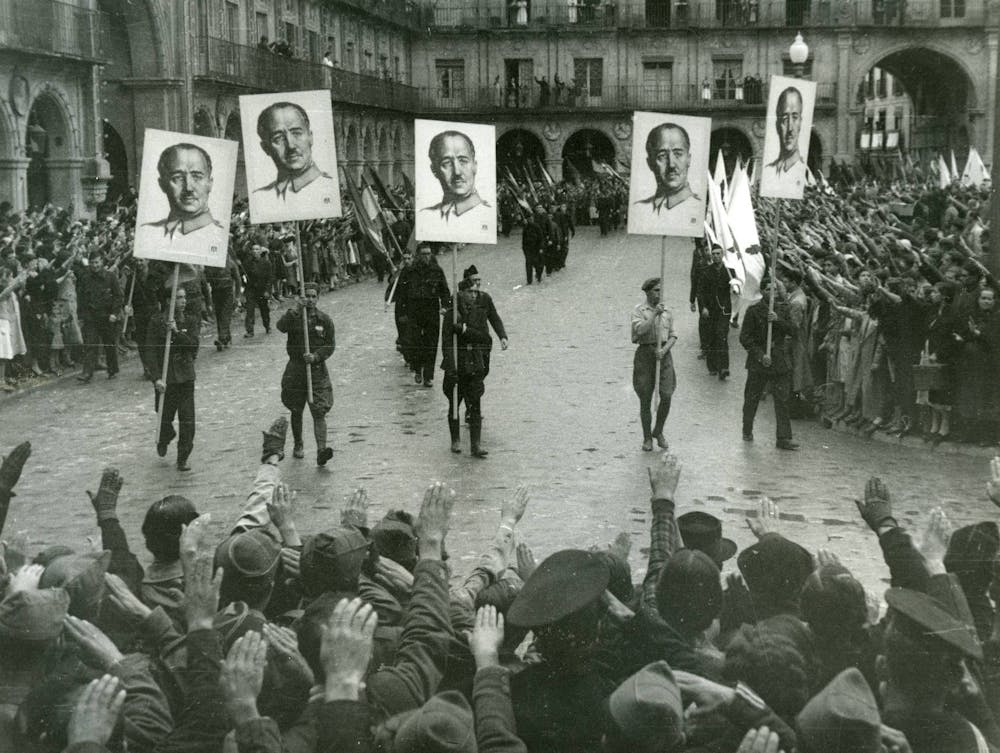 Nada was written in the early days of the Franco regime.
Biblioteca Virtual de Defensa/Wikimedia Commons, CC BY
While the rest of Europe was beginning to emerge from the nightmare of the second world war, by the mid-1940s Spain was settling into one of its bleakest periods. These early years of Franco’s regime are known in Spain as “the hunger years”.
It was in these hunger years Laforet wrote Nada. Andrea recalls how “[the] hunger I almost didn’t feel because it was chronic” weakens her will, making her irritable and unfocused. Sniffing around the kitchen, she drinks cold, leftover vegetable stock.
Bedbugs infest the rooms and characters have discoloured teeth; Gloria’s baby almost dies from pneumonia, a sickness of the undernourished. These are up-close glimpses of the severe deprivations that, as historian Miguel Ángel del Arco Blanco argues, Franco used to consolidate his power.
Under Franco, literary works were subject to strict censorship enforcing conservative values and the fascist narrative of the Civil War. As sometimes happens to art made in restricted circumstances, the social and political critiques embedded within Laforet’s novel are all the more remarkable given her creative play with what can and cannot be said directly.
Read more:
Franco's invisible legacy: books across the hispanic world are still scarred by his censorship
Apart from scattered references to the war, the political situation is rarely named. Yet the atmosphere is oppressive: walls ooze with damp, blinds are drawn against the daylight. Even the air itself is heavy. Family life is a gothic nightmare, replicated behind a thousand “darkened balconies” in Barcelona and beyond.
This apartment and the others like it, are haunted houses inhabited by the ghosts of past violence — but also by its survivors. Civil wars turn neighbour against neighbour, brother against brother. As they attempt to live side-by-side, the apparently intractable conflict between Juan and Román shows how violence can be subdued or domesticated, yet still bubbles beneath the surface.
Nada was written in the early days of the Franco regime.
Biblioteca Virtual de Defensa/Wikimedia Commons, CC BY
While the rest of Europe was beginning to emerge from the nightmare of the second world war, by the mid-1940s Spain was settling into one of its bleakest periods. These early years of Franco’s regime are known in Spain as “the hunger years”.
It was in these hunger years Laforet wrote Nada. Andrea recalls how “[the] hunger I almost didn’t feel because it was chronic” weakens her will, making her irritable and unfocused. Sniffing around the kitchen, she drinks cold, leftover vegetable stock.
Bedbugs infest the rooms and characters have discoloured teeth; Gloria’s baby almost dies from pneumonia, a sickness of the undernourished. These are up-close glimpses of the severe deprivations that, as historian Miguel Ángel del Arco Blanco argues, Franco used to consolidate his power.
Under Franco, literary works were subject to strict censorship enforcing conservative values and the fascist narrative of the Civil War. As sometimes happens to art made in restricted circumstances, the social and political critiques embedded within Laforet’s novel are all the more remarkable given her creative play with what can and cannot be said directly.
Read more:
Franco's invisible legacy: books across the hispanic world are still scarred by his censorship
Apart from scattered references to the war, the political situation is rarely named. Yet the atmosphere is oppressive: walls ooze with damp, blinds are drawn against the daylight. Even the air itself is heavy. Family life is a gothic nightmare, replicated behind a thousand “darkened balconies” in Barcelona and beyond.
This apartment and the others like it, are haunted houses inhabited by the ghosts of past violence — but also by its survivors. Civil wars turn neighbour against neighbour, brother against brother. As they attempt to live side-by-side, the apparently intractable conflict between Juan and Román shows how violence can be subdued or domesticated, yet still bubbles beneath the surface.
 Family life is oppressive, repeated again and again beyond darkened balconies.
Nationaal Archief, CC0
Gloria now views her joy at the end of the war as naïve:
How could I imagine what came afterwards? It was like the end of the novel. Like the end of all sadness.
With Nada, Laforet wrote the novel of what happens after: when the conflict ends but life continues.
A transcendent story of longing and desire
As a work of art, one of Nada’s triumphs is how it transcends this bleak and repressive atmosphere without ignoring it. Laforet’s novel offers compelling testimony of Spain’s post-war hunger years. But it is not a documentary. The novel’s compassionate portrayal of Andrea and its black humour draw the reader into a story that is unsentimental but deeply human: an impatient young woman, learning how to be in the world.
For Andrea, the only reprieve from the suffocating apartment is university. There, she makes friends with people her own age, who provide comfort away from the “ghostly world of older people”.
Family life is oppressive, repeated again and again beyond darkened balconies.
Nationaal Archief, CC0
Gloria now views her joy at the end of the war as naïve:
How could I imagine what came afterwards? It was like the end of the novel. Like the end of all sadness.
With Nada, Laforet wrote the novel of what happens after: when the conflict ends but life continues.
A transcendent story of longing and desire
As a work of art, one of Nada’s triumphs is how it transcends this bleak and repressive atmosphere without ignoring it. Laforet’s novel offers compelling testimony of Spain’s post-war hunger years. But it is not a documentary. The novel’s compassionate portrayal of Andrea and its black humour draw the reader into a story that is unsentimental but deeply human: an impatient young woman, learning how to be in the world.
For Andrea, the only reprieve from the suffocating apartment is university. There, she makes friends with people her own age, who provide comfort away from the “ghostly world of older people”.
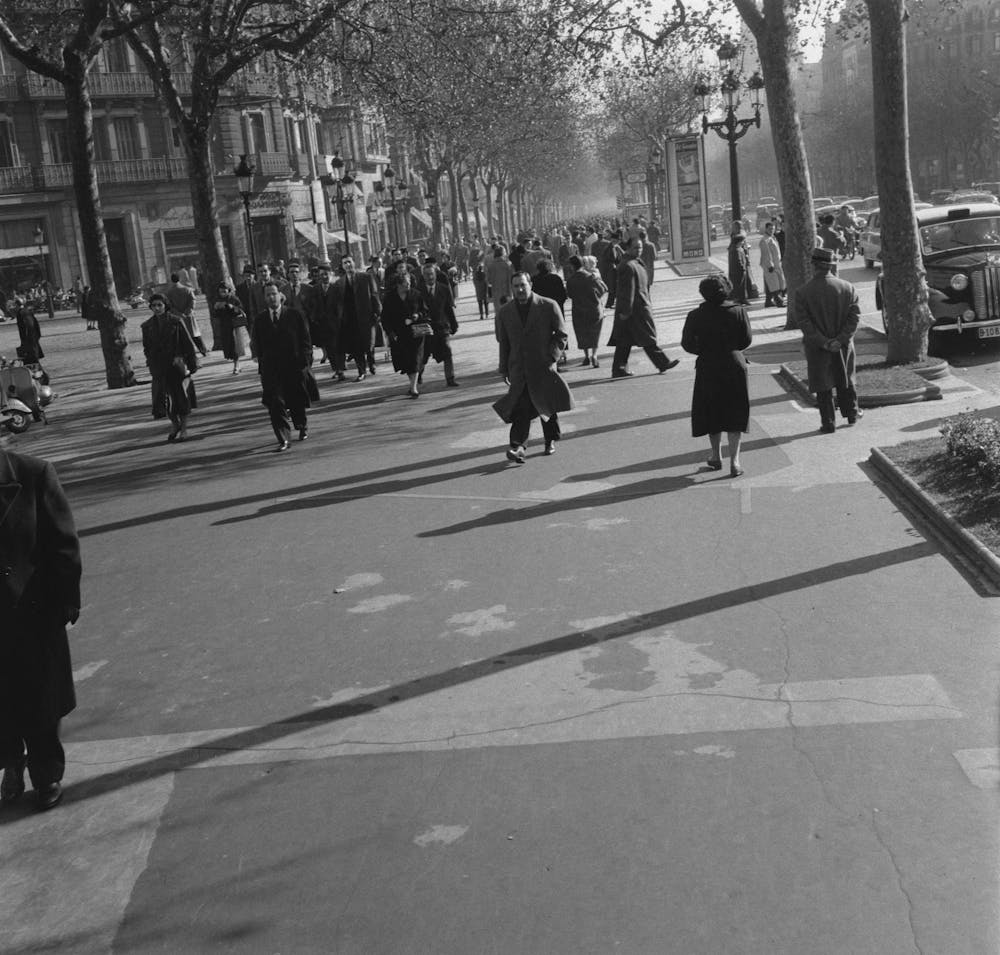 Andrea searches for respite from the suffocating apartment.
Nationaal Archief, CC0
The divide begins to blur, however, when her wealthy and magnetic friend, Ena, becomes drawn to Andrea’s uncle Román. Having already bewitched Gloria and the maid Antonia, Román’s predatory circling of Ena penetrates Andrea’s private world and threatens her most meaningful relationship.
Andrea’s relationship with Ena is charged with intense desire. She is drawn to Ena’s “pleasant, sensual face” and “terrible eyes” glittering with intelligence. Embraced by her friend’s family, Andrea must also endure the pain of watching Ena entertain her many male admirers. This, along with Andrea’s fascinated descriptions of Gloria’s naked body, has led to queer readings of the novel and its protagonist.
Named or unnamed, straight or queer, there is no doubt a deep sexuality surges beneath the novel’s surface. Angustias’s obsession with modesty, and her warnings Andrea stay away from Gloria, “an inappropriate woman”, represent the anxiety around sexual agency and transgression in Franco’s Spain.
Spanish culture before, during and after the dictatorship has challenged Franco’s repressive ideology. Written before the Civil War, Federico García Lorca’s play The House of Bernarda Alba (1936) also uses an authoritarian matriarch in the family home to explore repression and sexual freedom.
After Franco’s death, the Movida movement exploded in a riotous celebration of sexuality and transgression, on display in Pedro Almódovar’s many films.
Nada sits in between, passionate but understated, escaping the censors with a story of human longing, frustration and hope. Like all classics, it will be read, reread and given new context. Today, Andrea’s anguish at being trapped inside, waiting for life to begin, will speak to many.
Read more:
Pain and Glory: Pedro Almodóvar's latest movie is as much self-therapy as it is self-portrait
Andrea searches for respite from the suffocating apartment.
Nationaal Archief, CC0
The divide begins to blur, however, when her wealthy and magnetic friend, Ena, becomes drawn to Andrea’s uncle Román. Having already bewitched Gloria and the maid Antonia, Román’s predatory circling of Ena penetrates Andrea’s private world and threatens her most meaningful relationship.
Andrea’s relationship with Ena is charged with intense desire. She is drawn to Ena’s “pleasant, sensual face” and “terrible eyes” glittering with intelligence. Embraced by her friend’s family, Andrea must also endure the pain of watching Ena entertain her many male admirers. This, along with Andrea’s fascinated descriptions of Gloria’s naked body, has led to queer readings of the novel and its protagonist.
Named or unnamed, straight or queer, there is no doubt a deep sexuality surges beneath the novel’s surface. Angustias’s obsession with modesty, and her warnings Andrea stay away from Gloria, “an inappropriate woman”, represent the anxiety around sexual agency and transgression in Franco’s Spain.
Spanish culture before, during and after the dictatorship has challenged Franco’s repressive ideology. Written before the Civil War, Federico García Lorca’s play The House of Bernarda Alba (1936) also uses an authoritarian matriarch in the family home to explore repression and sexual freedom.
After Franco’s death, the Movida movement exploded in a riotous celebration of sexuality and transgression, on display in Pedro Almódovar’s many films.
Nada sits in between, passionate but understated, escaping the censors with a story of human longing, frustration and hope. Like all classics, it will be read, reread and given new context. Today, Andrea’s anguish at being trapped inside, waiting for life to begin, will speak to many.
Read more:
Pain and Glory: Pedro Almodóvar's latest movie is as much self-therapy as it is self-portrait
Authors: Ruth McHugh-Dillon, Lecturer in European Languages (Spanish and Latin American Studies), Monash University

















