

our expert guide to the books of The White Lotus
- Written by Jane Howard, Deputy Section Editor: Arts + Culture
Freud and Nietzsche may not be what you have in mind when thinking of pool-side reads, but they are among the books flipped through in The White Lotus — the tense, new TV drama about the lives of the rich and privileged as they overlap at a Hawaiian resort.
Are Paula and Olivia truly delving into the mind of the anti-colonial thinker Frantz Fanon, or indeed, into Camille Paglia’s deconstruction of the Western literary canon? Or are they just books for show: an intellectual performance to hide secret glances and gossip?
Either way, frequent book covers speak loudly in the show. So here, then, is what the experts think you should know about these props and the stories they tell.
Maybe you will find one to pick up the next time you fly off for your island holiday. Just try to avoid the White Lotus resort.
The Interpretation of Dreams, by Sigmund Freud
“If I cannot bend the heavens above, I will move Hell.” Sigmund Freud quotes the poet Virgil to describe his aim in this book of explaining the meaning of dreams — by recourse to his theory of the unconscious mind.
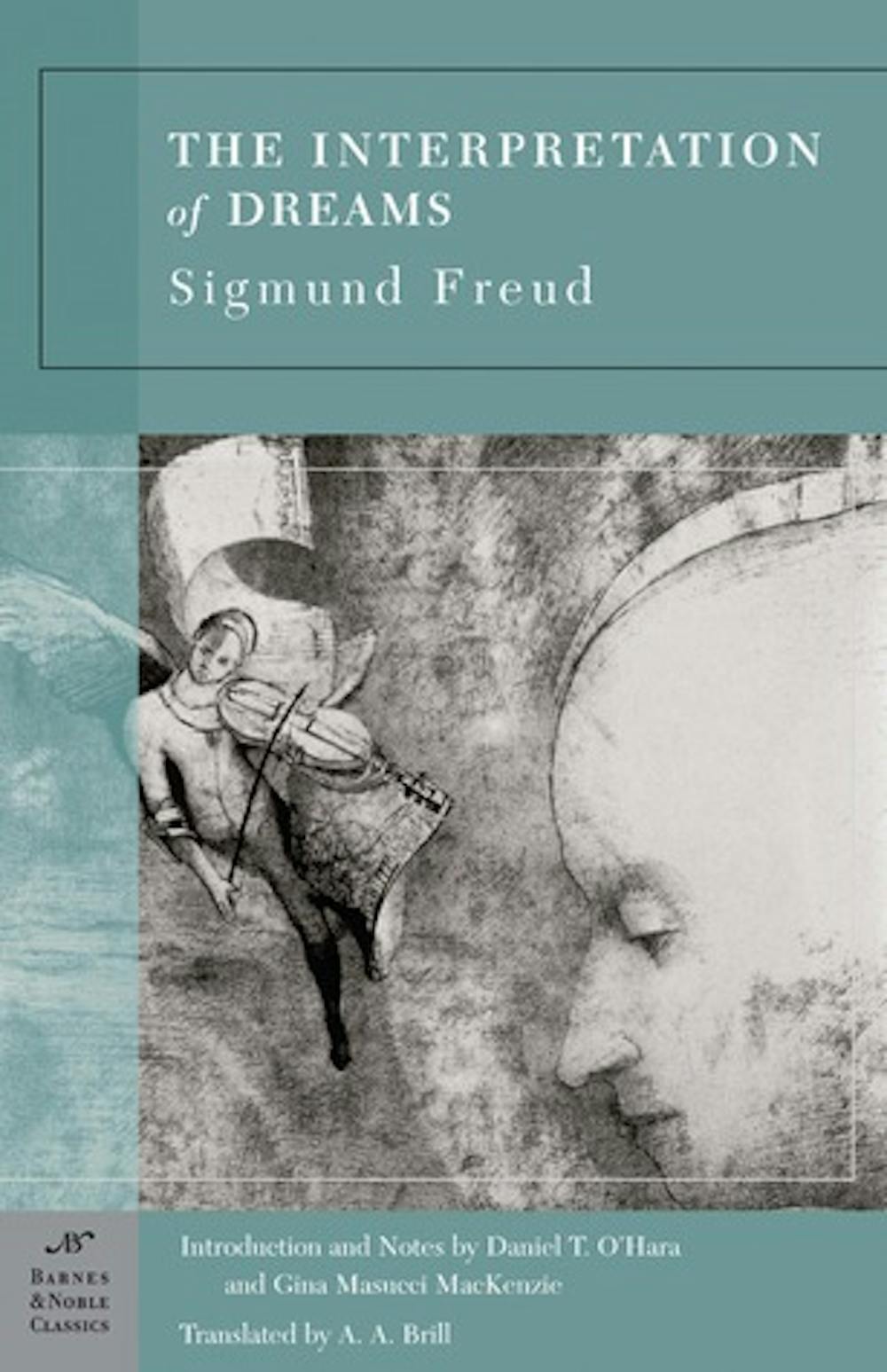 Freud always considered Interpretation of Dreams his masterpiece, and ensured it would be published in 1900 to mark its significance.
Dreams had traditionally been viewed as either senseless or vehicles of communication with the divine. Freud instead contended all dreams involve the fulfilment of a wish.
In adults, he wrote, many of the wishes we have are of such an “edgy” nature their fulfilment would wake us up if staged too directly.
So, in order to at once fulfil these unconscious wishes and stay asleep, the “dream work” of the sleeping mind distorts the wish, using mechanisms of displacement (making insignificant things seem important, and the other way around), condensation (bringing together multiple ideas in single images), and transforming words into the seemingly random images.
Packed with striking dream analyses, and containing perhaps the best systematic statement of Freud’s theory of the mind, this book is an influential classic.
—Matthew Sharpe, Associate Professor in Philosophy
Read more:
Unravelling the mysteries of sleep: how the brain 'sees' dreams
The Wretched of the Earth, by Frantz Fanon
Psychiatrist and anti-colonial thinker Frantz Fanon was born in 1925 in the French colony of Martinique. After the second world war, he studied in France. Later, in 1953, he moved to Algeria, joining the Algerian National Liberation Front.
Freud always considered Interpretation of Dreams his masterpiece, and ensured it would be published in 1900 to mark its significance.
Dreams had traditionally been viewed as either senseless or vehicles of communication with the divine. Freud instead contended all dreams involve the fulfilment of a wish.
In adults, he wrote, many of the wishes we have are of such an “edgy” nature their fulfilment would wake us up if staged too directly.
So, in order to at once fulfil these unconscious wishes and stay asleep, the “dream work” of the sleeping mind distorts the wish, using mechanisms of displacement (making insignificant things seem important, and the other way around), condensation (bringing together multiple ideas in single images), and transforming words into the seemingly random images.
Packed with striking dream analyses, and containing perhaps the best systematic statement of Freud’s theory of the mind, this book is an influential classic.
—Matthew Sharpe, Associate Professor in Philosophy
Read more:
Unravelling the mysteries of sleep: how the brain 'sees' dreams
The Wretched of the Earth, by Frantz Fanon
Psychiatrist and anti-colonial thinker Frantz Fanon was born in 1925 in the French colony of Martinique. After the second world war, he studied in France. Later, in 1953, he moved to Algeria, joining the Algerian National Liberation Front.
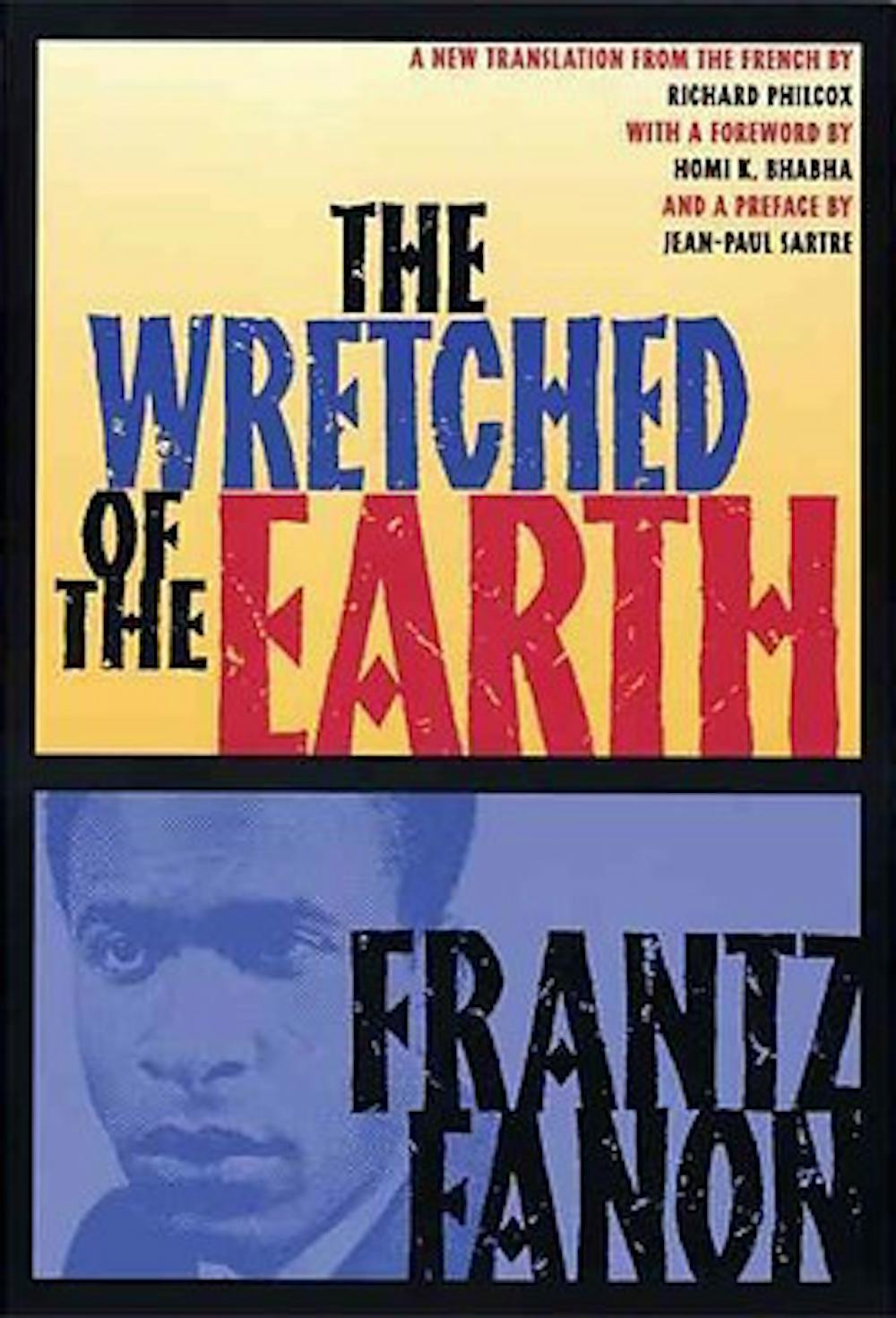 The Wretched of the Earth (originally published as Les damnés de la terre in 1961) was written at the height of the Algerian War of Independence. Based on Fanon’s first-hand experience of working in colonial Algeria, it is a classic text of postcolonial studies, examining the physical and psychological violence colonised people experience.
Fanon’s book is a lucid and damning account of the impact of colonialism: the ways it irrevocably changes people, their societies and their culture.
A passionate call to resist colonisation and oppression, The Wretched of the Earth was seen as dangerous by colonial powers at the time of its publication. It is still an important anti-colonial work today.
—Isabelle Hesse, Lecturer in English
Read more:
Why Fanon continues to resonate more than half a century after Algeria's independence
Sexual Personae, by Camille Paglia
Camille Paglia’s Sexual Personae: Art and Decadence from Nefertiti to Emily Dickinson (1990) is a provocative survey of Western canonical art and culture.
The Wretched of the Earth (originally published as Les damnés de la terre in 1961) was written at the height of the Algerian War of Independence. Based on Fanon’s first-hand experience of working in colonial Algeria, it is a classic text of postcolonial studies, examining the physical and psychological violence colonised people experience.
Fanon’s book is a lucid and damning account of the impact of colonialism: the ways it irrevocably changes people, their societies and their culture.
A passionate call to resist colonisation and oppression, The Wretched of the Earth was seen as dangerous by colonial powers at the time of its publication. It is still an important anti-colonial work today.
—Isabelle Hesse, Lecturer in English
Read more:
Why Fanon continues to resonate more than half a century after Algeria's independence
Sexual Personae, by Camille Paglia
Camille Paglia’s Sexual Personae: Art and Decadence from Nefertiti to Emily Dickinson (1990) is a provocative survey of Western canonical art and culture.
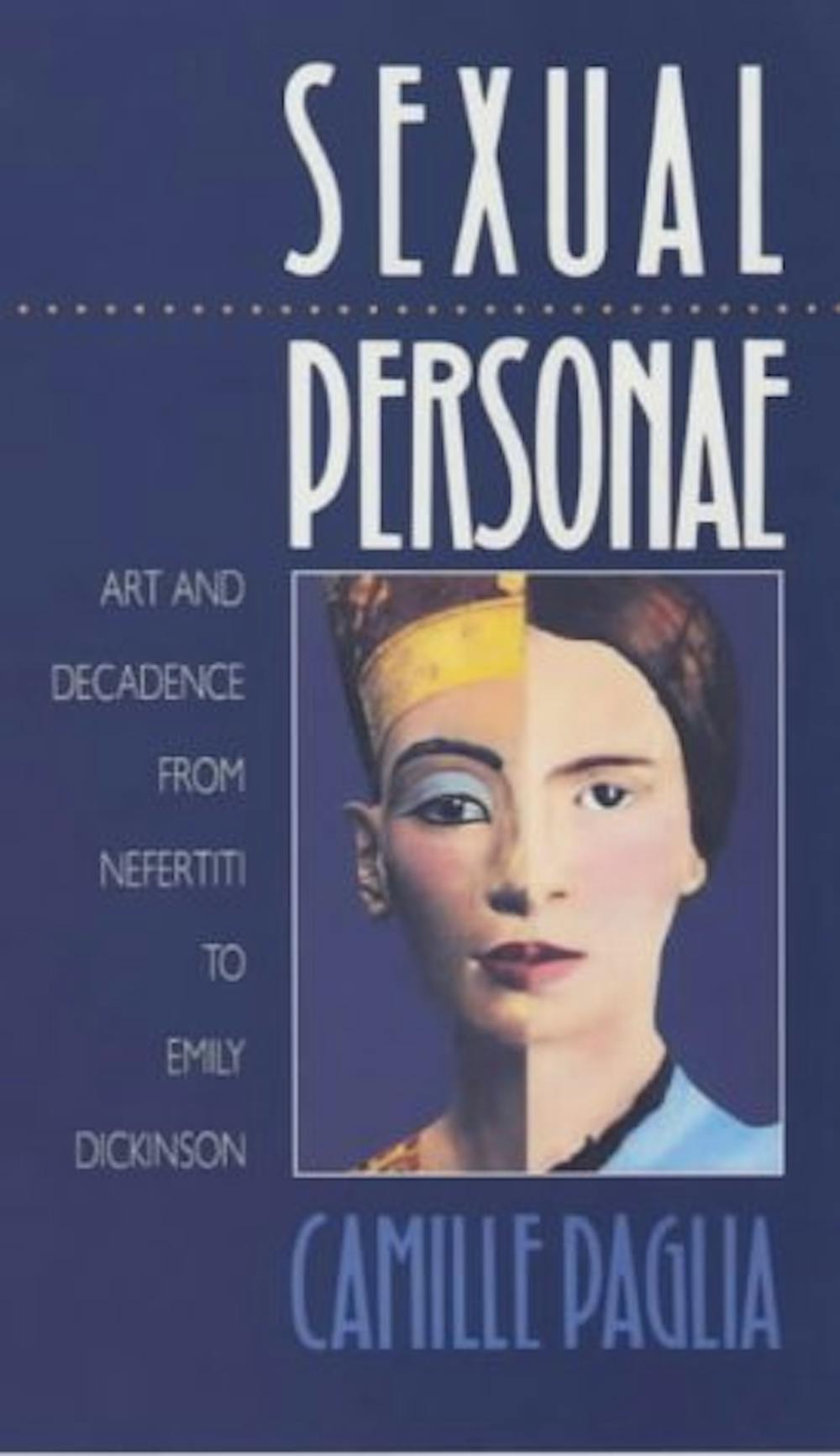 On its publication, Sexual Personae was considered iconoclastic, groundbreaking and subversive for, as Paglia wrote, its focus on “amorality, aggression, sadism, voyeurism and pornography in great art”.
The book was both lauded for its insights into sex, violence and power; and labelled anti-feminist and sinister in its views about gender and sexuality.
Sexual Personae discusses the decadence and enduring influence of paganism in Western culture. Paglia connects sexual freedom to sadomasochism and argues that our self-destructive and lustful Dionysian impulses are in tension with our Apollonian instincts for order.
Named after Ingmar Bergman’s Persona (1966), Paglia’s book charts recurrent types in the Western imagination, such as the “beautiful boy”, the “femme fatale” and the “female vampire”. Through these personae, she discusses works such as the Mona Lisa, Wuthering Heights and The Picture of Dorian Gray. Particularly famous is the chapter on Emily Dickinson and Paglia’s analysis of the brutal and sadistic metaphors in Dickinson’s poetry.
Paglia’s Sexual Personae is both electrifying and divisive; still one of the most important texts in 1990s sexual politics.
—Cassandra Atherton, Professor of Writing and Literature
My Brilliant Friend, by Elena Ferrante
Elena Ferrante’s My Brilliant Friend (2011), the first volume of her Neapolitan Series, is a feminist coming-of-age story that begins with a mystery.
On its publication, Sexual Personae was considered iconoclastic, groundbreaking and subversive for, as Paglia wrote, its focus on “amorality, aggression, sadism, voyeurism and pornography in great art”.
The book was both lauded for its insights into sex, violence and power; and labelled anti-feminist and sinister in its views about gender and sexuality.
Sexual Personae discusses the decadence and enduring influence of paganism in Western culture. Paglia connects sexual freedom to sadomasochism and argues that our self-destructive and lustful Dionysian impulses are in tension with our Apollonian instincts for order.
Named after Ingmar Bergman’s Persona (1966), Paglia’s book charts recurrent types in the Western imagination, such as the “beautiful boy”, the “femme fatale” and the “female vampire”. Through these personae, she discusses works such as the Mona Lisa, Wuthering Heights and The Picture of Dorian Gray. Particularly famous is the chapter on Emily Dickinson and Paglia’s analysis of the brutal and sadistic metaphors in Dickinson’s poetry.
Paglia’s Sexual Personae is both electrifying and divisive; still one of the most important texts in 1990s sexual politics.
—Cassandra Atherton, Professor of Writing and Literature
My Brilliant Friend, by Elena Ferrante
Elena Ferrante’s My Brilliant Friend (2011), the first volume of her Neapolitan Series, is a feminist coming-of-age story that begins with a mystery.
 In the first few pages, a distinguished writer, Elena (known as Lenù), learns an old friend, Raffaella (or Lila), has disappeared without a trace. Lila’s disappearance prompts Lenù to begin writing the story of her life, focusing particularly on the pair’s complicated friendship.
Focusing on their childhood in 1950s Naples, she writes unsentimentally of poverty, violence, familial conflicts and organised crime.
The novel is densely plotted and written with unsparing accuracy about the characters of Naples, but Lenù’s candid narration makes for an utterly engrossing reading experience. In plain, fast-paced prose she describes a grim childhood full of misogyny and domestic violence, but enlivened by her friendship with Lila.
Ferrante gives us a moving portrait of friendship. Over the course of the novel, both girls begin to see glimpses of how they might move beyond the limitations of the world they have inherited.
—Lucas Thompson, Lecturer in English
Read more:
Elena Ferrante: a vanishing author and the question of posthuman identity
The Portable Nietzsche, edited and translated by Walter Kaufmann
For Nietzsche, to write philosophy was to render one’s experience into life-affirming art — even if that art rocked the very foundations of culture itself.
In the first few pages, a distinguished writer, Elena (known as Lenù), learns an old friend, Raffaella (or Lila), has disappeared without a trace. Lila’s disappearance prompts Lenù to begin writing the story of her life, focusing particularly on the pair’s complicated friendship.
Focusing on their childhood in 1950s Naples, she writes unsentimentally of poverty, violence, familial conflicts and organised crime.
The novel is densely plotted and written with unsparing accuracy about the characters of Naples, but Lenù’s candid narration makes for an utterly engrossing reading experience. In plain, fast-paced prose she describes a grim childhood full of misogyny and domestic violence, but enlivened by her friendship with Lila.
Ferrante gives us a moving portrait of friendship. Over the course of the novel, both girls begin to see glimpses of how they might move beyond the limitations of the world they have inherited.
—Lucas Thompson, Lecturer in English
Read more:
Elena Ferrante: a vanishing author and the question of posthuman identity
The Portable Nietzsche, edited and translated by Walter Kaufmann
For Nietzsche, to write philosophy was to render one’s experience into life-affirming art — even if that art rocked the very foundations of culture itself.
 Walter Kaufmann’s translations in The Portable Nietzsche (1954) showcase much of the power and beauty of one of the finest minds in Western culture.
Here is Nietzsche’s devastating psychological portrait of St Paul; here is the infamous announcement of the death of God. They sit together with his complex notion of cheerfulness practised in the face of the terrifying collapse of certainties.
Despite his reputation in some quarters as a malevolent destroyer, Nietzsche’s actual aim of avoiding nihilism is well-captured here.
His cavorting and richly subversive “fifth gospel”, Thus Spoke Zarathustra, is reproduced in full, as is Twilight of the Idols, one of his last works and a fine condensation of his mature project.
Kaufmann’s translations are now dated and his selection of Nietzsche’s works is occasionally eccentric, but The Portable Nietzsche goes an admirable way to presenting Nietzsche’s many aspects: the shy recluse, the loather of anti-Semites, the brilliant transfigurer of pain into texts of depth and beauty, and the lover of life, come what may.
—Jamie Parr, Lecturer in Philosophy
Read more:
Explainer: Nietzsche, nihilism and reasons to be cheerful
Blink, by Malcolm Gladwell
Malcolm Galdwell’s Blink (2005) opens with an anecdote about a kouros: an ancient Greek statue bought by the Getty Museum in 1985 for just under $10 million. Despite months of due diligence to check the authenticity of the statue, the Getty was duped – the statue had been made in the 1980s.
Walter Kaufmann’s translations in The Portable Nietzsche (1954) showcase much of the power and beauty of one of the finest minds in Western culture.
Here is Nietzsche’s devastating psychological portrait of St Paul; here is the infamous announcement of the death of God. They sit together with his complex notion of cheerfulness practised in the face of the terrifying collapse of certainties.
Despite his reputation in some quarters as a malevolent destroyer, Nietzsche’s actual aim of avoiding nihilism is well-captured here.
His cavorting and richly subversive “fifth gospel”, Thus Spoke Zarathustra, is reproduced in full, as is Twilight of the Idols, one of his last works and a fine condensation of his mature project.
Kaufmann’s translations are now dated and his selection of Nietzsche’s works is occasionally eccentric, but The Portable Nietzsche goes an admirable way to presenting Nietzsche’s many aspects: the shy recluse, the loather of anti-Semites, the brilliant transfigurer of pain into texts of depth and beauty, and the lover of life, come what may.
—Jamie Parr, Lecturer in Philosophy
Read more:
Explainer: Nietzsche, nihilism and reasons to be cheerful
Blink, by Malcolm Gladwell
Malcolm Galdwell’s Blink (2005) opens with an anecdote about a kouros: an ancient Greek statue bought by the Getty Museum in 1985 for just under $10 million. Despite months of due diligence to check the authenticity of the statue, the Getty was duped – the statue had been made in the 1980s.
 The discovery of the fake was attributed to an art historian who, according to Gladwell, knew as soon as he clapped eyes on it that it was not the real deal.
This instant of recognition (a “blink”) is what Gladwell describes as the “power of thinking without thinking”. Gladwell argues going with your gut can often lead to far superior decisions than thinking things over.
Blink is an entertaining collection of anecdotes, from art-historians to “marriage-whisperers” who can tell if a relationship is going to last from watching split-second videos of partners interacting. But, as the saying goes, the plural of anecdote is not data.
—Ben Newell, Professor of Cognitive Psychology
None of these strike your fancy? The characters also pick up Judith Butler, Aimé Césaire and Jacques Lacan — just more light reads on feminism, colonialism and psychoanalysis.
White Lotus is now streaming on Binge.
The discovery of the fake was attributed to an art historian who, according to Gladwell, knew as soon as he clapped eyes on it that it was not the real deal.
This instant of recognition (a “blink”) is what Gladwell describes as the “power of thinking without thinking”. Gladwell argues going with your gut can often lead to far superior decisions than thinking things over.
Blink is an entertaining collection of anecdotes, from art-historians to “marriage-whisperers” who can tell if a relationship is going to last from watching split-second videos of partners interacting. But, as the saying goes, the plural of anecdote is not data.
—Ben Newell, Professor of Cognitive Psychology
None of these strike your fancy? The characters also pick up Judith Butler, Aimé Césaire and Jacques Lacan — just more light reads on feminism, colonialism and psychoanalysis.
White Lotus is now streaming on Binge.
Authors: Jane Howard, Deputy Section Editor: Arts + Culture

















