

what is shariah law and what version of it is the Taliban likely to implement?
- Written by Zuleyha Keskin, Associate Professor, Charles Sturt University
With the world still in shock over the Taliban’s lightning-fast takeover of Afghanistan, Afghan people, especially women, wonder what kind of life awaits the nation. When pressed about preserving the rights of women, a Taliban spokesperson said the Taliban would not discriminate against women and would give them their rights “within the bounds of shariah”.
These seemingly moderate messages from the Taliban give the impression they might have changed. But their track record in the 1990s, their interpretation of Islam, and the events that transpired in the past two decades give us a good idea of how they are likely to implement shariah.
What is shariah and how did it come about?
Shariah literally means “the way to a watering source” in Arabic. It came to denote a unique legal system based on the sources of Islam.
When Prophet Muhammad established the first Muslim community in Medina in 622, there was a need to have a legal system better than the crude customs of the tribal Arabian Peninsula. The revelations of the Quran and the Prophet’s own reforms set out the legal principles and practices that laid the foundations of shariah.
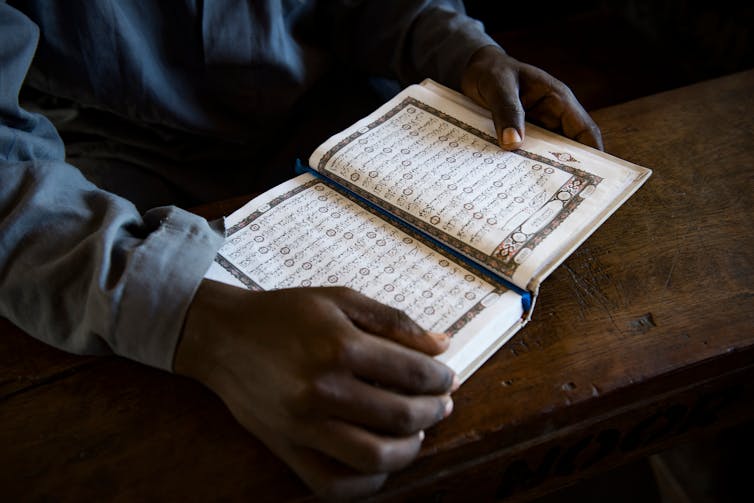 The teachings of the Prophet Muhammad and the Quran laid the foundations of shariah law.
Shutterstock
The teachings of the Prophet Muhammad and the Quran laid the foundations of shariah law.
Shutterstock
The legal approach of the Prophet was progressive and moderate for its time. Prophet Muhammad’s wife Ai’sha said whenever he was confronted with a matter regarding people, he would always choose the easier option for people and he never took revenge. This is an important point for the Taliban to keep in mind.
When Islam grew rapidly from Spain to India by the end of the seventh century, the need for a common legal system became paramount. Instead of replicating the Roman and Persian legal systems, caliphs and Muslim scholars built a complex and detailed legal system on the foundation laid by the Quran and Prophet Muhammad.
Scholars identified higher objectives of the law. In the 14th century, influential Muslim jurist Abu Ishaq al-Shatibi identified the highest objective of law as:
to promote good and to benefit human beings and to protect them from evil, from harm and from subsequent suffering.
Muslim jurists deduced five basic human rights for Islamic law to guarantee – the right to life, property, freedom of religion, freedom of mind (including speech) and to raise a family. Caliphs and sultans could not violate these individual rights.
Legal pluralism was also practised in the Muslim world. Many schools of law were established, having developed over centuries, and implemented in much of the Muslim world. Five such schools survived – Hanafi, Maliki, Shafi’i, Hanbali and Jafari. The last is for Shiite Muslims, and the others for Sunnis.
Shariah became the most sophisticated and developed legal system in the world from the eighth to the 17th century. It served as the common legal code across the vast Muslim lands and populations characterised by racial, cultural, religious and geographic diversity.
Read more: The Taliban wants the world's trust. To achieve this, it will need to make some difficult choices
Why does shariah appear backwards today?
Why, then, does Islamic law appear to have a medieval flavour and appear backwards when it is implemented in modern times? There are five main reasons.
First, from the 11th century onwards, Muslim scholars declared the closure of the gate of ijtihad (legislation) and discouraged new legal interpretation. The 11th through to the 14th centuries was the era of the Crusades, Mongol invasion of Muslim heartlands and the plague. It was not the time to make new interpretations with so many crises taking place. Anyway, scholars reasoned, Islamic law was quite developed.
Second, European colonisation of the majority of the Muslim world from the 19th century onward collapsed the political, legal and religious institutions. Busy with independence movements and dealing with the onslaught of modernity on conservative society, Muslim leaders and scholars had no time to develop Islamic law.
Third, when Muslim nations gained their freedom, mostly after the second world war, they began nation-building. The political leadership were mainly secular modernists who wanted to westernise and modernise their nations. There was no place for Shariah in their vision. The new Republic of Turkey, for example, implemented direct translations of Swiss civil codes instead of Shariah.
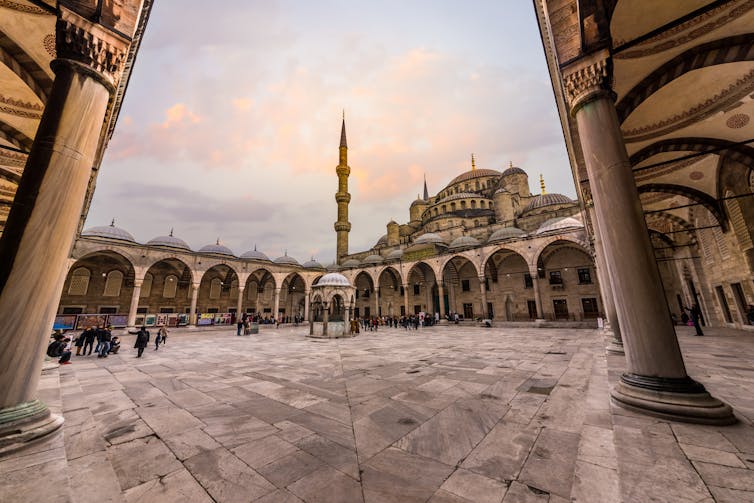 Many Islamic countries, such as Turkey, adopted a more progressive set of laws.
Shutterstock
Many Islamic countries, such as Turkey, adopted a more progressive set of laws.
Shutterstock
Fourth, the historical role of Muslim scholarship has shifted. Newly established secular nation states nationalised rich endowments that belonged to religious institutions. Muslim scholars were persecuted for fear of dissent and opposition. Islamic scholarship was reduced to a small, underfunded university faculty. Talented Muslims chose professions other than Islamic law.
The result is a major loss in the quality of scholarship and a gap of at least 150 years with no practical development in Islamic law.
The last attempt to align Islamic law with a modern legislative framework was made by the Ottoman Empire in its Majalla civil code project. Completed in 1876, Majalla consisted of 16 volumes and 1,851 articles. Since then, the world has changed dramatically without an adequate theoretical and practical response from Islamic law.
A fifth factor is the influence of puritanical Salafism among jihadist groups such as Al-Qaeda, the Taliban and Islamic State. These groups often ignored the vast Shariah legal literature, scholarship and historical experience. They cherry-picked and implemented certain Quranic verses and prophetic traditions as Islamic law.
So, Islamic law appears relatively underdeveloped when compared to other legal systems. It simply did not have a chance to develop in the modern era.
Contemporary Muslim views on shariah
Muslims have differing views on the contemporary application of shariah law.
One view held by secular and modernist Muslims is that shariah was more suited to classical agrarian societies. Given the world and Muslim societies have changed dramatically, shariah is no longer applicable.
The opposite view is held by ultra-conservative Muslims and Islamists. They insist shariah is complete and perfect as it is, and modern societies should be changing to conform with shariah.
A third group, holding perhaps the majority view, believes Shariah is applicable at all times. The key is to know how to apply it correctly, given the changes in time and place.
The third view considers the complexity of the world and proposes committees made up of Islamic scholars alongside scientists and sociologists to fully examine Islamic law. Using the principles and methodology of Shariah, old legal rulings could be evaluated and, if there are grounds, modified. New issues not found in classical Islamic law would also be responded to.
Read more: Owning up: Australia must admit its involvement in Afghanistan has been an abject failure
Taliban’s idea of shariah and Women
Almost certainly, the Taliban holds the second view – society has to change in line with the shariah. This means a move away from the liberalism Afghans grew accustomed to in the past two decades.
The next important question is whether the Taliban will follow the puritanical Salafism or a more traditional Islamic legal school?
In the 1990s, with its support of Al-Qaeda and use of harsh punishments, the Taliban appeared to follow puritanical Salafism. Their fall in 2001, Islamic State’s demise in 2019, and regression of Al-Qaeda after Osama bin Laden’s death would suggest they have learned a lesson or two.
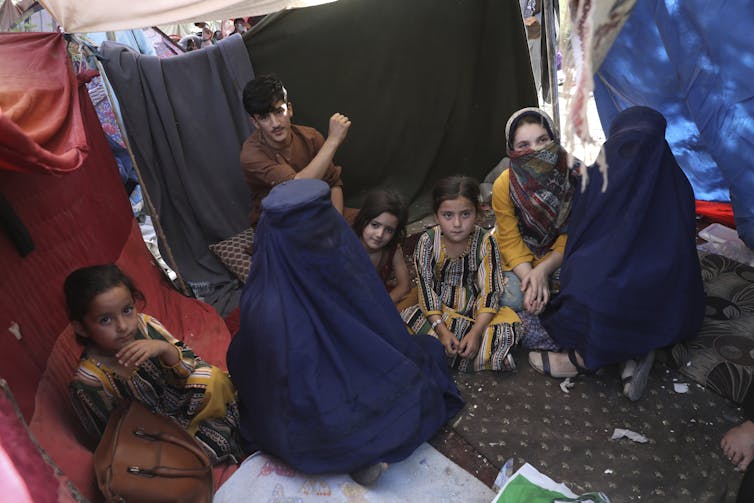 During the first Taliban rule, women and girls had almost no rights. Will it be the same again?
Rahmat Gul/AP/AAP
During the first Taliban rule, women and girls had almost no rights. Will it be the same again?
Rahmat Gul/AP/AAP
Muslims of the subcontinent and central Asia traditionally follow the Hanafi legal school, which is one of the more liberal of the four Sunni Islamic legal schools. Even if this legal school is implemented, its most recent form is the 150-year-old Ottoman Majalla legal code. It will be curious to see if Taliban will consider Majalla at all.
An important consideration is the degree of change the world and Afghanistan have gone through since the first Taliban rule. The Taliban were isolated when they first came to power. But now all of their officers have smartphones connected to the internet and social media. Most importantly, they are using them effectively. Online access to the world would certainly have a moderating effect.
In the first Taliban rule, women had almost no rights. Women had to cover their body and face with the burqa, and they could not get education or work. They could only travel with a male chaperone.
The Taliban today claims to be more inclusive and tolerant of women. While wearing the burqa may not be imposed, women (and men) will be required to cover the rest of their bodies, much like in Iran.
Girls would be allowed to receive an education in girls-only schools staffed by female teachers and administrators. Women would be able to work in a narrow list of professions where there will be limited or no mixing of genders.
In short, life for women in Afghanistan will be better than during the first Taliban rule, but worse than the liberal rights they enjoyed in the past two decades.
Authors: Zuleyha Keskin, Associate Professor, Charles Sturt University

















