

it flies non-stop for 5 days from Japan to Australia, but now its habitat is under threat
- Written by Birgita Hansen, Senior Research Fellow, Federation University and Better Data for Better Decisions Constellation Leader, Food Agility CRC, Federation University Australia
Imagine having to fly non-stop for five days over thousands of kilometres of ocean for your survival. That’s what the Latham’s Snipe shorebird does twice a year, for every year of its life.
This migratory shorebird, similar in size to a blackbird, completes this gruelling migration to warmer climes, where it prepares itself for its return flight and the next breeding season.
Unfortunately, their wetland habitat is now being lost to development and other pressures, putting this tough little bird at risk.
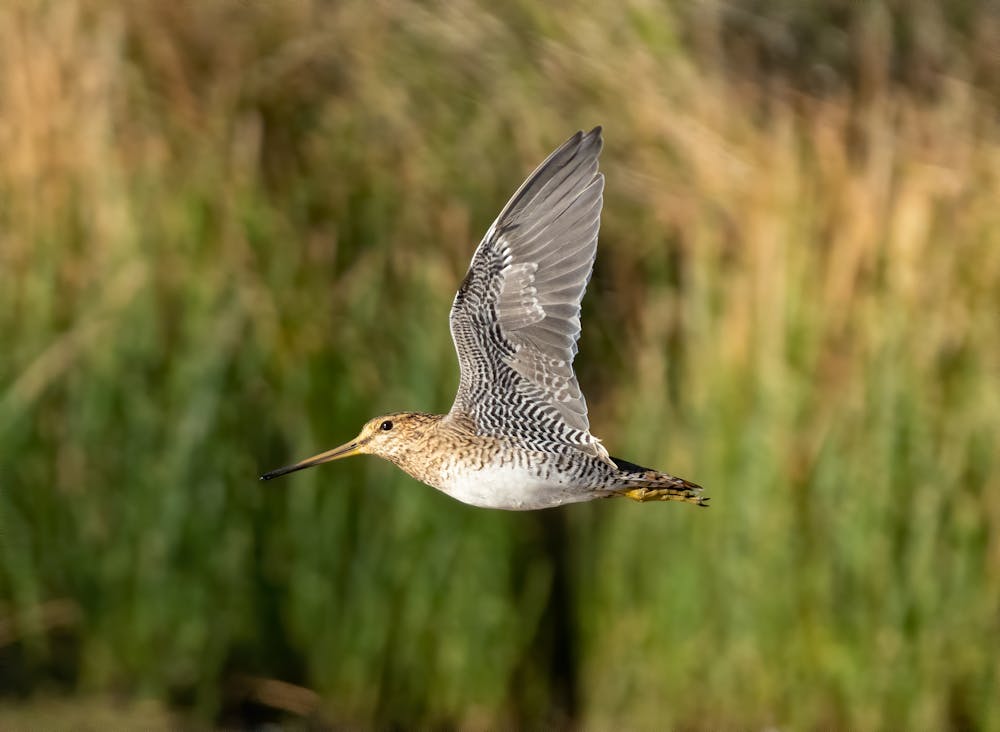 The Latham’s Snipe arrives at its destination severely malnourished and spends the Australian summer months build up its strength and body fat to complete its long return flight.
David Sinnott/instagram.com/birdsbydave/, Author provided
The Latham’s Snipe arrives at its destination severely malnourished and spends the Australian summer months build up its strength and body fat to complete its long return flight.
David Sinnott/instagram.com/birdsbydave/, Author provided
Read more: Be still, my beating wings: hunters kill migrating birds on their 10,000km journey to Australia
A feat of incredible endurance
Latham’s Snipe breeds in northern Japan and parts of eastern Russia during May-July and spends its non-breeding season (September to March) along Australia’s eastern coast.
Like other migratory shorebirds, it has incredible endurance, undertaking a non-stop, over-ocean flight between its breeding and non-breeding grounds.
It arrives at its destination severely malnourished and spends the Australian summer months building up its strength and body fat to complete its long return flight.
Unlike many other migratory shorebird species in Australia, you won’t find Latham’s Snipe in large flocks enjoying picturesque estuaries and bays. Instead, it hides away in thickly vegetated wetlands during the day to avoid local predators.
Their characteristic brown mottled feathers help them hide in wetlands.
Large eyes high on their heads allow them to see far and wide. Their exceptional eyesight helps them constantly scan for dangers at night, when they forage for food in open wet and muddy areas.
Latham’s Snipe is the ultimate sun-seeker. It breeds in the northern hemisphere when the snows have melted and the weather is warm, then returns to the southern hemisphere to take advantage of spring rains, warmer weather and food-rich wetlands.
It spends its entire time in Australia feeding, resting and growing new flight feathers in preparation for the long haul back to Japan in autumn.
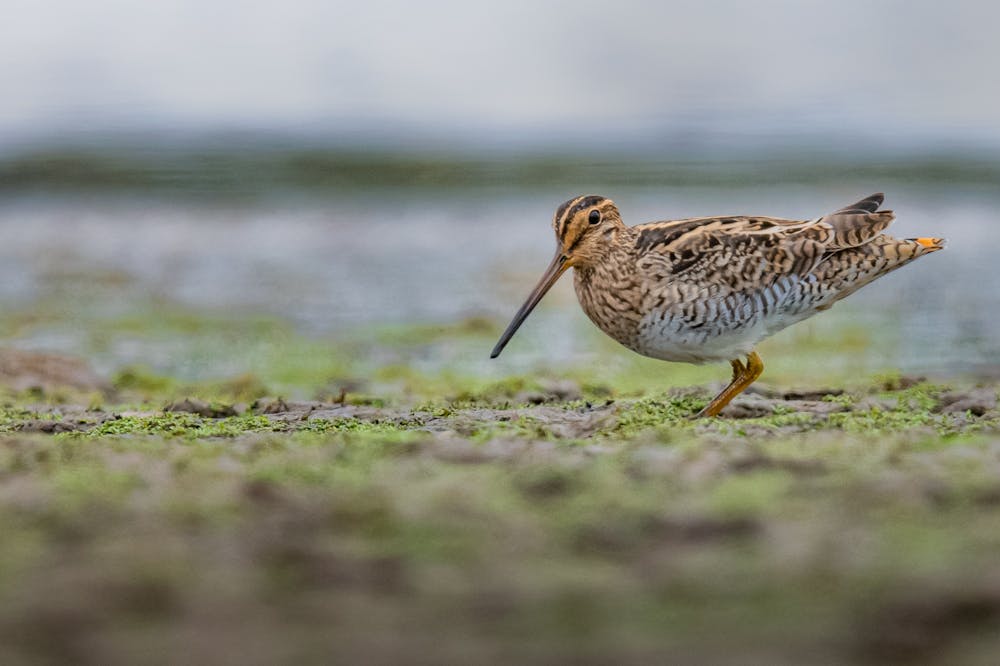 The Latham’s Snipe’s characteristic brown mottled feathers help it hide in wetlands.
Mark Lethlean, Author provided
The Latham’s Snipe’s characteristic brown mottled feathers help it hide in wetlands.
Mark Lethlean, Author provided
No food and nowhere to rest
Latham’s Snipe, formerly known as the Japanese Snipe, was once a popular game bird. Hunting and wetland loss during the 20th century have contributed to a decline in Latham’s Snipe in south-eastern Australia.
The signing of the Japan Australia Migratory Bird Agreement in 1981 has stopped snipe hunting in both countries. However, their wetland habitat continues to be lost due to land development and drying of wetlands.
Imagine flying for five days straight, arriving at your destination emaciated and exhausted, only to find your habitat has disappeared. No food and nowhere to rest. This is the crisis facing Latham’s Snipe and many other migratory shorebird species.
No formal protection for many of its wetlands
Under the Australian government Environment Protection and Biodiversity Conservation Act, any grouping of 18 or more snipe at a wetland site is considered nationally important. Unfortunately, however, development on snipe habitat still occurs.
In 2014 — triggered by a plan to allow housing construction on an important snipe wetland area — a team of passionate researchers and citizen scientists banded together to initiate a monitoring program of Latham’s Snipe in south-west Victoria.
After the first year of the monitoring, the Latham’s Snipe Project expanded to other parts of the country with help from a large number of dedicated volunteers and professionals.
The story from this monitoring is still unfolding but two clear patterns are emerging:
Latham’s Snipe often congregate in urban wetlands; and
the majority of these important wetlands have no formal protection from development or disturbance.
7,000km, non-stop, in three days
Between 2016 and 2020, the Latham’s Snipe Project started tagging snipe with small electronic devices to try and learn about their migratory routes.
The team uncovered an amazing migration from a female snipe captured in Port Fairy. She left her breeding grounds in northern Japan and flew directly to south-east Queensland in three days, a non-stop flight of around 7,000km. A trip that might normally take around five days, this incredible individual did in three.
This is one of the fastest bird migrations on record and highlights how demanding these over-ocean migrations are. It also shines the spotlight on the critical importance of good quality wetland habitat when the snipe return to Australia.
Urban development continues to threaten Latham’s Snipe habitats. Several snipe sites in eastern Australia are at risk from housing developments and large infrastructure projects.
However, a different way of doing things is possible.
Eco-friendly developments like the Cape Paterson Ecovillage in Victoria provide hope. Here, researchers and citizen scientists have worked with the developer to help design conservation areas within the development to protect and restore wetlands for snipe.
Such progress is heartening, but a critically important next step is to make changes to local planning schemes that explicitly recognise wetlands for Latham’s Snipe.
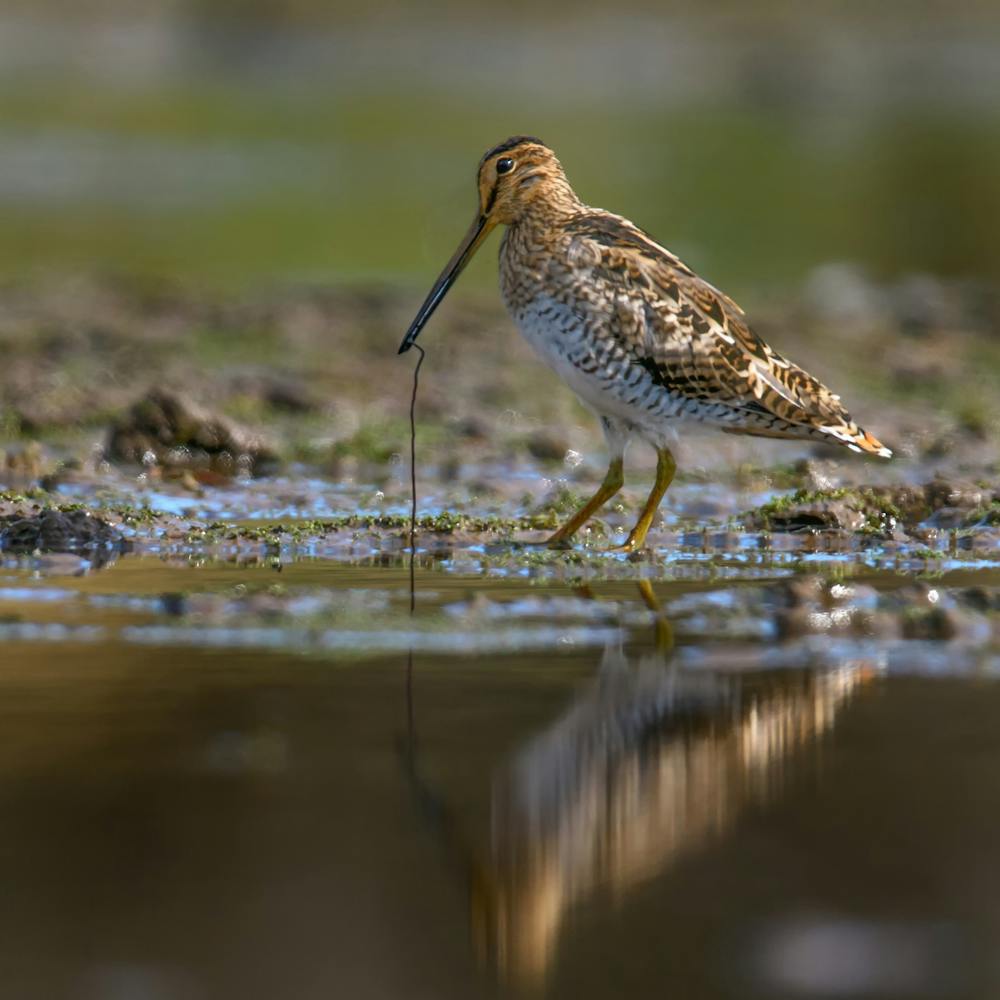 Imagine flying for five days straight, arriving at your destination emaciated and exhausted, only to find your habitat has disappeared.
Mark Lethlean, Author provided
Imagine flying for five days straight, arriving at your destination emaciated and exhausted, only to find your habitat has disappeared.
Mark Lethlean, Author provided
Read more: Birds use massive magnetic maps to migrate – and some could cover the whole world
Authors: Birgita Hansen, Senior Research Fellow, Federation University and Better Data for Better Decisions Constellation Leader, Food Agility CRC, Federation University Australia

















