

Regressive changes to Northern Territory water laws could undermine Indigenous rights
- Written by Erin O'Donnell, Early Career Academic Fellow, Centre for Resources, Energy and Environment Law, The University of Melbourne
Water management in the Northern Territory just keeps making headlines. The recent decision to grant an unprecedentedly large groundwater licence is a case in point.
The licence, granted to Fortune Agribusiness at Singleton Station, threatens springs and sacred sites near Alice Springs, and Aboriginal people, who are the custodians of these places, say they “are not being listened to”.
These media stories point to a wider problem with water law and water management in the Northern Territory. New legislation passed just this month is set to make it worse.
Under the cover of responding to a COVID-induced economic slowdown, the Northern Territory government is set to undermine hard-won national standards of water governance. This includes one of the most important advances in Indigenous water rights: the reservation of water for Aboriginal land owners to use or trade.
The Northern Land Council called the water law reforms a “betrayal of the interests of all Territorians”.
With even more regressive reforms on the books, the future of the NT’s water is looking more like its frontier past.
 Springs on the junction of the Flora and Katherine Rivers, managed jointly by Wardaman traditional owners and NT Parks as the Giwining/Flora River Nature Park. Springs like these are an important source of the dry season flows that sustain the Daly River. These springs flow up through limestone, the source of minerals that give the Flora River its emerald colour and create its scenic tufa dams.
Sue Jackson, Author provided (no reuse)
Springs on the junction of the Flora and Katherine Rivers, managed jointly by Wardaman traditional owners and NT Parks as the Giwining/Flora River Nature Park. Springs like these are an important source of the dry season flows that sustain the Daly River. These springs flow up through limestone, the source of minerals that give the Flora River its emerald colour and create its scenic tufa dams.
Sue Jackson, Author provided (no reuse)
The NT’s history of undermining Aboriginal economic development
Water is a valuable resource, especially in the drier zones of Australia. The sheer volume of the Alice Springs water licence, in particular, represents a new form of resource extraction that rivals mineral extraction in scale.
Just as in the 19th and 20th centuries, the rampant reach of the Crown to appropriate and control natural resources to the detriment of Aboriginal peoples is evident. Analysis of the actions of the NT government in land rights disputes since the 1970s showed it made “immense areas of land and resources” available to commercial interests at virtually no cost.
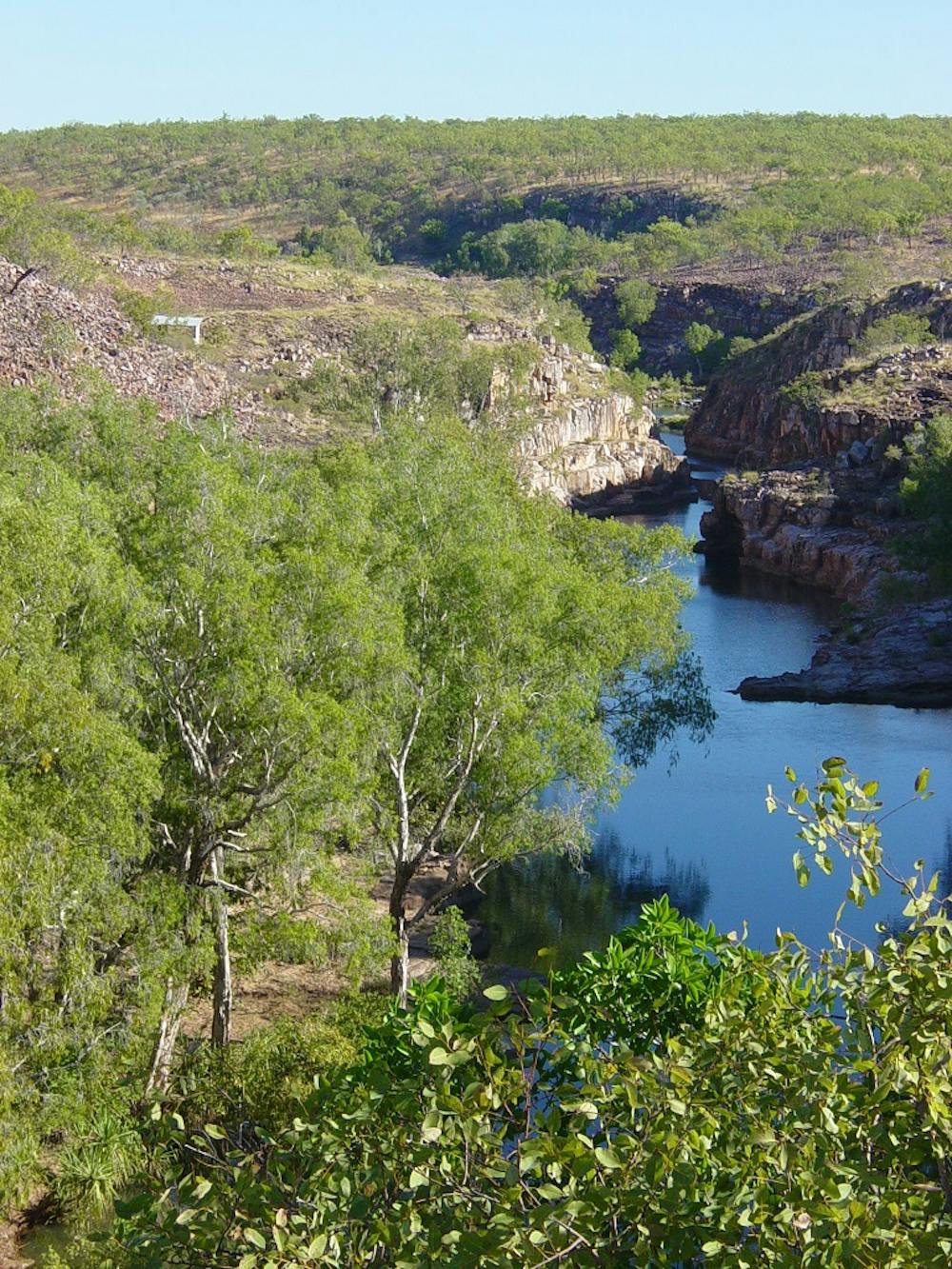 Fish River Gorge is on Fish River Station 150 kilometres south of Darwin. The traditional owners of the area are the Wagiman, Labarganyan, Malak Malak and Kamu peoples.
Sue Jackson, Author provided (no reuse)
Fish River Gorge is on Fish River Station 150 kilometres south of Darwin. The traditional owners of the area are the Wagiman, Labarganyan, Malak Malak and Kamu peoples.
Sue Jackson, Author provided (no reuse)
A major participant (and beneficiary) of the government’s efforts to prevent land claims was the Northern Territory Land Corporation. Its role included holding title to certain lands, thereby removing them from the category of land over which claims could be made under the Land Rights Act.
History is being repeated in today’s water reforms. The Northern Territory Land Corporation has now been repurposed to accelerate the transfer of water rights to commercial interests. This move could make it harder for Aboriginal people to access water.
Why is Northern Territory water governance so weak?
In 2004, states and territories across Australia signed the National Water Initiative, which laid a foundation for good water management. On almost all counts, the Northern Territory is not compliant.
Read more: Australia, it's time to talk about our water emergency
Only 5% of the Northern Territory is covered by water allocation plans. Under NT law, environmental water is protected through provisions in water plans – which means it is largely unprotected in the 95% of the territory without a plan.
Major decisions about water use are made by the water controller, who wears multiple hats. They are the water regulator, the chief executive of the Territory’s environment department, and also sometimes a water holder through their role on the board of the Northern Territory Land Corporation. We think that this inevitably creates a perception of a conflict of interest, and objectively leaves the decisions open to criticism, even where the decisions are well based.
One of the only areas in which the NT is arguably ahead of the curve is the Strategic Aboriginal Water Reserve. It was introduced into law in 2019 because Indigenous people have historically been locked out of water allocation processes and denied water rights.
The reserve sets aside up to 30% of water rights in a water allocation plan area for Aboriginal economic development. The reserve is only available to Aboriginal people with recognised rights to land.
Water can only be accessed under the reserve through an allocation plan. Even then, if all the available water is allocated by the time the plan is prepared, the reserve will have no water.
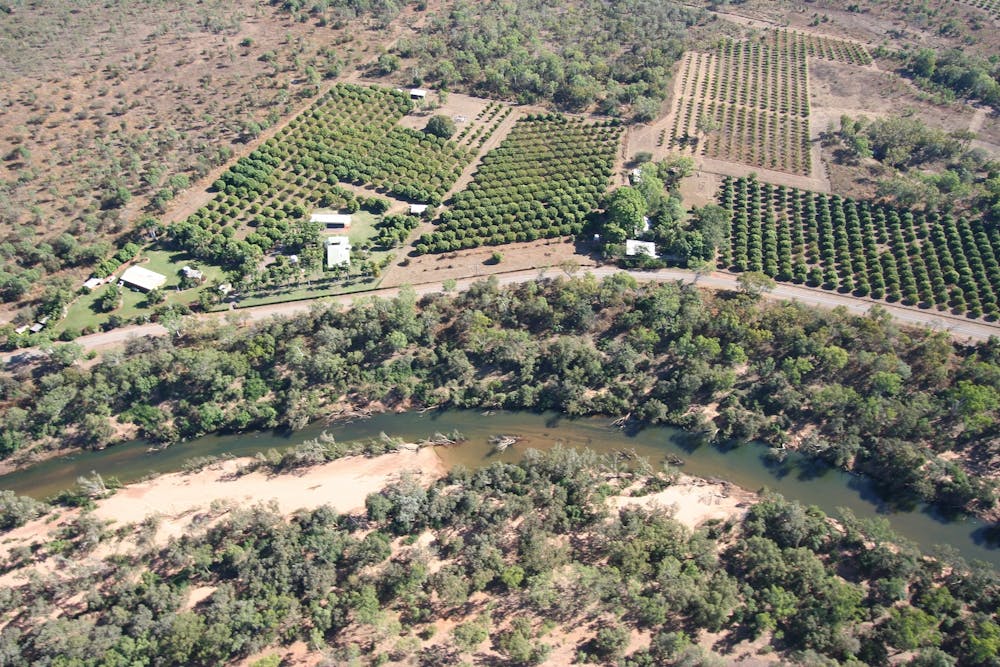 Farms in the Katherine-Daly region of the NT where irrigation is expected to markedly increase in coming years. Water use in this area is currently regulated by water allocation plans, one of which contains the NT’s only Strategic Aboriginal Water Reserve.
Brad Pusey, Author provided (no reuse)
Farms in the Katherine-Daly region of the NT where irrigation is expected to markedly increase in coming years. Water use in this area is currently regulated by water allocation plans, one of which contains the NT’s only Strategic Aboriginal Water Reserve.
Brad Pusey, Author provided (no reuse)
New laws make NT water governance worse
On August 12, the NT parliament passed the first of two key pieces of water legislation. The Statute Law Amendment (Territory Economic Reform) Act creates “head licence” arrangements that will formally allow “speculative” water licence applications from land developers, including the NT Land Corporation.
As water licences in the NT cost nothing to acquire, developers can effectively hoard this water for free until they are ready to proceed, locking others out.
The second set of law reforms are in the environment omnibus bills, which have been recently delayed by the NT environment minister after widespread concern about inadequate consultation.
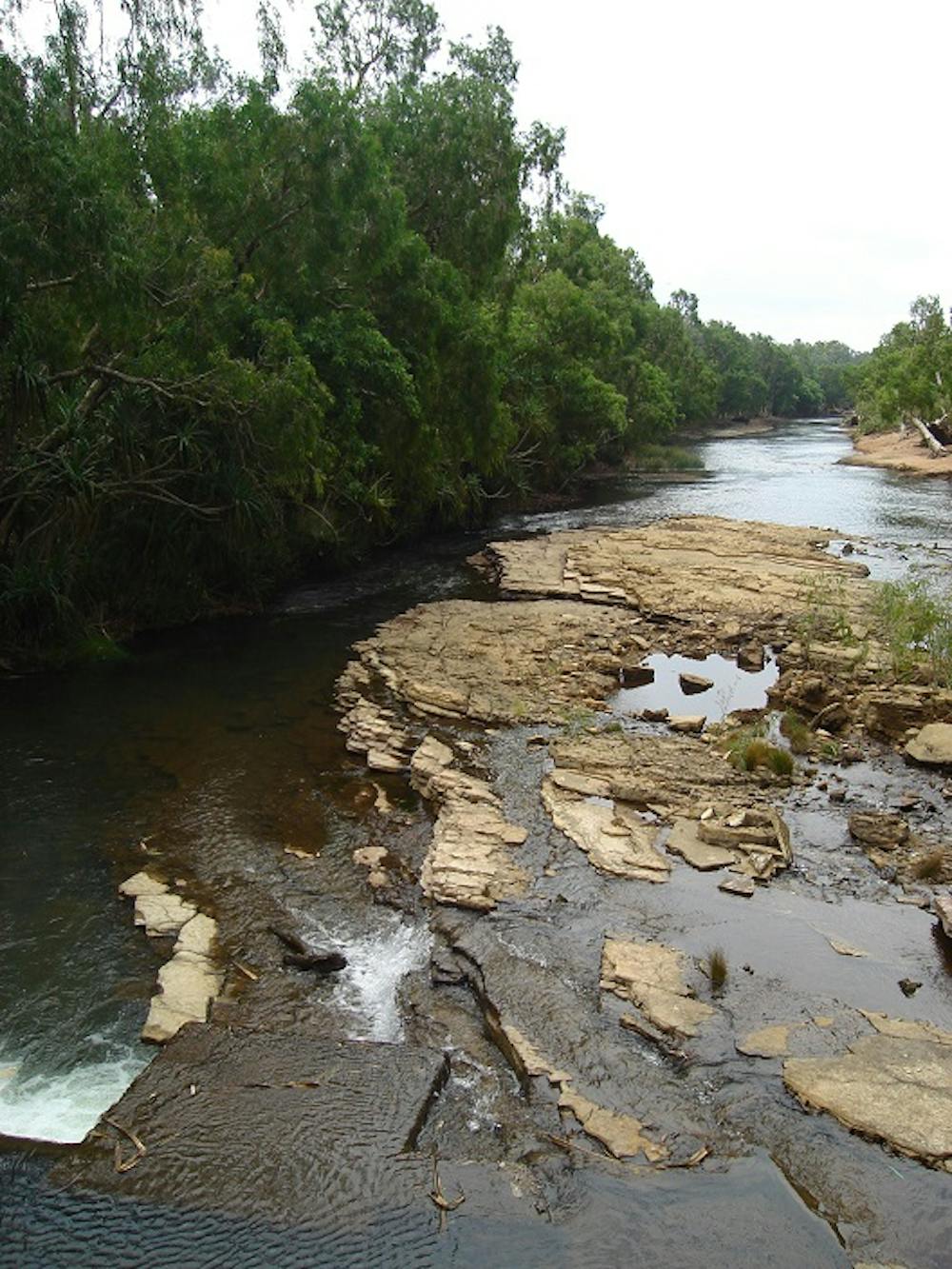 The Katherine River, which flows into the Daly River, is a vital source of water for the many Aboriginal and other communities of the region, its growing agricultural sector, and diverse plant and animal life.
Sue Jackson, Author provided (no reuse)
The Katherine River, which flows into the Daly River, is a vital source of water for the many Aboriginal and other communities of the region, its growing agricultural sector, and diverse plant and animal life.
Sue Jackson, Author provided (no reuse)
As currently written, these bills:
reduce the need to comply with water allocation plans when issuing a water licence
enable water trade to occur outside water allocation plan areas
reduce public notification requirements, including for dams, limiting public feedback.
If passed, these laws would reduce transparency and scientific rigour in water allocation and undermine public confidence in regulation.
Together, these proposed changes mean the Northern Territory government is less likely to invest resources to produce more water allocation plans (essential for Aboriginal Water Reserves). Even where they do, new “head licence” law means more water may be allocated by the time the plans come into effect, leaving less in the Aboriginal Water Reserve.
The future of water management in the Northern Territory
We can’t help but also draw a connection between the new legislation and the successful challenges to water licence decisions made by the water controller.
These include most recently the decision by the NT minister to cancel the Larrimah water licence (issued to the Northern Territory Land Corporation) on the grounds it lacked clarity on future water use and was therefore too “speculative”.
A similar challenge has been made to the decision to grant the 40,000 megalitre licence at Alice Springs. However, the new “head licence” arrangements could entrench speculative water use in the Northern Territory’s water law.
While the changes appear to be aimed at stimulating economic development, the package of law reforms (those passed in August and those still under consideration) weaken legal controls on the issuing of water licences. Considering the Northern Territory’s colonial history, these new laws seem like a way to make it harder for Aboriginal people to access water for economic gain.
The excessive scope of this package of new water laws is not dissimilar to the long campaign by mining companies and the Northern Territory government itself in opposition to Aboriginal land rights from the 1970s.
The Northern Territory government has a long, tragic history of weakening land and water rights for Aboriginal people, and the proposed laws could further entrench the national problem of water dispossession.
Authors: Erin O'Donnell, Early Career Academic Fellow, Centre for Resources, Energy and Environment Law, The University of Melbourne

















