

Court gives legal weight to academics' right to intellectual freedom, but it's not the final word
- Written by Pnina Levine, Lecturer in Law, Curtin Law School, Curtin University
The nature and enforceability of university codes of conduct have been in the news lately. Prominent sackings for alleged misconduct include the cases of Professors Peter Ridd from James Cook University and Tim Anderson from the University of Sydney.
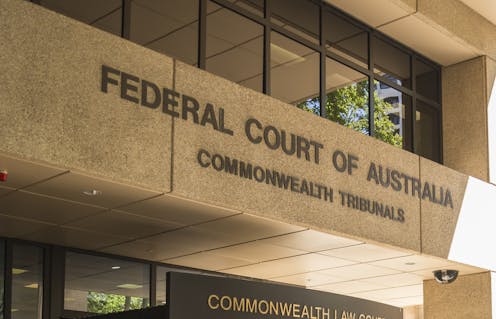
Anderson had a legal win this week when the full court of the Federal Court decided Sydney’s enterprise agreement contains an enforceable right of academics to “intellectual freedom”.
Previous court rulings had suggested intellectual freedom is an aspirational goal with limited legal force. Ridd and Anderson have both argued they were sacked for exercising their right to intellectual freedom, albeit in ways to which many, including us, would object.
The issue, broadly speaking, is what happens when the manner in which academics want to exercise their right of intellectual freedom under university enterprise agreements collides with what their university’s code of conduct requires of them. Universities are clearly wondering about the worth of their codes of conduct if they cannot dismiss staff for discourteous, disrespectful or offensive behaviour.
Read more: Feel free to disagree on campus ... by learning to do it well
Universities and academics, and Ridd in particular, are awaiting the outcome of his appeal to the High Court.
As for Anderson, the National Tertiary Education Industry Union supported him in the case of NTEU and Anderson v University of Sydney [2021] FCAFC 159. The full court found this week that his right to exercise intellectual freedom is relatively unfettered. But victory is only partially complete: a Federal Court judge will now have to decide whether Anderson was exercising his right to intellectual freedom.
Why was Anderson dismissed?
Anderson was dismissed in 2019 after the university repeatedly warned him about his social media activity. Among other things, he posted:
- PowerPoint slides with an infographic of an Israeli flag with a swastika superimposed over it
- a photo of one of his tutors wearing a shirt bearing the words in Arabic “Death to Israel”, “Curse the Jews” and “Victory to all Islam”
- allegedly false references to the university’s allegations against him when he had been directed to keep their communications confidential.
Anderson removed the “University of Sydney” from the “about” details of his Facebook and Twitter accounts after receiving a final warning. He did not remove the comments and posts. After he reposted and retweeted the Israeli flag with swastika infographic, the university at first suspended and then terminated his employment for “serious misconduct”.
Anderson argues he was exercising his right to intellectual freedom under the university’s enterprise agreement and, as such, his activities could not constitute misconduct. He contends that, in warning him and terminating him, the university breached the agreement (it crossed two agreements, from 2013-17 and 2018-21) and contravened the Fair Work Act 2009.
What is the effect of the judgment?
What does the court finding mean? This right to intellectual freedom under their enterprise agreement allows Sydney’s academics to express unpopular or controversial views, provided they do not engage in harassment, vilification or intimidation. They must also exercise their right “in accordance with the highest ethical, professional and legal standards”.
The court found that if Sydney academics are exercising the right to intellectual freedom, it generally could not be misconduct or serious misconduct to do so. This was the case even if the manner in which they exercised their right breached the code of conduct.
In this way, the court privileged the intellectual freedom clauses over other clauses in the agreement. These included “misconduct” and “serious misconduct” being specifically defined as including breaches of the code of conduct.
The ongoing problem for Sydney’s academics is that the court decided the code of conduct did not identify the “standards” relevant to deciding whether intellectual freedom was being exercised “in accordance with the highest ethical, professional and legal standards”, as stated in the enterprise agreement.
Read more: Universities' relevance hinges on academic freedom
What happens next?
The court was considering the legal issues of the relationship between Sydney’s enterprise agreement and its code of conduct. But whether Anderson’s social media activity was a permissible exercise of intellectual freedom under the agreement and whether he was wrongfully dismissed remains to be decided by a Federal Court judge. If the judge finds in favour of Anderson, the University of Sydney may have to reinstate and compensate him.
In the meantime, the Federal Court has left Sydney’s academics with a relatively unqualified right to express their opinions however they choose. They are unconstrained by any behavioural standards, as long as they do not harass, vilify, intimidate or fail to uphold the “highest ethical, professional and legal standards”.
This judgment underscores to Australian universities what they must do to ensure they can terminate staff for breaches of their codes of conduct. Their enterprise agreements must explicitly qualify the right of intellectual freedom by reference to upholding the code of conduct.
Universities will also have to consider the effect of the French Model Code for the Protection of Free Speech and Academic Freedom on this course of action.
For Australian academics generally, the judgment demonstrates that their right to intellectual freedom is strongly prescribed by what their particular enterprise agreement says.
Read more: Dan Tehan wants a 'model code' on free speech at universities – what is it and do unis need it?
The lingering question for Sydney academics is: what are the “the highest ethical, professional and legal standards”? This week’s judgment suggested these standards do not require them to avoid causing any offence to others. Nor did they necessarily have to conduct themselves with “respect”, “impartiality” or “courtesy”. It also did not matter to the court whether the conduct might be able to be carried out in a different way so as to not cause offence.
We, along with Anderson, now have to await a Federal Court judge’s view as to whether his conduct departed from the required standards.
Authors: Pnina Levine, Lecturer in Law, Curtin Law School, Curtin University

















