which one to reach for when you're injured or in pain
- Written by Andrew Lavender, Senior Lecturer, School of Science, Psychology and Sport, Federation University Australia
When you injure yourself, you may reach for a hot or a cold pack. Which option is better depends on the nature of your pain, what caused it and how long you’ve had it.
Heat therapy, sometimes called thermotherapy, involves applying heat to an injury or painful area on the body. Hot water bottles or pads that can be heated in a microwave oven are commonly used. Cold therapy, or cryotherapy, can come in the form of water bottles or pads cooled in a fridge or freezer.
Placing something cold at the injury site causes the blood vessels, arteries and veins, to narrow. This reduces blood flow through the area and helps reduce inflammation and swelling. Adding heat to the area has the opposite effect: opening the blood vessels up and increasing blood flow through injured tissue.
These opposite effects are useful in different situations.
Read more: Feeling sore after exercise? Here's what science suggests helps (and what doesn't)
Cooling down to prevent inflammation
We can treat injury or tissue pain with a hot or cold pack, or sometimes alternate the two.
Cold therapy should be used for injuries that result in swelling and inflammation such as joint sprains, muscle strains or bruises. The objective is to slow blood flow to the area and prevent the effects of the injury. Gel packs that can be kept in the freezer, coolant sprays or even a bag of frozen veggies will do the job.
It is important to avoid holding ice in direct contact with the skin for long periods as this can cause skin damage. It is best to wrap ice in a cloth and then apply it.
Cold therapy is most effective in the immediate or acute phase of pain when swelling and inflammation first kicks off. Typically, the treatment should be applied for about 20 minutes and can be reapplied every two hours for a few days. After that, the injury should be well into the healing phase and the swelling and inflammation will subside.
Cold therapy, or applying ice, is often used in conjunction with rest, compression and elevation, known in first aid by the acronym RICE.
So, ice can be useful when we want to limit the initial swelling and pain, since too much or prolonged swelling can impede the healing process. But with less severe injuries like minor sprains and strains, inflammation is part of the body’s healing process and continuing cold therapy can be a barrier to recovery.
Read more: Can't face running? Have a hot bath or a sauna – research shows they offer some similar benefits
When to warm up
Heat therapy is generally thought of as being either dry or moist.
Dry heat therapy includes hot water bottles or heated pads. These are easy to apply and are effective for reducing pain. Moist heat therapy includes warm bath, hot wet towel and moist heat packs.
Heat therapy is not recommended for acute management of sprains, strains or contusions as this promotes blood flow and can increase swelling and pain.
Heat therapy can help chronic conditions such as recurring joint pain, neck or back pain.
If pain is due to a strain or sprain, cold therapy should be applied immediately, but heat therapy can help relieve pain from 72 hours post-injury.
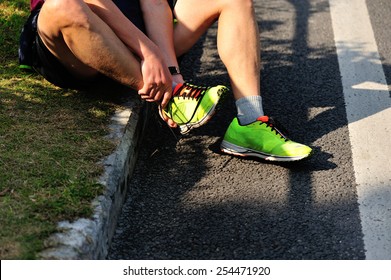
 Cooling down an injury immediately after it happens can reduce swelling but don’t do it for too long.
Shutterstock
Cooling down an injury immediately after it happens can reduce swelling but don’t do it for too long.
Shutterstock
Heat therapy does not mean applying something very hot, rather it should be warm, pleasant and easily tolerated for long periods.
Heat therapy can be very effective for muscle tension or joint stiffness — increasingly blood flow and heating muscles or joints for around 15 minutes before physical activity as a kind of warm up. This approach can also help people engage in activities that might aggravate a chronic injury by loosening and relaxing injured muscles.
Read more: Health Check: do joint and muscle aches get worse in the cold?
Heat is used differently for bluebottle stings. These are best treated by a medical professional in a hospital emergency department. But, as a first aid intervention, pain can be reduced by applying hot water (42–45°C) to the area for 30–90 minutes.
Alternating hot and cold to an area of pain has been used for decades but there has not been a great deal of research assessing the practice. One study assessed hospital inpatients with heel pain and found greater improvement in foot function after hot/cold therapy compared with a group who underwent standard therapy.
Soaking in it
Athletes commonly use water immersion therapy for recovery.
However, this practice is also not without controversy. One review of the evidence found cold water immersion improved performance, measured by jumping and all-out sprint ability 24 hours after a sporting event. Fatigue was also reduced at 48–72 hours after sports events.
This type of temperature control therapy may also help with recovery after undertaking some sustained physical exertion such as a day of hiking.
 Sports teams, like these Collingwood players at St Kilda Beach in 2011, use cold water for recovery from big games.
AAP/Julian Smith
Sports teams, like these Collingwood players at St Kilda Beach in 2011, use cold water for recovery from big games.
AAP/Julian Smith
Read more: Health Check: why do my muscles ache the day after exercise?
So, cold first and maybe heat later
The take-home message is that cold packs work well for reducing pain and inflammation in the acute phase of a strain, sprain or bruise — especially when used in as part of the RICE method.
Heat packs are useful for reducing muscle tension and stiffness and pain in the joints, but never in the initial phase of an injury. There is not enough evidence to show alternating the two is particularly useful, while cold water immersion therapy may help recovery after sport or sustained physical exertion.
Authors: Andrew Lavender, Senior Lecturer, School of Science, Psychology and Sport, Federation University Australia