

How urban soundscapes affect humans and wildlife — and what may have changed in the hush of lockdown
- Written by Kurt Iveson, Associate Professor of Urban Geography and Research Lead, Sydney Policy Lab, University of Sydney
The dull roar of traffic, the barking of dogs in backyards and the screeching of cockatoos at dusk. The shattering of early morning quiet by the first plane overhead or the garbage truck on its rounds. The squealed delights and occasional fights of a children’s playground.
These sounds and many more create what Canadian composer R Murray Schafer famously called a “soundscape”. Schafer, who passed away last month, helped us realise we experience cities with our ears as well as our eyes.
In recent years, studies have confirmed these soundscapes affect the well-being of urban inhabitants — both human and non-human. But with much of the country back under lockdown, urban soundscapes have changed, sometimes bringing delight, but sometimes causing new distress.
So let’s take a moment to consider how soundscapes influence our lives, and the lives of urban wildlife.
When sounds become ‘noise’
Whether it’s housemates, traffic, or construction, we tend to respond to many urban sounds by defining them as “noise”, and try to shut them out. We do this using a range of techniques and technologies: building regulations on soundproofing, controls on the times for certain activities like construction, and planning measures.
But noise mapping efforts show such regulations tend to produce uneven urban soundscapes — some people are more exposed to loud or annoying sounds than others.
Housing quality is a major factor here, and noise problems are likely exacerbated under lockdown. A recent study of pandemic housing inequality in Sydney found increased exposure to noise during lockdown is significantly contributing to poor well-being.
For example, sounds travelling across internal and external walls of apartments were frequently a source of tension in pre-pandemic times. Now, with so many more people spending more time at home, these domestic sounds inevitably increase.
Read more: Coronavirus reminds us how liveable neighbourhoods matter for our well-being
It’s not just humans whose lives are disrupted by city noise, as many animals use sound to communicate.
The ever-vigilant New Holland honeyeaters of Australian cities use their alarm calls to warn their friends and neighbours of danger, while the iconic chorus of banjo frogs in wetlands are the hopeful calls of males seeking mates.
This is the sound a banjo frog makes.Noisy environments can dramatically change how these animals behave. In some cases, animals adapt to their noisy environment. Some frogs, for example, overcome traffic noise disrupting their sex lives by calling at a higher pitch. Likewise, populations of bow-winged grasshoppers in Germany exposed to road noise sing at higher frequencies than those living in quieter areas.
For other animals, such as microbats in England, disruptive noise changes how they forage and move around their environments.
Read more: How noise pollution is changing animal behaviour
In extreme cases, these human-associated noises can drive animals away from their homes, as the disruptions to their lives becomes untenable.
Urban black-tufted marmosets in Brazil have been shown to avoid areas with abundant food where noise may interfere with their vocal communication. And research shows intruding noise in stopovers for migratory birds in the United States reduces their diversity by 25%, with some species avoiding the stopovers altogether.
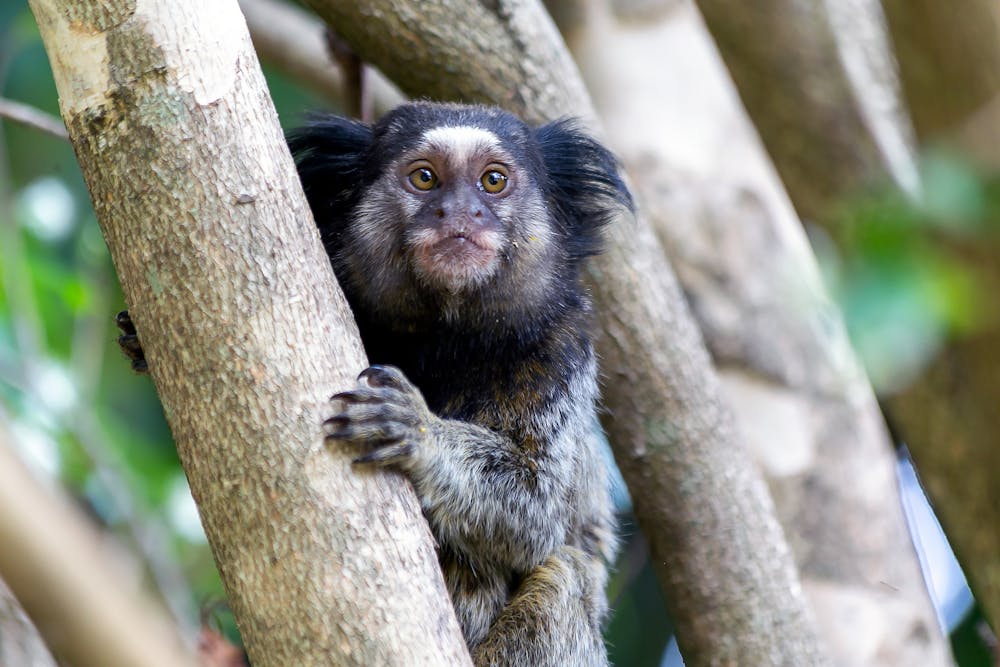 Black-tufted marmosets in Brazil avoid noisy habitats even when there’s plenty of food.
Shutterstock
Black-tufted marmosets in Brazil avoid noisy habitats even when there’s plenty of food.
Shutterstock
A new quiet?
The soundscape of cities in lockdown can be dramatically different from what we have come to accept as normal.
First, there are new noises. For example, in Sydney’s areas of concern subject to tighter lockdown restrictions, people are living with the frequent intrusive noise of police helicopters patrolling their neighbourhoods, making announcements over loudspeakers about compliance.
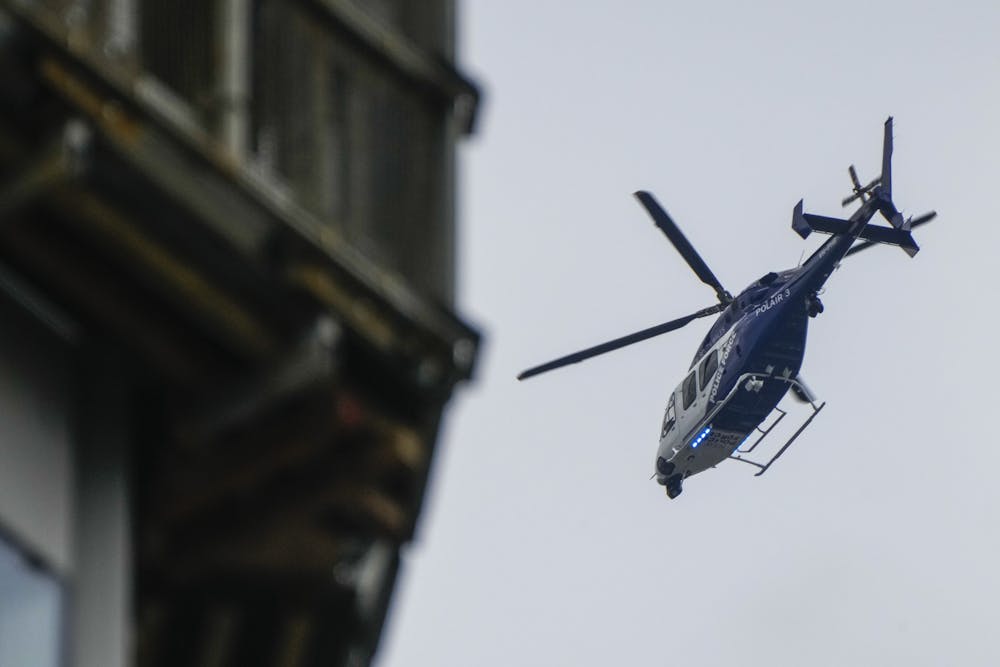 Police helicopters frequently patrolling the skies may be new, unexpected sounds for many people in Sydney.
AP Photo/Mark Baker
Police helicopters frequently patrolling the skies may be new, unexpected sounds for many people in Sydney.
AP Photo/Mark Baker
But in other cases, as our movements and activities are restricted, some city sounds associated with a negative impact on well-being are significantly reduced. People who live near major roads, aircraft flight paths, or construction sites will certainly be noticing the quiet as road traffic is greatly reduced and non-essential construction is paused.
But of course, while this silence might be golden for some, for others the sound of silence is the sound of lost work and income. This quietude may even be considered as unwelcome or even eerie — the sonic signature of isolation, confinement and loss.
 The bow-winged grasshopper adapts to noisy soundscapes by singing at higher frequencies.
Quartl/Wikimedia, CC BY-SA
The bow-winged grasshopper adapts to noisy soundscapes by singing at higher frequencies.
Quartl/Wikimedia, CC BY-SA
Just as many animals adapt to or avoid noisy urban environments, there is a chance many will respond to this natural experiment playing out. Quieter urban environments may see the return of some of our more noise sensitive species, but this depends on the species.
The Brazilian marmosets mentioned earlier didn’t return to those locations even during quieter times, suggesting the noise left a disruptive legacy on their habitat choice, well after it was experienced. On the other hand, other experiments show some species of birds rapidly returned to sites after noise was removed from the landscape.
Read more: Birdwatching increased tenfold last lockdown. Don't stop, it's a huge help for bushfire recovery
While it’s too early to confirm any early speculation about nature returning to quieter urban environments during lockdown, there is compelling evidence many people will benefit from engaging with local nature more actively than they did before.
 Birdwatching increased tenfold in lockdown last year.
Matthew Willimott/Unsplash
Birdwatching increased tenfold in lockdown last year.
Matthew Willimott/Unsplash
Many more Australians are acting as urban field naturalists. Birdwatching, for example, increased tenfold in lockdown last year.
It’s clear people are seeing novelty and wonder in animals and plants that have survived and even thrived in our cities right beneath our noses the whole time. Our increased use of local greenspace during the pandemic has created new opportunities to find the extraordinary in the ordinary.
Rethinking post-pandemic soundscapes
What might we learn from this natural experiment about the soundscapes we take for granted and the soundscapes we actually want?
This is an invitation to think about whether we ought to do more to control sounds we consider “noise”. Yes, decibel levels of activities like car and air traffic matter. But it’s also an opportunity to think beyond controlling sounds, and consider how we might create soundscapes to enhance human and non-human well-being. This is easier said than done, given there’s no universal measure of what sounds give pleasure and what sounds are perceived as noise.
This aligns with the growing body of evidence on the need to reduce noise pollution and protect biodiversity when planning and managing our cities.
Like just about every other dimension of urban life, envisioning and creating an improved urban soundscape requires careful attention to spatial inequality and diversity - including of species - and a capacity to work through our differences in a fair and just way.
Read more: Where the wild things are: how nature might respond as coronavirus keeps humans indoors
Authors: Kurt Iveson, Associate Professor of Urban Geography and Research Lead, Sydney Policy Lab, University of Sydney

















