

Tasmania's salmon industry detonates underwater bombs to scare away seals – but at what cost?
- Written by Benjamin Richardson, Professor of Environmental Law, University of Tasmania
Australians consume a lot of salmon – much of it farmed in Tasmania. But as Richard Flanagan’s new book Toxic shows, concern about the industry’s environmental damage is growing.
With the industry set to double in size by 2030, one dubious industry practice should be intensely scrutinised – the use of so-called “cracker bombs” or seal bombs.
The A$1 billion industry uses the technique to deter seals and protect fish farming operations. Cracker bombs are underwater explosive devices that emit sharp, extremely loud noise impulses. Combined, Tasmania’s three major salmon farm operators have detonated at least 77,000 crackers since 2018.
The industry says the deterrent is necessary, but international research shows the devices pose a significant threat to some marine life. Unless the salmon industry is more strictly controlled, native species will likely be killed or injured as the industry expands.
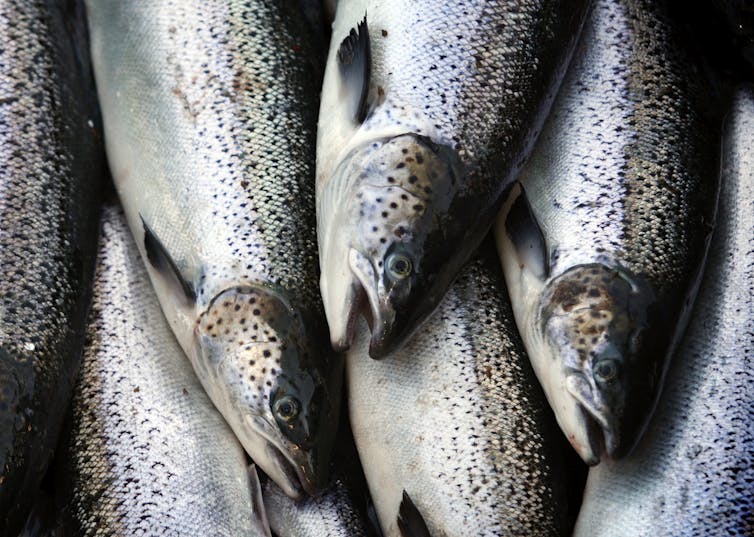 Tasmanian salmon farming is a billion-dollar industry.
Shutterstock
Tasmanian salmon farming is a billion-dollar industry.
Shutterstock
Protecting a lucrative industry
Marine farming has been growing rapidly in Tasmania since the 1990s, and Atlantic salmon is Tasmania’s most lucrative fishery‑related industry. The salmon industry comprises three major producers: Huon Aquaculture, Tassal and Petuna.
These companies go to great effort to protect their operations from fur seals, which are protected in Australia with an exemption for the salmon industry.
Seals may attack fish pens in search of food and injure salmon farm divers, though known incidents of harm to divers are extremely rare.
The industry uses a number of seal deterrent devices, the use of which is approved by the government. They include:
lead-filled projectiles known as “beanbags”, which are fired from a gun
sedation darts fired from a gun
explosive charges or “crackers” thrown into the water which detonate under the surface.
In June this year, the ABC reported on government documents showing the three major salmon producers had detonated more than 77,000 crackers since 2018. The documents showed how various seal deterrent methods had led to maiming, death and seal injuries resulting in euthanasia. Blunt-force trauma was a factor in half the reported seal deaths.
A response to this article by the salmon industry can be found below. The industry has previoulsy defended the use of cracker bombs, saying it has a responsibility to protect workers. It says the increased use of seal-proof infrastructure means the use of seal deterrents is declining. If this is true, it’s not yet strongly reflected in the data.
Read more: Here's the seafood Australians eat (and what we should be eating)
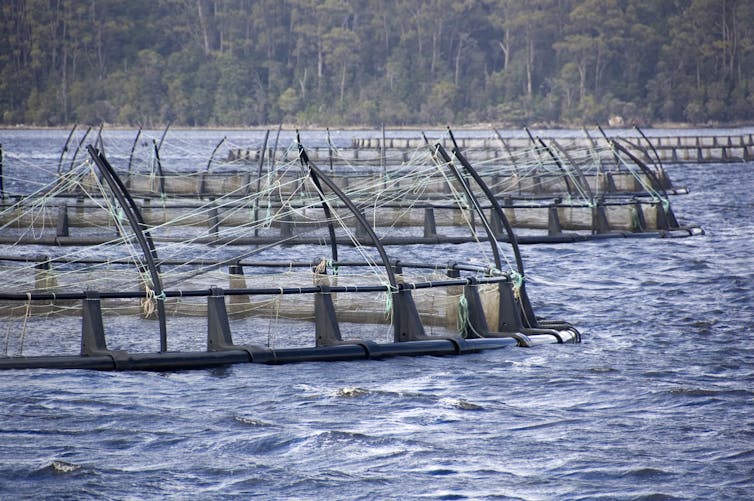 Seal deterrents are deployed to protect salmon farm operations.
Shutterstock
Seal deterrents are deployed to protect salmon farm operations.
Shutterstock
Piercing the ocean silence
Given the prevalence of seal bomb use by the salmon industry, it’s worth reviewing the evidence on how they affect seals and other marine life.
A study on the use of the devices in California showed they can cause horrific injuries to seals. The damage includes trauma to bones, soft tissue burns and prolapsed eye balls, as well as death.
And research suggests damage to marine life extends far beyond seals. For example, the devices can disturb porpoises which rely on echolocation to find food, avoid predators and navigate the ocean. Porpoises emit clicks and squeaks – sound which travels through the water and bounces off objects. In 2018, a study found seal bombs could disturb harbour porpoises in California at least 64 kilometres from the detonation site.
There is also a body of research showing how similar types of industrial noise affect marine life. A study in South Africa in 2017 showed how during seismic surveys in search of oil or gas, which produce intense ocean noise, penguins raising chicks often avoided their preferred foraging areas. Whales and fish have also shown similar avoidance behaviour.
The study showed underwater blasts can also kill and injure seabirds such as penguins. And there may be implications from leaving penguin nests unattended and vulnerable to predators, and leaving chicks hungry longer.
Research also shows underwater explosions damage to fish. One study on caged fish reported profound trauma to their ears, including blistering, holes and other damage. Another study cited official reports of dead fish in the vicinity of seal bomb explosions.
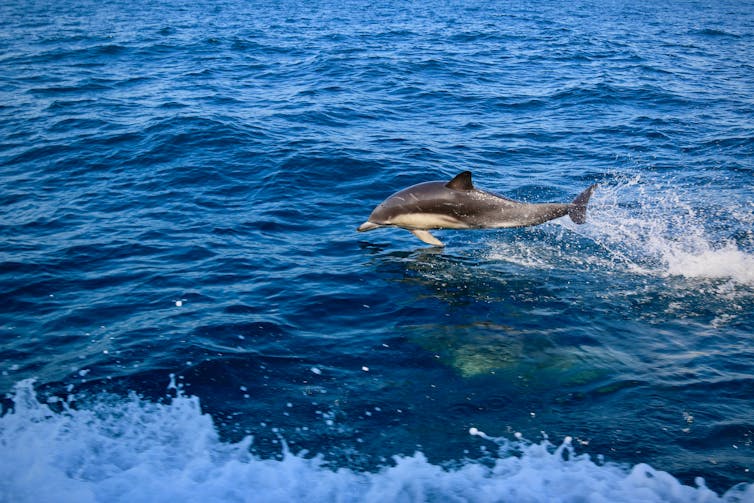 Man-made noise can disturb a variety of marine animals, including porpoises.
Shutterstock
Man-made noise can disturb a variety of marine animals, including porpoises.
Shutterstock
Shining a light
Clearly, more scientific research is needed into how seal bombs affect marine life in the oceans off Tasmania. And regulators should impose far stricter limits on the salmon industry’s use of seal bombs – a call echoed by Tasmania’s Salmon Reform Alliance.
All this is unfolding as federal environment laws fail to protect Australian plant and animal species, including marine wildlife.
And the laws in Tasmania are far from perfect. In 2017, Tasmania’s Finfish Farming Environmental Regulation Act introduced opportunities for better oversight of commercial fisheries. However, as the Environmental Defenders Office (EDO) has noted, the director of Tasmania’s Environment Protection Authority can decide on license applications by salmon farms without the development necessarily undergoing a full environmental assessment.
Tasmania’s Marine Farming Planning Act covers salmon farm locations and leases. As the EDO has noted, the public is not notified of some key decisions under the law and has very limited public rights of appeal.
Two relevant public inquiries are underway – a federal inquiry into aquaculture expansion and a Tasmanian parliamentary probe into fin-fish sustainability. Both have heard evidence from community stakeholders, such as the Tasmanian Alliance for Marine Protection and the Tasmanian Conservation Trust, that the Tasmanian salmon industry lacks transparency and provides insufficient opportunities for public input into environmental governance.
The Tasmanian government has thrown its support behind rapid expansion of the salmon industry. But it’s essential that the industry is more tightly regulated, and far more accountable for any environmental damage it creates.
Read more: Why Indigenous knowledge should be an essential part of how we govern the world's oceans
In a statement in response to this article, the Tasmanian Salmonid Growers Association, which represents the three producers named above, said:
Around $500 million has been spent on innovative pens by the industry. These pens are designed to minimise risks to wildlife as well as to fish stocks and the employees. We believe that farms should be designed to minimise the threat of seals, but we also understand that non-lethal deterrents are a part of the measures approved by the government for the individual member companies to use. If these deterrents are used it is under strict guidelines, sparingly, and in emergency situations when staff are threatened by these animals, which can be very aggressive.
Tasmania has a strong, highly regulated, longstanding salmon industry of which we should all be proud. The salmon industry will continue its track record of operating at world’s best practice now and into future. Our local people have been working in regional communities for more than 30 years, to bring healthy, nutritious salmon to Australian dinner plates, through innovation and determination.
Authors: Benjamin Richardson, Professor of Environmental Law, University of Tasmania

















