

What is dust? And where does it all come from?
- Written by Mark Patrick Taylor, Chief Environmental Scientist, EPA Victoria; Honorary Professor Macquarie University, Macquarie University
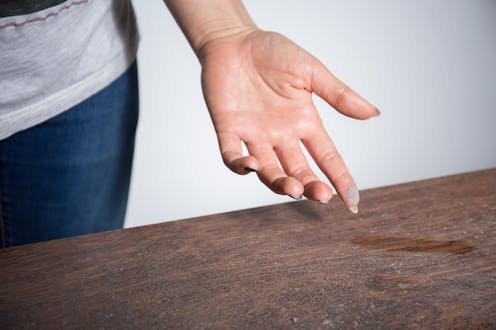
Everything in our homes gathers dust. But what exactly is it? Where does it come from, and why does it keep coming back? Is it from outside? Is it fibres from our clothes and cells from our skin?
Yes, but it’s a lot more than that.
People from all around Australia have been sending their dust to Macquarie University’s DustSafe program. Instead of emptying the vacuum cleaner into the bin, they package it up and we analyse it. As a result, we are getting to know the secrets of your dust! In total, 35 countries are part of this program.
Here’s a taste of what we know so far.
Dust is everywhere
Dust is everywhere. It settles on all surfaces in the natural environment as well as inside homes and buildings — where we spend about 90% of our time, even before COVID.
Some dust is natural, coming from rocks, soils and even space. But the DustSafe program is revealing Australian house dust can include nasties such as:
Dust from inside your home
Some estimates suggest one third of trace element contaminants in household dust originate from sources inside your home, with the rest migrating from outside via air, clothes, pets, shoes and the like.
You and your pets are constantly contributing skin cells and hair to dust. Dust is also made up of decomposing insects, bits of food, plastic and soil.
Intuitively, one might think having pets transporting a variety of organic contaminants including faeces into homes is somewhat gross. However, there is emerging evidence that some “filth” is beneficial as it may help your immune system and reduce allergy risk.
Cooking, open fireplaces and smoking indoors adds very fine dust to your home along with contaminants of concern, which are associated with poor health outcomes.
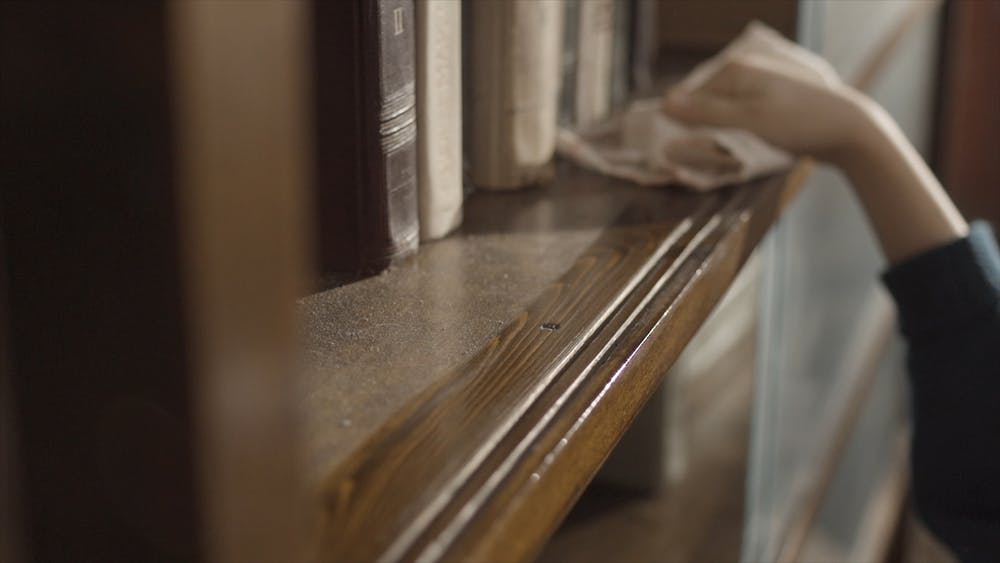
Dust contains a wide collection of chemicals, including those listed on the UN’s Stockholm Convention on Persistent Organic Pollutants, which are linked to certain cancers, birth defects, dysfunctional immune and reproductive systems, greater susceptibility to disease and damage to the nervous system.
Chemicals used in pesticides and in our clothing and furniture also combine with dust in our homes. Toxic flame retardants are used in countless domestic products including children’s pyjamas and can make their way into dust.
Dust also contains microplastics from clothes, packaging, carpeting and furnishings. They’re easily inhaled and ingested, especially by children who often put their hands in their mouth.
Pefluorinated chemicals or PFAS — known as the “forever chemicals” — are used in many domestic products including cosmetics and some non-stick surfaces. These chemicals are in our house dust, too.
Dust from outside your home
About two-thirds of household dust comes from outdoors.
Garden soil and road dust gets tracked in on your shoes or blown in on windy days. Outdoor dust particles get in on the hairs of your pets. Vehicle exhaust dust also gets inside.
Recent dust storms have transported topsoil from farming lands and desert regions to our homes in the city.
Bushfires create fine particulate atmospheric dust, which can contain toxic components from past pollution.
Dust from nearby mines and industry can result in toxic exposures to children.
 About two thirds of household dust comes from outdoors.
Shutterstock
About two thirds of household dust comes from outdoors.
Shutterstock
Poor air quality and damp homes are a source of disease and death.
By deduction, dust would also contribute to adverse health outcomes. Certain types of dust are particularly bad; there are renewed exposures concerns about silicosis dust for tradespeople, and asbestos dust from home renovation.
Excessive use of disinfectants and antibacterial products has been linked to the increased prevalence of antibiotic resistant genes, which we can detect in our dust.
Nearly one in five Australians have allergic rhinitis (hay fever), caused by dust related allergens such as dust mites, pollen, pet dander and skin particles.
Take action against dust!
House dust is part of life. Even in closed-up homes, it will still settle from the indoor atmosphere, leak from the ceiling cornices and attic spaces, and seep into your living areas through cracks around windows and doors.
Any particles of dirt, smoke, fibres or crushed materials that go into the air eventually come down as dust.
But there’s much you can do.
We can try to stop dust getting inside. Use door mats and take your shoes off indoors. Mud-covered children or pets can be towelled down at the door and dusty work clothes should be removed upon entering.
We can choose wisely what chemicals we allow into our homes and how they are used.
Reducing our use of plastics, pesticides and waterproofers will help to reduce the chemical load. Quit unnecessary antibacterial products. A damp cloth with soap or a detergent is just as useful to clean a surface.
Regular vacuuming helps enormously. Vacuum cleaners fitted with a fine particle filter (such as HEPA filter) are more effective at removing allergen-causing dust.
Dusting with a dry cloth or feather duster is likely to recirculate the dust back into the air, so use a damp cloth instead.
Wet mopping of hard floor surfaces also removes fine dust left behind by sweeping or vacuuming.
To find out more about your dust, send a sample to DustSafe.
Read more: What does the dust in your home mean for your health?
Authors: Mark Patrick Taylor, Chief Environmental Scientist, EPA Victoria; Honorary Professor Macquarie University, Macquarie University
Read more https://theconversation.com/what-is-dust-and-where-does-it-all-come-from-168265

















