Australia's international borders to reopen from November. It's one big step towards living with COVID
- Written by Catherine Bennett, Chair in Epidemiology, Deakin University
“Australia will be ready for takeoff very soon” said Prime Minister Scott Morrison today as he announced the ban on international travel will be lifted some time next month.
Returning Australian citizens and permanent residents will be able to quarantine at home for seven days if fully vaccinated with a TGA-approved vaccine.
The recognised vaccines include those already approved for use in Australia by Pfizer, AstraZeneca, Moderna and Johnson and Johnson/Janssen, as well as Sinovac and Covishield (Covishield is AstraZeneca’s vaccine made in India).
Unvaccinated returnees will still need to enter managed hotel quarantine for 14 days until Australia moves beyond Phase C of the National Plan.
Those who can’t be vaccinated, including young children and those with a medical exemption, will be counted as vaccinated for travel.
Arrival caps will also be abolished for fully vaccinated returnees.
Today’s announcement is one big step towards allowing vaccinated Australians to return home soon, as we move to a future that somewhat resembles pre-COVID life.
Is seven days enough?
Home quarantine trials in South Australia and New South Wales will answer this question.
Authorities will be testing returnees and the proportion of those who are COVID-positive, as well as when they test positive, will inform decision-making. This will also be monitored on an ongoing basis once we open up and can be adjusted if it turns out a higher than acceptable number of travellers test positive between day seven and 14.
Currently, NSW data tell us less than half of 1% of returnees in hotel quarantine are testing positive. The NSW Surveillance report from August 21 shows only 4% of those positive cases were in fully vaccinated.
The low percentage of returnees who are positive will matter less anyway as Australia progressively moves towards “living with COVID” with a background rate of the virus in the community.
We know fully vaccinated people can still get infected, but at much lower rates. There’s also mounting evidence suggesting their infectious period is shorter than unvaccinated people, so they’re less likely to pass the virus on. Importantly, there’s now a better than 70% reduction in risk of having a serious infection requiring hospitalisation in all of the vaccines the TGA has recognised for international arrivals.
How will we ensure people stay home?
South Australia is currently trialling an app that uses geo-tagged facial recognition software to ensure people stay home during quarantine.
If this app proves successful it might be rolled out across Australia.
It might also include supports for other aspects of compliance, like prompts to get tested, a checklist of symptoms and other ways to check in with returnees.
Random checks by police or ADF personnel have proven home quarantine and isolation have high levels of compliance. Something similar could also be brought in at some point if there were compliance concerns.
One thing that’s more difficult to monitor is whether other people come into the house of a person meant to be isolating. The risk of transmission to the visitor is much higher than if the returnee ventured out. But this is the same risk we currently have with isolating close contacts locally.
Ultimately the system will need to rely, in part, on trust. We know Australians are generally very compliant, and many people will be desperate to travel again and reunite with family and friends. The majority will be likely to comply with the requirements to facilitate keeping travel open.
The system will be safe enough — and that’s all we need going forward.
What about other household members?
One question yet to be answered is whether everyone else in the house has to quarantine if housing a returned traveller.
With the risk of a fully vaccinated returnee being positive very low, so too is the risk to the household. If they do return a positive test on one of their test days, their household members may also be required to quarantine. Rapid Antigen Tests might be useful for early detection of infection in these cases.
Another question is whether we will still have offshore screening, requiring a negative test prior to departure for Australia?
The finer details will emerge and probably change over time as we collect data and manage changing risks. We’ll probably start conservatively and then gradually open things up more and more as we learn which components of risk mitigation are proportionate.
 Some details of home quarantine on return from overseas still need clarification.
Unsplash/Eva Darron, CC BY
Some details of home quarantine on return from overseas still need clarification.
Unsplash/Eva Darron, CC BY
Which states will go first?
International travel will open to states and territories gradually as they reach 80% of over-16s fully vaccinated. So we won’t have to wait until all jurisdictions have individually hit the threshold.
Based on vaccination uptake rates, the ACT and NSW will likely be the first to open, followed by Victoria.
Tasmania is still tracking well but other states are lagging behind. Queensland and Western Australia will probably be the last to open their borders.
This is broadly in line with the national plan, but is coming probably a month or two earlier than looked possible in June. Vaccination rates, particularly in NSW, Victoria and the ACT, have been spurred on by significant COVID outbreaks. States are also assessing the distribution of vaccine coverage to ensure there are no parts of the community left behind by the time of opening.
What about travel bubbles?
The Prime Minister flagged potential bubble arrangements with countries like New Zealand where there’d be no quarantine requirements. The list of such countries will likely change over time, depending on circulating variants and country risk profiles.
We’re probably heading in the direction of eventually not requiring quarantine for returnees at all, only testing. For now, it’s clear we’re moving towards a system that manages risks rather than operating with zero risk tolerance.
Will contact tracers be able to cope?
As fully vaccinated people contribute less to transmission and are at less risk of severe COVID-19 symptoms, all states and territories will progressively shift the risk settings that underpin contact tracing. We have used comprehensive contact tracing, casting the epidemiological net wide to ensure not one contact of a case who might have contracted the virus was missed.
The chance of someone being positive drops away the more casual the exposure. Once you no longer have to be fearful of missing even just one case, we can make the net smaller and just trace the people at highest risk.
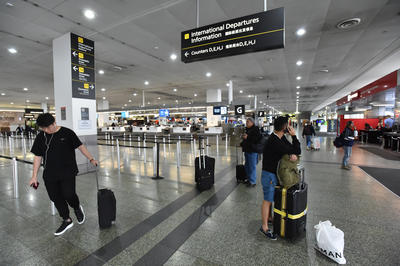
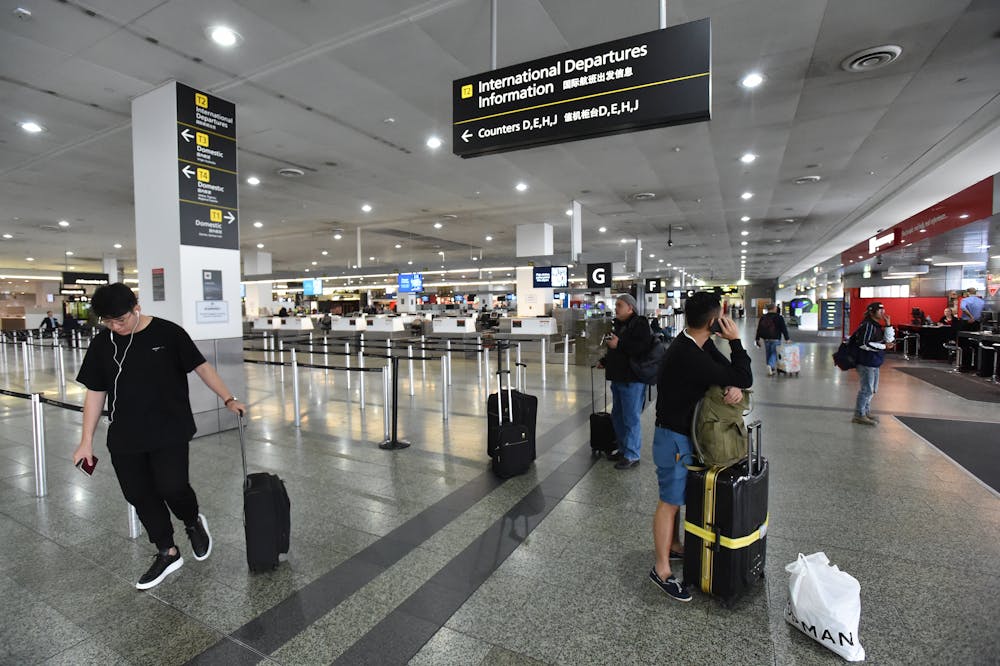
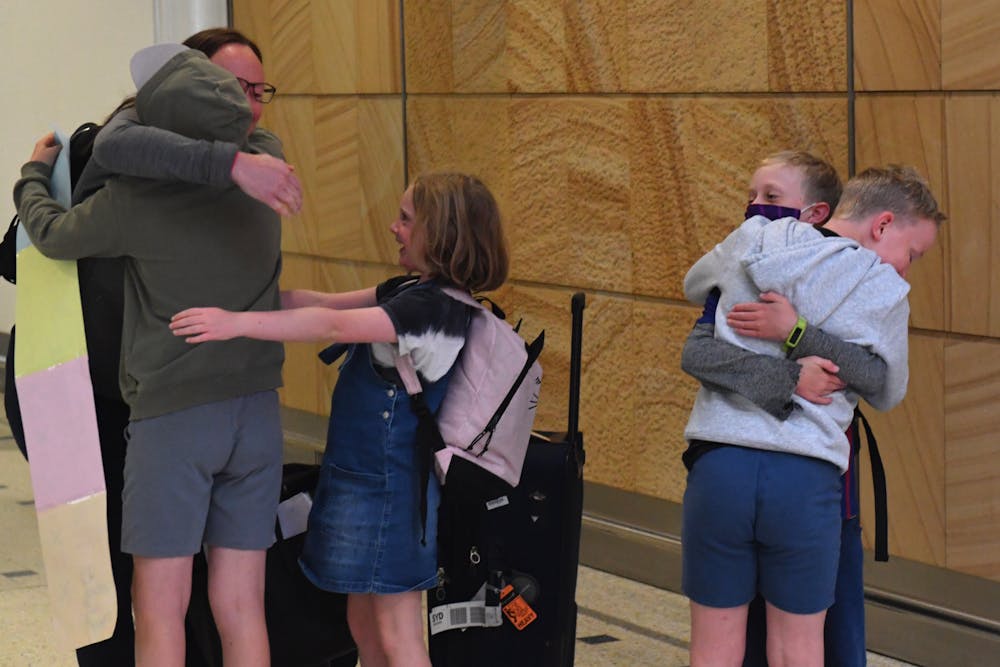 Many Australians are looking forward to seeing loved ones when international travel resumes.
AAP Image/Mick Tsikas
Many Australians are looking forward to seeing loved ones when international travel resumes.
AAP Image/Mick Tsikas
We might reach a stage where even close contacts just have to get a test, without having to quarantine.
This shift brings with it some risk of cases to the community, but we’re likely to have an ongoing, even if low, level of cases in the community. A low rate of introduction across international borders will not materially add to that. It’s about managing risk and being much more selective about identifying who’s at risk in a highly vaccinated population.
What about new variants from overseas?
Watching what variants are circulating will be a priority and some border rules changes might be needed if new risks are identified. For example, stricter arrangements for people arriving from “high-risk” areas where a particularly worrisome variant has emerged.
The system can be adapted for changing risks. There might be more transmissible variants which emerge, but we also might start using next-generation COVID vaccines which are a better fit for variants and precautions can be dialled down.
Being highly vaccinated allows Australia to move away from the ultra-conservative ways we’ve had to manage the pandemic previously, and allows us to start reopening to the world.
Authors: Catherine Bennett, Chair in Epidemiology, Deakin University