

Modern Australian
Men's Weekly

.

NZ needs a more urgent vaccination plan — with nearly 80% now single-dosed, the majority will support it

  • Written by Rod Jackson, Professor of Epidemiology, University of Auckland
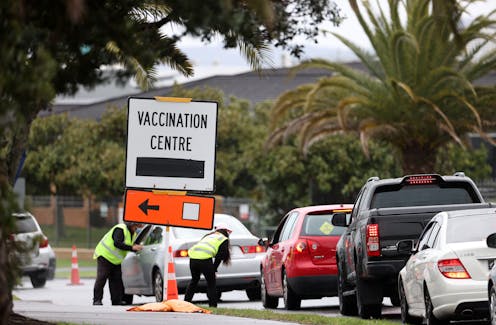
NZ needs a more urgent vaccination plan — with nearly 80% now single-dosed, the majority will support it

With vaccination rates still too low in Auckland and around Aotearoa New Zealand, and with unexpected cases still showing up, there are few options ahead of today’s government decision on alert levels.

Until there are high levels of immunity, any relaxation of restrictions within Aotearoa when Delta is in the community will dramatically increase the speed at which the virus spreads through the population.

The time has come for a concerted vaccination drive, mandatory vaccination for more workers, and a clear signal that eligible but unvaccinated people will face restricted access to travel and other activities.

With Delta, there is no “herd immunity” — almost everyone who has not been vaccinated will eventually (and sooner rather than later) get infected. Vaccinated people are about 75% less likely than unvaccinated people to develop a COVID infection if exposed, and over 90% less likely to develop severe disease.

In the current Auckland outbreak, only 3% of the more than 1,000 cases were fully vaccinated. There has been only one fully vaccinated patient among the more than 100 hospitalised cases.

With fewer than 10,000 New Zealanders having been infected by COVID-19, unlike most other countries we are completely dependent on high levels of vaccination to provide high levels of immunity.

System overload

Left to its own devices, Delta spreads like wildfire – from 1 person to 6, to 36, to 216, to 1296 and so on – at high speed until there is a high enough vaccination level. This rapid exponential spread is the main threat to health and other essential services.

No hospital system, however many ICU beds per capita, could cope, and no amount of testing would be able to get on top of Delta in an opened-up Aotearoa. Contact tracing systems would be overwhelmed in days.

Without a high vaccination level, increasing hospital capacity or investing in new drugs would be the equivalent of rearranging deck chairs on the Titanic.

Read more: New Zealand cannot abandon its COVID elimination strategy while Māori and Pasifika vaccination rates are too low

Beyond the hospitals, COVID will spread through the unvaccinated 5–11-year-olds at school, who will then infect their teachers, parents and grandparents. Who will be able to care for whom?

Beyond the schools, businesses with clusters of unvaccinated staff will shut down because up to half the unvaccinated infected people will be too sick to work, and up to one in ten could be hospitalised. Asymptomatic infected staff will infect other staff, clients, customers and their families and friends.

Then there is long COVID. A large British study has reported one in three hospitalised COVID cases needed to be readmitted.

In another British study, more than half admitted to hospital had long COVID symptoms three months after discharge. Symptoms were worse among those aged under 50, women and those with higher pre-COVID fitness levels.

What are the acceptable costs?

Every national and international health authority has always accepted the only possible sustainable way to deal with COVID is through the development of immunity.

Since the introduction of safe and effective vaccines, every health authority has recommended high levels of vaccination as the only safe and acceptable way to achieve high levels of immunity.

Today, in semi-vaccinated Aotearoa, only two questions are relevant to any plan to open up:

  • is there a high target vaccination level and what does the target imply about the numbers of infections, hospitalisations, deaths and cases of long COVID considered an “acceptable cost” of opening up?

  • how does the plan propose to achieve the vaccination target required to meet the “acceptable cost”?

Aotearoa’s most respected COVID-19 modellers, from Te Pūnaha Matatini, have provided robust scenarios of the likely impacts of a one-year outbreak at different vaccination levels.

Their modelling assumes moderate public health measures, including a full testing, tracing, isolation and quarantine system. Their predictions are remarkably similar to equivalent predictions from Australian modelling groups (aside from the one used by the federal government).
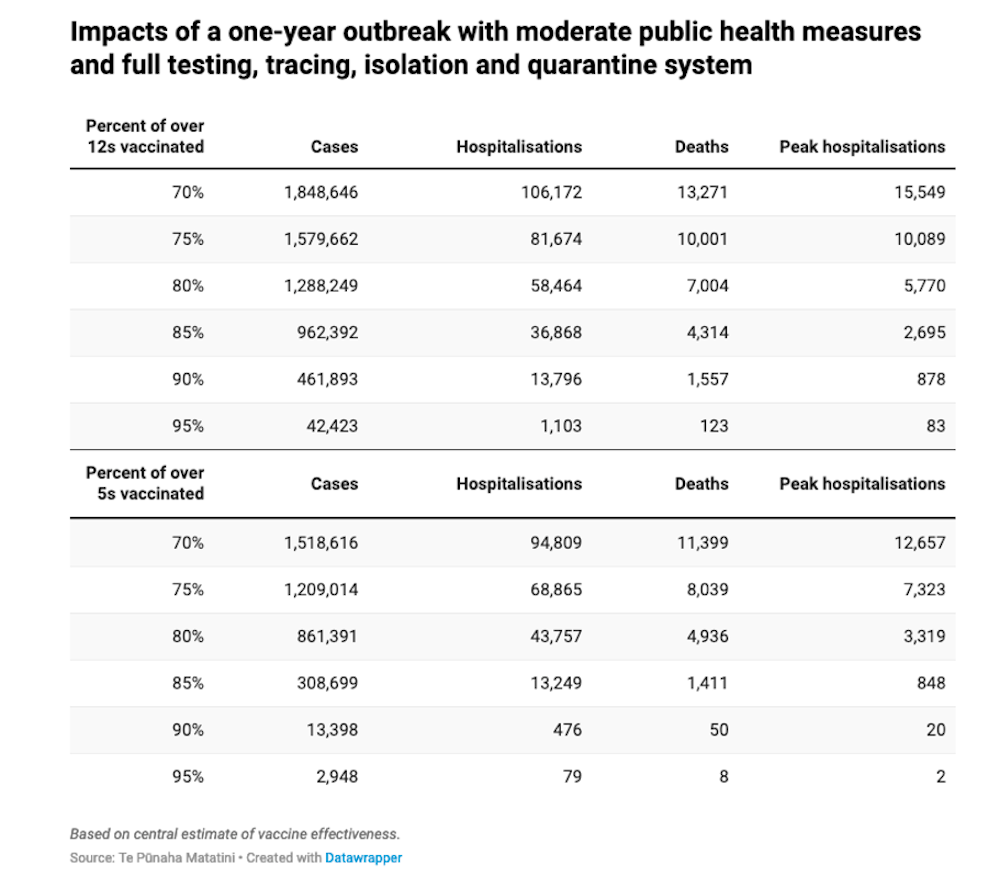

More radical plan needed The National Party’s recently announced “Opening Up” plan was based on nationwide lockdowns no longer being necessary when 70-75% of the population aged 12+ are fully vaccinated. Based on the Te Pūnaha Matatini models, this suggests the acceptable cost, in the event of a new outbreak, would be somewhere between 1.5 million and 1.8 million cases, 80,000–105,000 hospitalisations and 10,000–13,000 deaths annually. The plan states international borders would open at a 12+ vaccination level of 85-90%. It’s unclear why there are different thresholds for opening internally and externally. If COVID comes back, whether through an opened border or under the current border restrictions, the consequences will be the same without lockdowns. Read more: New Zealand government takes a calculated risk to relax Auckland's lockdown while new cases continue to appear National’s proposals for increasing vaccination rates are excellent, although most are already happening to a greater or lesser extent. If the government hasn’t already done so, however, the proposal to order a supply of booster shots should be adopted immediately, as we are very likely to need these as immunity wanes. The key problem with the plan is that it’s not sufficiently radical to achieve either the 85-90% target or the more humane target of 95% or higher. Even at 95%, there could be 40,000 cases, 1,000 hospitalisations, over 100 deaths and over 10,000 cases of long COVID. Vaccine ‘passports’ now In most countries that have already achieved targets above 90%, the main motivation has been fear due to daily exposure to death and hospitalisations. Fortunately, this does not apply in New Zealand yet, although it might if lockdowns were removed as a strategy at 70–75% vaccination rates. The most effective intervention now required to convince the last 20% of the eligible population to be vaccinated will be some form of vaccination authentication — a vaccine “passport”. Read more: New Zealand has ramped up vaccination rates, but too many people remain concerned about vaccine safety Internationally, this approach has been very successful. It has included mandatory vaccination in many jobs beyond border or healthcare, and restricted access to flying, hospitality and other activities for unvaccinated eligible people. Both major parties have so far only hinted at many of these options, other than that vaccination should be mandated for healthcare workers. This should have been implemented months ago. A non-partisan approach It is not surprising politicians are reluctant to make vaccination compulsory for some, restrict activities for the unvaccinated, or allow businesses to exclude workers, clients and customers if they are unvaccinated. But we won’t achieve an acceptable target without it. Among other international precedents, Victoria will require all school and childcare staff to have their first shot or a booking by October 18. In the US, all federal workers must be vaccinated by November 22. And vaccine “passports” are already required for access to hospitality in much of Western Europe. Read more: Why a domestic NZ COVID ‘passport’ raises hard questions about discrimination, inequality and coercion New Zealand now needs a unified, non-partisan and radical approach to achieving a minimum 95% of eligible people vaccinated. Ideally this will include 5-11-year-olds if the Pfizer vaccine is approved for this age group. Mandated vaccination for a wide range of jobs should be introduced, and limits on various activities put in place for unvaccinated eligible people. These may only be required for 12 months, but without them the current restrictions will have to remain. With almost 80% of all eligible New Zealanders already having had their first vaccination shot, the country will be overwhelmingly behind such a proposal. Authors: Rod Jackson, Professor of Epidemiology, University of Auckland

Read more https://theconversation.com/nz-needs-a-more-urgent-vaccination-plan-with-nearly-80-now-single-dosed-the-majority-will-support-it-168926

BMW Used Cars and the Appeal of Driving German Engineering

For drivers who value performance, comfort, and refined design, BMW used cars Melbourne offer an attractive way to experience premium motoring without...

Why Automatic Gates Melbourne are A Smarter Property Access

Security and convenience have become defining features of modern properties, and automatic gates Melbourne are increasingly seen as a practical sol...

The Importance Of Structured Commercial Office Cleaning In Busy Office Environments

Office spaces are dynamic environments where people collaborate, meet clients, and spend a significant portion of their day. Maintaining cleanliness...

Single Tooth Dental Implant for Natural Tooth Replacement and Lasting Stability

Losing a single tooth can have a noticeable impact on comfort, appearance, and confidence, which is why a Single Tooth Dental Implant is considered...

When Grief Doesn’t Follow a Timeline

Grief rarely moves in a straight line. It doesn’t follow stages neatly, and it doesn’t respond well to pressure — especially the quiet pressure ...

Steel Plate And Its Role In Modern Construction And Manufacturing

A steel plate is one of those materials that quietly holds the modern world together. It does not demand attention, yet it supports bridges, buildin...

Understanding Fat Transfer to the Breast: What to Know Before Considering the Procedure

Surgical options for breast enhancement have evolved over time, offering different approaches depending on a person’s goals and body type. One opt...

What to Do When Your Car’s Side Window Is Broken

A shattered side window is more than an inconvenience. Whether caused by a break-in, road debris, or accidental impact, it leaves your vehicle exposed...

Shopify Web Development and Shopify Website Development for Scalable Online Stores

Choosing the right platform is a crucial decision for any online business, and Shopify web development has become a popular choice for brands that ...

How a Burleigh Heads Plumber Tests for Pipe Leaks

Pipe leaks can be deceptively difficult to spot. Some announce themselves with a steady drip under the sink, but many develop quietly behind walls, ...

What Local Businesses Should Expect from IT Services in Melbourne?

If you run a Melbourne business with roughly 7–100 staff, you have probably noticed something over the last couple of years. The IT problems got m...

How Professional Cleaning Improves Indoor Air Quality

Indoor air quality (IAQ) plays a crucial role in our health, comfort, and overall wellbeing. Australians spend nearly 90% of their time indoors-at hom...

Solar and Solar Battery Systems: Powering Smarter Homes in Victoria

As energy prices continue to rise and sustainability becomes a priority for Australian homeowners, more families are investing in Solar and Solar Ba...

Plumbing Emergency Melbourne: What to Do When Every Minute Counts

A sudden plumbing issue can quickly turn into a major disaster if not handled promptly. From burst pipes and overflowing toilets to leaking gas line...

Why Older Melbourne Homes Require Detailed Building & Pest Inspections

Older homes make up a large part of Melbourne’s housing stock. Victorian terraces, Edwardian houses, Californian bungalows, and post-war brick hom...

7 Essential Tips for Choosing Reliable Moving Services in Perth

Moving to a new home or office can be exciting, but it also comes with stress, planning, and plenty of decisions. One of the most important choices yo...

How to Find the Best Real Estate Agent Near You on the Central Coast

Choosing the right real estate agent can make a major difference to your final sale price, days on market, and overall experience. The Central Coast...

Unlock Durability And Beauty With Burnt Timber Cladding Solutions

Imagine a home or commercial space that not only stands the test of time but also tells a story through its very facade. In the world of architectur...
















