

Why you might feel anxious returning to 'normal' after lockdown -- and how to cope
- Written by Kristin Naragon-Gainey, Associate Professor, School of Psychological Science, and Director, Emotional Wellbeing Lab, The University of Western Australia
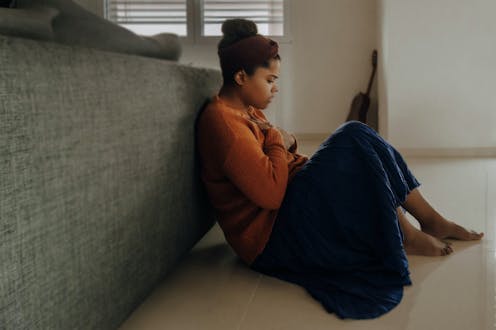
As lockdown eases today in New South Wales, and will do so in Victoria later this month, many people will begin readjusting to “normal” life.
Exiting lockdown after several months can lead to a range of feelings, from excitement and relief to stress and worry.
While it may seem counter-intuitive to feel anxious about returning to past freedoms and ways of life, it’s natural for such a major change to be stressful.
So why might it be anxiety-inducing, and how can you cope?
Mixed emotions
Humans are creatures of habit, and the lockdowns have persisted long enough for people to become comfortable with and accustomed to their lockdown daily routines – even those parts they don’t like. Reinventing a new daily routine takes effort, as it requires overriding our current habits and inertia.
Furthermore, some people may experience certain aspects of lockdown as beneficial, such as not commuting to work, spending more time with immediate family or roommates, and greater flexibility in work hours. People may miss these positive aspects after lockdown ends.
Home may also have become associated with safety and control during lockdown, so resuming life in public can seem daunting.
What’s more, while lockdown may come to an end, there’s uncertainty regarding the pandemic’s future impact on our lives, creating a new backdrop of anxiety.
For all these reasons, many people may have mixed emotions – including anxiety and fear – about leaving lockdown.
Everyone has experienced lockdown differently
While everyone responds differently, returning from lockdown may be especially difficult for some groups of people.
In particular, people with psychological conditions associated with anxiety when outside the home or interacting with people may have experienced less social stress than usual during lockdown, if they weren’t faced with as many anxiety-provoking situations. These include some people with, for example, social anxiety, agoraphobia, post-traumatic stress disorder (PTSD) or people on the autism spectrum.
At the same time, many of these people also felt greater loneliness and other anxieties during lockdown, similar to the general population.
Other people may be experiencing strong anxiety or depression for the first time, or may feel overwhelming worry about contracting COVID or the impact of the pandemic.
A wealth of research has shown that when people avoid situations that make them feel anxious, they may feel less stress immediately, but over time avoidance makes them feel as anxious or even more anxious in those situations in the future.
In contrast, engaging in these situations repeatedly helps reduce anxiety over time, as demonstrated by treatments like exposure therapy.
This process seems to manifest in lockdown. One study found that although college students’ social anxiety tended to decrease over the course of the academic year in recent years, anxiety remained high during this same period in lockdown, perhaps due to decreased social interactions.
While reduced interaction with the public during lockdown may have eased social stress for some people, it may also make it more challenging to re-engage in these interactions now.
4 ideas to help you cope
There are numerous strategies you can use to help you successfully cope with anxiety and worry as you leave lockdown behind.
1. Expect a readjustment phase
It can be helpful simply to remind yourself a period of readjustment is normal, given the unusual and stressful situation the world is facing, and any distress is generally temporary.
Keeping this in mind can lead to more realistic expectations for yourself and others who might be struggling, as well as greater compassion for yourself and others. Allowing some downtime and leeway for bad days will facilitate a quicker and smoother readjustment.
2. Talk to supportive friends
Seeking support from others you feel comfortable with and talking about how you’re feeling is also important for many people, particularly as others may be struggling with the same feelings and challenges.
3. Re-engage with fun
You can also make an effort to do activities you generally find enjoyable and/or meaningful — particularly those you haven’t been able to do during lockdown and were looking forward to, even if you have mixed feelings now about doing them.
4. Stay in the moment
Deep breathing or mindfulness practice can help people get through difficult emotions or situations following lockdown.
Although many things about the pandemic are out of our control, taking concrete steps to decrease your stress level — even in small ways — can help you feel better and more in control.
When should you see a professional?
For most people, anxiety and stress post-lockdown will be mild and will fade quickly as people settle back into their pre-lockdown routines.
However, there are some signs that indicate you may benefit from seeking professional help. These include experiencing distress or anxiety that persists for weeks and is impacting your ability to function well at work or at home.
Others may find they’re still managing to get through their day, but have strong worries about COVID or leaving the house that don’t go away and make it difficult to focus or be present. Lots of people may have bad days or occasional feelings like this, but help may be needed if these experiences are severe and/or persistent. If you are feeling hopeless and thinking of harming yourself, please seek help immediately.
While some people may require longer to readjust post-lockdown than others, there’s support available to help people return to their pre-lockdown lives and enjoy the freedoms that go along with it.
If this article has raised issues for you, or if you’re concerned about someone you know, call Lifeline on 13 11 14.
Authors: Kristin Naragon-Gainey, Associate Professor, School of Psychological Science, and Director, Emotional Wellbeing Lab, The University of Western Australia

















