

What is COP26 and why does the fate of Earth, and Australia's prosperity, depend on it?
- Written by Wesley Morgan, Researcher, Climate Council, and Research Fellow, Griffith Asia Institute, Griffith University
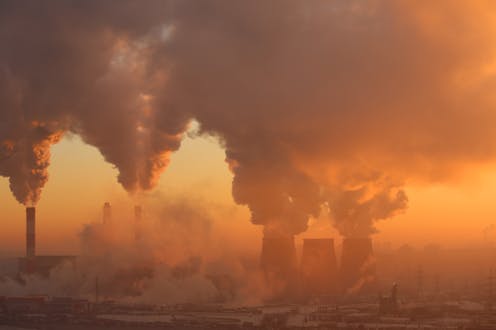
In just over two weeks, more than 100 world leaders will gather in the Scottish industrial city of Glasgow for United Nations climate change negotiations known as COP26. Their task, no less, is to decide the fate of our planet.
This characterisation may sound dramatic. After all, UN climate talks are held every year, and they’re usually pretty staid affairs. But next month’s COP26 summit is, without doubt, vitally important.
In the landmark 2015 Paris Agreement, each nation pledged to ramp up their emissions reduction pledges every five years. We’ve reached that deadline – in fact, a one-year delay due to the COVID pandemic means six years have passed.
This five-yearly requirement set a framework for countries to reach net-zero emissions across the global economy by mid-century. The Glasgow summit is the first real stress test of whether the world can meet that goal.
Global mega-trend toward a clean economy
The Paris Agreement was the world’s first truly global treaty to cut greenhouse gas emissions. It set a shared goal for countries to limit global warming to 1.5℃ above the long-term average.
The agreement has been signed and ratified by 191 of the world’s 195 countries, giving it near-universal legitimacy.
But the actual emissions-reduction commitments countries brought to Paris, known as “Nationally Determined Contributions”, left the world heading toward 3℃ of warming this century. This outcome would be cataclysmic for ecosystems and human societies.
That’s why, every five years, countries must bring progressively stronger pledges to reduce emissions.
The years since the Paris summit have seen a dramatic shift towards climate action. Today, countries representing more than two-thirds of the global economy have set a firm date for achieving net-zero emissions.
More importantly many jurisdictions – including the United States, United Kingdom, European Union, Japan and Canada – have substantially strengthened their 2030 targets. This constitutes a powerful market signal, driving a global reallocation of private and public investment from fossil fuels toward clean energy solutions.
Read more: 5 reasons why the Morrison government needs a net-zero target, not just a flimsy plan
What’s at stake in Glasgow?
While the world is moving fast, there remains a crucial gap between current pledges and the goals of the Paris Agreement. Glasgow is seen as the last chance to close that gap and keep the 1.5℃ goal within reach.
Without stronger national commitments, we risk crossing irreversible “tipping points” in the Earth’s climate system, locking in uncontrollable global warming.
The Australian government has inched toward announcing net-zero emissions by 2050. But such a commitment will not be seen as particularly helpful in Glasgow.
Read more: The net-zero bandwagon is gathering steam, and resistant MPs are about to be run over
In reality, such announcements are merely the summit’s entry ticket. Discussions have moved on, to ensuring much deeper cuts this decade.
Barring Australia, almost all advanced economies have set new 2030 targets to slash carbon pollution. By 2030 the UK, the summit’s host nation, plans to cut emissions by 68% below 1990 levels. Meanwhile, the US will cut emissions by 50-52% below 2005 levels.
The G7 countries have announced they will collectively halve emissions by 2030. There are clear expectations Australia will follow suit.
At present, Australia plans to take to Glasgow the same 2030 target it took to Paris six years ago – a 26-28% cut by 2030, from 2005 levels. Prime Minister Scott Morrison has hinted he will take an upgraded 2030 projection (rather than target), but this ruse won’t pass muster.
The Paris Agreement is about targets, and countries are required to set new targets representing “highest possible ambition”. If projections suggest we will outperform our target, a new 2030 target is clearly needed.
Global diplomatic pressure is driving a sea change in Australia’s climate politics. Just this month, the Business Council of Australia backed cuts to emissions by 46-50% by 2030. The Murdoch press has thrown its weight behind net-zero emissions. Even many conservative Nationals MPs appear to have dropped opposition to a net-zero target.
There is also dawning recognition within the Morrison government that the global energy transition is underway, and it will significantly boost Australia’s economy.
Thriving in a net-zero world
Australia’s economy is shaped by trends in the global marketplace. The international car market is switching rapidly to electric vehicles. And around the world, wind and solar energy are now cheaper than coal and gas.
Our export markets are changing too. As growing economies in Asia meet their climate targets, they will no longer want to buy coal and gas. Instead they’ll want renewable energy, delivered directly via undersea cable or stored as renewable hydrogen.
Such nations will still want Australian iron ore. But increasingly, they will want “green steel” made using hydrogen instead of coking coal.
Global demand for batteries, electric vehicles and renewable energy technologies will drive Australian exports of critical minerals – including lithium, cobalt and rare earths. Globally, these minerals will be worth A$17.6 trillion over the next two decades.
With the right policy settings, Australia could grow a clean export mix worth A$333 billion annually, almost triple the value of existing fossil fuel exports.
Getting to net-zero could also create 672,000 jobs, and generate A$2.1 trillion in economic activity by mid-century.
Commitments in Glasgow will spark a global race toward net-zero. But it is not a race we should be scared of. If we embrace the transition, Australia will prosper. It’s time to get started – we have a world to win.
Read more: Asia's energy pivot is a warning to Australia: clinging to coal is bad for the economy
Authors: Wesley Morgan, Researcher, Climate Council, and Research Fellow, Griffith Asia Institute, Griffith University

















