

People want to use bleach and antiseptic for COVID and are calling us for advice
- Written by Darren Roberts, Conjoint Associate Professor in clinical pharmacology and toxicology, UNSW
Through our work at the New South Wales Poisons Information Centre, we’re used to receiving calls from concerned parents about what to do if their child has accidentally drunk some cleaning product. We also take calls from health professionals for advice on how to manage poisonings.
But over the past 18 months, we’ve seen an increasing number of people calling us about home remedies to prevent or cure COVID-19, particularly during an outbreak. They’re calling for advice before using items such as bleach or disinfectant. Or they’re calling to ask about side-effects after gargling, spraying or bathing in them.
When asked about the reason for using such products, callers say they did not know they could be harmful. Some say they thought it was better to do something, rather than nothing.
We’re concerned about the use of unproven COVID-19 home remedies. Here are some of the more common ones people have called our 24-hour poisons information service about, the types that can need medical care.
1. Inhaling hydrogen peroxide
Hydrogen peroxide is used in household disinfectants, chlorine-free bleaches, stain removers and hair dyes. And people have been calling about inhaling products containing hydrogen peroxide as a fine mist (called nebulising).
Hydrogen peroxide (1-1.5%) mouthwashes have been recommended as an antiseptic before a dental procedure. However, results about whether it kills SARS-CoV-2, the virus that causes COVID-19, are conflicting.
Nebulising hydrogen peroxide can cause irritation and swelling to the nose, throat and lungs. People can develop a cough and become short of breath; it can cause persistent damage to the lungs. These symptoms can be misinterpreted as a lung infection. If you have COVID-19, nebulising hydrogen peroxide can make you sicker and prolong your recovery.
People also report nausea and vomiting after nebulising hydrogen peroxide. The risk is increased with solutions of higher concentrations, although we do not believe any concentration is safe.
Read more: Thinking of trying ivermectin for COVID? Here's what can happen with this controversial drug
2. Gargling or swallowing antiseptics
People have also called about gargling or swallowing strong antiseptics. These can cause irritation, swelling and pain to the mouth, as well as vomiting, diarrhoea and stomach pains.
Gargling or swallowing corrosive household cleaning products, such as the type you’d use in your kitchen or bathroom, is particularly unsafe. This can lead to life-threatening injuries, including rupture and bleeding of the upper gut, between the mouth and stomach.
A recently promoted home remedy is gargling antiseptics containing povidone-iodine.
Some low concentration (0.5-1%) of products containing povidone-iodine can be gargled. And povidone-iodine (0.5%) mouthwash has been recommended before a dental procedure to prevent transmission of SARS-CoV-2.
Small pilot studies have suggested that similar low-strength gargle and nasal sprays may shorten the survival of SARS-CoV-2 in the nose and mouth. But these results should be confirmed in larger studies.
Although some people are allergic to povidone-iodine, low concentration solutions are usually safe when applied in the nose or mouth for a few months.
However, many products contain much higher concentrations of povidone-iodine and other chemicals designed for use on the skin.
So swallowing, gargling or inserting these products in the nose is not recommended.
Read more: Gargling with iodine won't stop you getting COVID
3. Bathing in bleach or disinfectant
Bathing in household cleaning products (such as bleach or disinfectant), or applying them directly to the skin, can cause mild-to-moderate irritation and rashes.
Burns can occur with stronger products.
Read more: Bleach, bonfires and bad breath: the long history of dodgy plague remedies
4. Spraying face masks
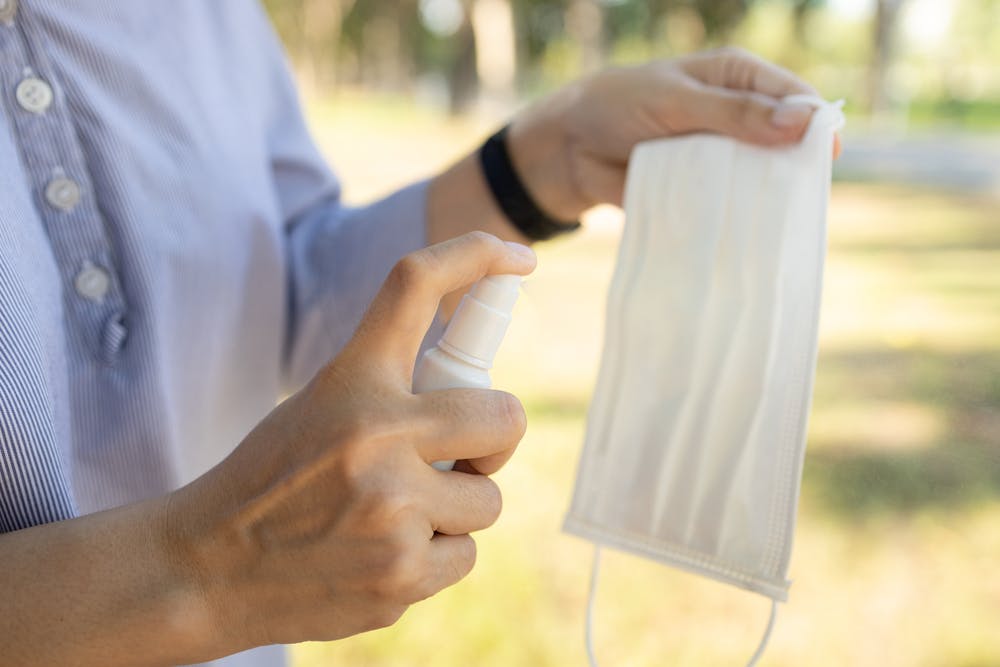
Routinely spraying disinfectants into face masks, and then breathing in the fumes and residue for a prolonged period, can also harm.
This can result in irritation to the throat and lungs, dizziness, headache and nausea.
5. Taking high-dose vitamins
Taking over-the-counter supplements, including vitamins, for a prolonged period is also a concern as high doses can have side-effects:
vitamin C can cause kidney stones
zinc can cause loss of taste or smell
vitamin D can cause high concentrations of calcium in the blood, with effects including headache, thirst and, uncommonly, seizures.
Read more: Vitamins and minerals aren't risk-free. Here are 6 ways they can cause harm
It’s a confusing time
COVID-19 is arguably the most confusing time in recent history for making decisions about our health care. While people debate if any of these proposed home remedies work, it is essential to also consider their potential harms.
Deaths and other complications are reported in people overseas due to well-meaning use of proposed treatments and home remedies. We hope to avoid this in Australia.
If this article raises concerns for you or for someone you know about a COVID-19 home remedy, call the Poisons Information Hotline from anywhere in Australia on 131 126. This evidence-base advice is available 24 hours a day. For life-threatening symptoms, call 000.
Authors: Darren Roberts, Conjoint Associate Professor in clinical pharmacology and toxicology, UNSW

















