

Getting vaccinated is the act of love needed right now to support the survival of Aboriginal and Torres Strait Islander peoples during the pandemic
- Written by Lisa Jackson Pulver, Deputy Vice-Chancellor, Professor of Public Health and Epidemiology, University of Sydney
Redfern’s Community Chaplain Pastor Ray Minniecon, recently made a compelling video urging people to get the COVID-19 vaccination. Pastor Minniecon regarded the simple act of becoming vaccinated as an act of love for family and community, encouraging all to get vaccinated as quickly as possible.
There have been many barriers for Aboriginal communities to access the vaccine and culturally safe health-care during the pandemic. However for some communities, access to health services is a struggle that predates the COVID-19 pandemic.
Aboriginal people have faced decades of exclusion from government decision making resulting in poor and inappropriate housing and service provision which has impacted their health.
This did not change when the Commonwealth government declared Aboriginal and Torres Strait Islander peoples as a priority community during the initial roll-out of the COVID-19 vaccine.
Aboriginal communities have struggled to get access to the vaccine. Some were also concerned by inconsistent messaging about the vaccine from federal and state governments.
All of this has contributed to a lack of trust in governments to ensure the rights and needs of Aboriginal people and communities are met.
A big concern about the current levels of vaccination in community is for younger children, Elders and others ineligible or unable to get the jab. These people could face exposure to COVID and other significant diseases.
Vulnerable communities taking the lead
Communities recognised the threat of this outbreak early on with actions such as developing a pandemic response plan (Apunipima, January 2020) and the development of appropriate language resources for communities (Northern Territory Land Councils, February 2020. In addition, The National Aboriginal Community Controlled Health Organisation co-chaired the first Aboriginal and Torres Strait Islander Advisory Group on COVID-19 in March 2020.
Particularly for those living in communities outside of urban and regional areas, the risks related to COVID-19 are exacerbated by many factors. These include existing chronic illnesses and disabilities, mobility of people between communities and regions, poor and overcrowded housing and reliance on health outreach for regular health care.
Much of the care to communities is through the 143 local Aboriginal community controlled health organisations and their 300 clinics.
Recent gains by the health sector in the National Agreement on Closing the Gap offers a new era of collaboration between government, non-government organisations and community-controlled organisations. Recently in Western NSW we saw the positive impact of such collaboration when combined efforts resulted in an increase of COVID-19 vaccine doses from 20% first dose coverage to 70% in a month.
However these organisations - like many other health-care providers in Australia - are dealing with significant staffing shortages because of COVID-related workloads, furloughing of staff and of staff themselves becoming sick.
Read more: COVID in Wilcannia: a national disgrace we all saw coming
Low vaccination rates and poor housing in Aboriginal communities
The current outbreaks of the COVID-19 Delta variant have highlighted the gap in health services for communities already under-serviced. Some of these communities have witnessed the virus “rip through communities”.
This is what has been seen in NSW and many other parts of Australia, despite the tremendous vaccine uptake of Aboriginal community members. Aboriginal people continue to be vaccinated at a rate that is 20% lower than the general population. This indicates devastating outbreaks will continue - not only in remote regions, but in communities closer to towns and cities.
Modelling shows this vaccine uptake lag could translate into a doubling of deaths.
Pat Turner, CEO of the National Aboriginal Community Controlled Organisation argues that to protect communities, the aim must be to vaccinate as close as possible to 100% of Aboriginal people over the age of 12. Auntie Pat, whom Indigenous people will often title thus as a mark of respect, also describes how overcrowded housing and lack of places to quarantine has enabled the wildfire-like spread of COVID in some remote NSW communities, causing sickness and loss of life.
COVID is causing a further housing crisis in places where many Aboriginal people live. One example is the NSW North Coast where jobs have become precarious. This is due to long and fluctuating lockdowns and property demand from wealthy Sydney-siders anxious to escape to regional areas.
Escalating house prices diminished the already stressed stock of affordable rentals held by multiple housing organisations. In addition, rent rises under these conditions have pushed families into homelessness, poverty and higher risk of COVID infection.
These challenges and others have been years in the making, with calls from Aboriginal organisations’ for a centralised housing support strategy falling on deaf ears.
The pandemic has amplified ongoing inequalities for Aboriginal and Torres Strait Islander people. Communities have been placed at risk of losing their jobs and roofs over their heads at the same time. Overcrowding and homelessness bring multiple risks to health and well-being. These risks range from infectious diseases to mental health and safety concerns.
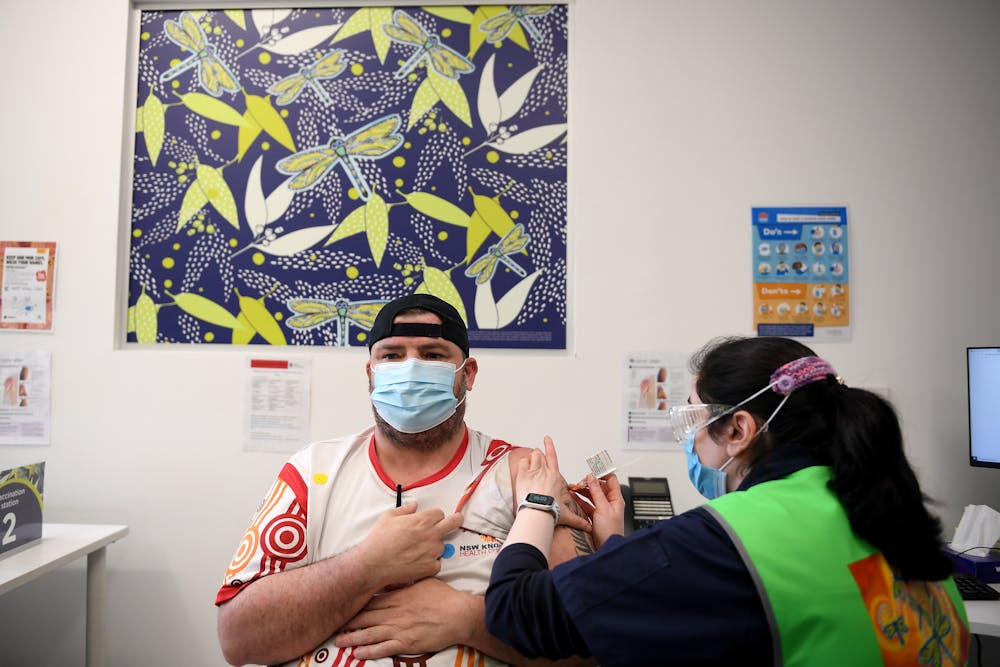
Uncle Ray’s and Auntie Pat’s messages, along with those of many other Aboriginal and Torres Strait Islander epidemiologists, researchers, doctors, nurses, health-workers and community leaders, are exactly what Australia needs right now. Why? because not leaving anyone behind is a characterisic of how we care for one another.
As Auntie Yvonne Cadet-James says:
People shouldn’t be listening to gossip, there’s a lot of that in the media […] the more we get vaccinated, the more we build up that immunity as a community, so that protects everybody.
The message is clear - get vaccinated, look after one another, don’t leave anyone behind. Find love in your heart and act to protect yourself, your family and your community.
For government, Auntie Pat says, the time for others to make decisions for Aboriginal and Torres Strait Islander people is over.
Now is the time to address the long standing inequities in health, well-being and the ongoing housing and employment crisis impacting Aboriginal people.
During this age of COVID, Australians must show the world our full capability to listen, get behind and champion the rights and needs of Aboriginal people.
We have never been so strong. And we can’t leave anyone behind.
Authors: Lisa Jackson Pulver, Deputy Vice-Chancellor, Professor of Public Health and Epidemiology, University of Sydney

















