

a parliamentary inquiry into the creative industries gives us a plan for a plan
- Written by Julian Meyrick, Professor of Creative Arts, Griffith University
Fourteen months after it was announced, the House of Representatives Standing Committee on Communications and the Arts has handed down its report, “Sculpting A National Cultural Plan”, on Australia’s cultural and creative industries and institutions.
Labor finished six years in government in 2013 with the launch of Creative Australia, our last national cultural policy. The Coalition finishes an eight year stretch with a call to think about developing one. Still, a plan for a plan is better than no plan at all.
The 205-page document is broken into six sections. They cover the composition of the cultural sector, approaches to evaluating it, the impact of COVID-19 on artists and organisations (spoiler alert, it isn’t good), and the problem of arts education in schools (and, glancingly, at a tertiary level).
Read more: Why an education in visual arts is the key to arming students for the future
As befits an investigative inquiry, the report devotes considerable space to describing what the sector does and communicating the views of those who work in it. There is frequent quotation from 352 submissions, and responses to a related survey.
A useful tip: read “Appendix F. Labor Members – Additional Comments” first. It raises the issues the rest of the report avoids, particularly around two institutions crucial to any cultural plan of national scope, the Australia Council for the Arts and the ABC.

Light on calls for action
There are five terms of reference, and some are addressed in more detail than others. The first two are the most crucial: culture’s “direct and indirect economic benefits and employment opportunities”, and its “non-economic benefits [that] enhance community, social well-being and … Australia’s national identity”.
The terms were provided by the Minister for Communications, and it is not the job of the committee to contest them.
Even so, both their order and wording is restrictive. Slicing culture into economic and non-economic benefits is a binary with limited policy application. Making the former the primary lens has a reductive effect on all discussion thereafter.
In respect of Australian cultural policy’s three favoured key terms – they seem on perpetual rotation – there is a return to the limelight for “access” (74 mentions), while “innovation”, a preoccupation of the Turnbull government slips to a supporting role (46 mentions), and “excellence”, dominant in the years when George Brandis ran the portfolio, becomes a spear-carrier (4 mentions).
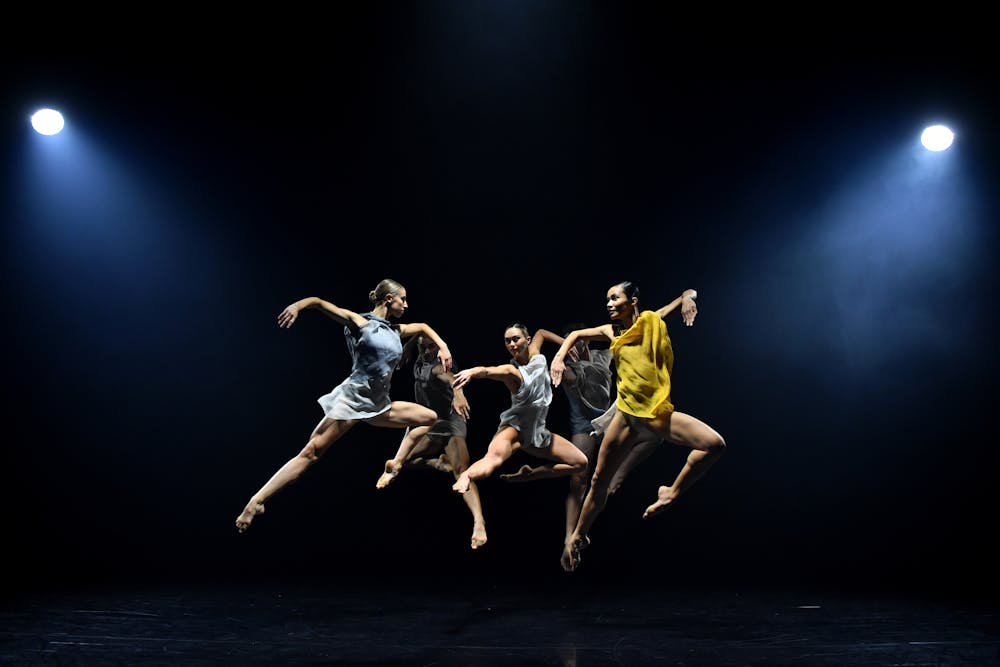
 Bangarra Dance Theatre performers at the reopening ceremony for the Australian Museum last year. Slicing culture into economic and non-economic benefits is a binary with limited policy application.
Lisa Maree Williams, Getty/AAP
Bangarra Dance Theatre performers at the reopening ceremony for the Australian Museum last year. Slicing culture into economic and non-economic benefits is a binary with limited policy application.
Lisa Maree Williams, Getty/AAP
Submissions show a diverse mix of people, organisations and art forms. A New Approach (ANA) is the think tank most frequently cited though (50+ mentions), and its comments often have headline status.
Read more: The limits of advocacy: arts sector told to stop worrying and be happy
The report’s 22 recommendations can be divided into three categories: restorations, bespoke suggestions, and calls for further action.
The first are welcome, though in rejoicing at the return of the word “arts” to the Department of Infrastructure, Transport, Regional Development and Communications, or the resumption of ABS cultural and creative satellite accounts (dedicated statistics on the sector’s activities) we should remember who removed them.
The bespoke suggestions are interesting, even when their impact is not immediately apparent (an app for information on arts events) or their implementation likely to be contested (20% of local revenue for streaming services to be spent on local content).
The calls for action are light-on, even by the standards of a broad-ranging report. Discussion of the national identity aspects of Australian culture is thin, for example. This leaves the report at a disadvantage when considering the non-economic benefits of the arts – the ones most people regard as synonymous with them.
Apart from the awkwardness of talking about culture in this displaced way (do we refer to the “non-economic benefits of the health system”?), it leaves the report looking truncated and partisan.
 This report looks truncated and partisan.
Joel Carrett/AAP
This report looks truncated and partisan.
Joel Carrett/AAP
Apolitical
There is discussion of culture’s contribution to our mental health, but not our political health; to social cohesion but not social change. The arts come across as soft-edged, catering to emotional needs like “confidence” and “hope” rather than intellectual ones, like insight and truth.
On the economic side, there are lots of figures, but it is hard to know how to parse them. They are sourced in different ways by different agencies, and append different production contexts (literary publishing vs. performing arts vs. digital games). The report swings between terms: “culture”, “creative industries”, “cultural and creative industries” – all “otherwise known as the arts”.
Read more: Beyond bulldust, benchmarks and numbers: what matters in Australian culture
The aggregate figure of $111.7 billion of culture’s annual economic contribution is repeated, though according to the ABS, 50% of this is “non-cultural”, involving computing, industrial design, fashion and retail. The “arts industry”, including broadcast and electronic media, is far smaller, just $14 billion.
Such definitional slippages suggest these metrics are more ritual offerings to the ideological gods than a serious guide to policy-making.
Here, ANA should be careful how it manages relations with the government. Uncritically adopting an econometric mind-set is unwise, as is insistent reference to a “middle Australia” that has little sociological substance to it. To the extent ANA mirrors the report’s “market first” assumptions, it aligns with the Coalition’s view of the cultural sector.
Business-speak, with one exception
The exception – and it stands out markedly – is the report’s discussion of, and proposals for, Indigenous arts and culture.
There is not the same division of the economic and non-economic, and respect is afforded culture’s intrinsic worth. (“Country, culture and community are, for many Aboriginal and Torres Strait Islander people, intrinsically linked and the well-being and success of one depends on the health of the other”.)
 Artist Vincent Namatjira pictured in 2020 with his Archibald Prize winning portrait of Australian Rules footballer and community leader Adam Goodes.
Iwantja Arts/AGNSW
Artist Vincent Namatjira pictured in 2020 with his Archibald Prize winning portrait of Australian Rules footballer and community leader Adam Goodes.
Iwantja Arts/AGNSW
The closest the report comes to adopting this holistic tone elsewhere is in reference to heritage institutions and their “important preservation and curation service”. Though even here, there is a rapid shift to focusing on spill-overs (“enhancing well-being, fostering shared values [and] supporting social cohesion”).
The 10-person committee has two Coalition chairs and a Coalition majority of six to four. This is reflected in the report’s language of business-speak, used not only to describe what the sector does but to validate it. Thus the report is firmly “inside the box” of 40 years of neoliberal prescriptions on small government, culture-as-enterprise and value-as-money.
That said, the committee has a number of members on it with diverse backgrounds and interesting pre-Parliamentary experience. It is not a collection of the usual suspects.
This raises the question of whether the report’s “market first” perspective comes from the committee or from the sector itself, which, after 40 years of being told its value is to be measured in dollars now believes it.
The report cites some challenges to this viewpoint, but they feel muted. The suspicion is that what was once a rhetoric of convenience is now a self-view. It is, for example, a very bad idea to call in the Productivity Commission to consider “arrangements which govern funding of artistic programs” (one report recommendation) given its traditional hostility to all forms of producer subsidy and its perennial muddling of equity and efficiency issues.
Likewise omitting the Australia Council and the ABC from detailed discussion should flash a warning light. Much government policy-making now involves vested interest lobbying and ministerial fiat, as the Grattan Institute’s ex-chief executive, John Daley (who has worked with ANA) noted in a recent report on removing barriers to policy reform.
Read more: Latest arts windfalls show money isn't enough. We need transparency
“It’s goodbye Whitlam, hello pork-barrel” a colleague said to us recently. How then should we greet a report that says nothing about the public sector or intermediary cultural agencies established precisely to avoid such political control of arts and culture?
Authors: Julian Meyrick, Professor of Creative Arts, Griffith University

















