

5 major heatwaves in 30 years have turned the Great Barrier Reef into a bleached checkerboard
- Written by Terry Hughes, Distinguished Professor, James Cook University
Just 2% of the Great Barrier Reef remains untouched by bleaching since 1998 and 80% of individual reefs have bleached severely once, twice or three times since 2016, our new study reveals today.
We measured the impacts of five marine heatwaves on the Great Barrier Reef over the past three decades: in 1998, 2002, 2016, 2017 and 2020. We found these bouts of extreme temperatures have transformed it into a checkerboard of bleached reefs with very different recent histories.
Whether we still have a functioning Great Barrier Reef in the decades to come depends on how much higher we allow global temperatures to rise. The bleaching events we’ve already seen in recent years are a result of the world warming by 1.2℃ since pre-industrial times.
World leaders meeting at the climate summit in Glasgow must commit to more ambitious promises to drastically cut greenhouse gas emissions. It’s vital for the future of corals reefs, and for the hundreds of millions of people who depend on them for their livelihoods and food security.
Coral in a hotter climate
The Great Barrier Reef is comprised of more than 3,000 individual reefs stretching for 2,300 kilometres, and supports more than 60,000 jobs in reef tourism.
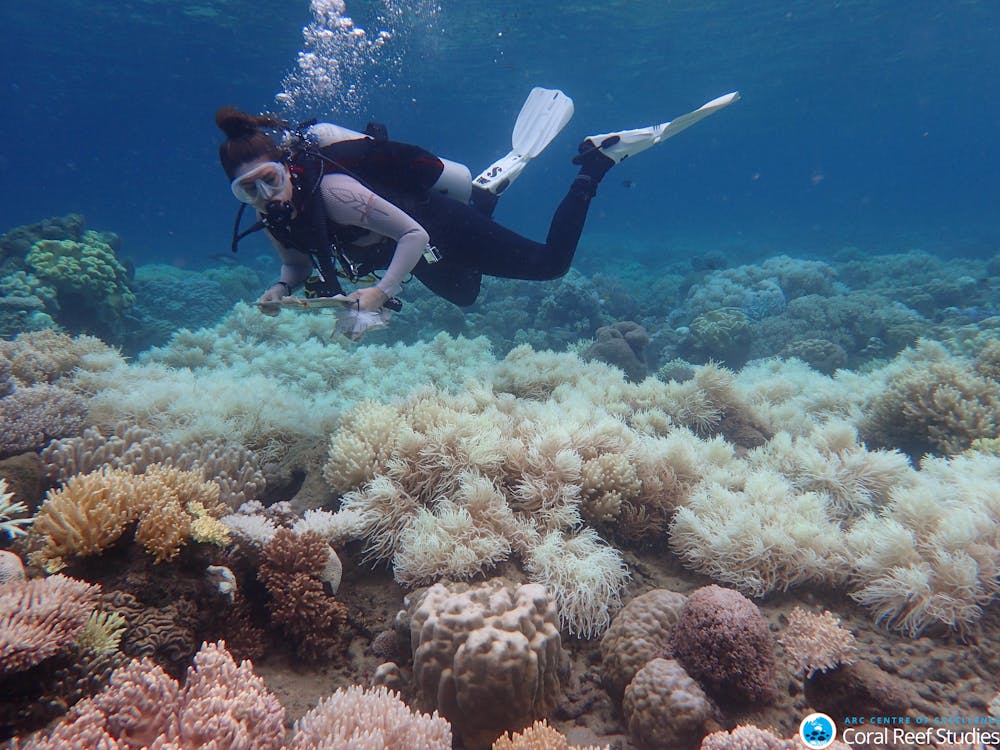
Under climate change, the frequency, intensity and scale of climate extremes is changing rapidly, including the record-breaking marine heatwaves that cause corals to bleach. Bleaching is a stress response by overheated corals, where they lose their colour and many struggle to survive.
If all new COP26 pledges by individual countries are actually met, then the projected increase in average global warming could be brought down to 1.9℃. In theory, this would put us in line with the goal of the Paris Agreement, which is to keep global warming below 2℃, but preferably 1.5℃, this century.
However, it is still not enough to prevent the ongoing degradation of the world’s coral reefs. The damage to coral reefs from anthropogenic heating so far is very clear, and further warming will continue to ratchet down reefs throughout the tropics.
Read more: Not declaring the Great Barrier Reef as 'in danger' only postpones the inevitable
Ecological memories of heatwaves
Most reefs today are in early recovery mode, as coral populations begin to re-build since they last experienced bleaching in 2016, 2017 and 2020. It takes about a decade for a decent recovery of the fastest growing corals, and much longer for slow-growing species. Many coastal reefs that were severely bleached in 1998 have never fully recovered.
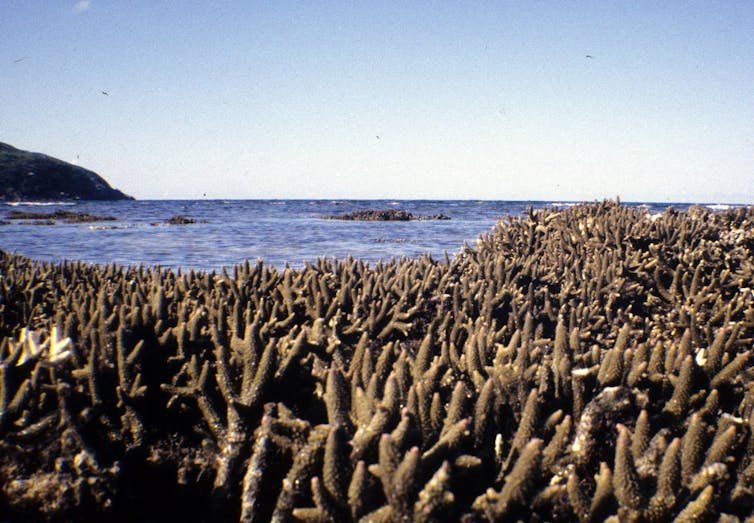
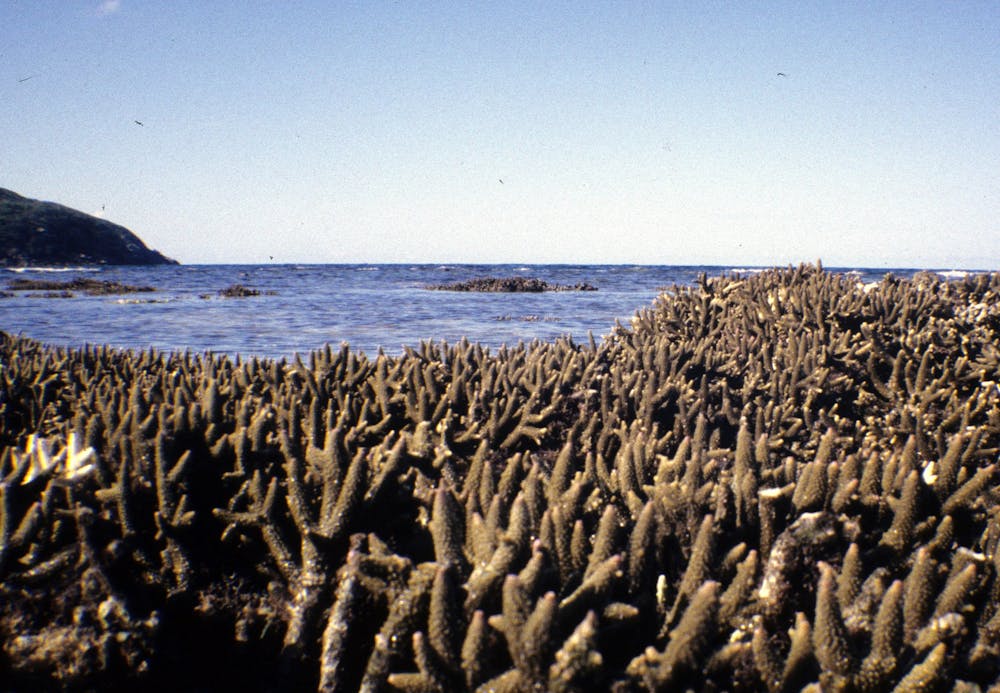 The fringing reef flat at Orpheus Island on the central Great Barrier Reef, prior to mass coral bleaching in 1998.
Bette Willis and Andrew Baird, Author provided
The fringing reef flat at Orpheus Island on the central Great Barrier Reef, prior to mass coral bleaching in 1998.
Bette Willis and Andrew Baird, Author provided
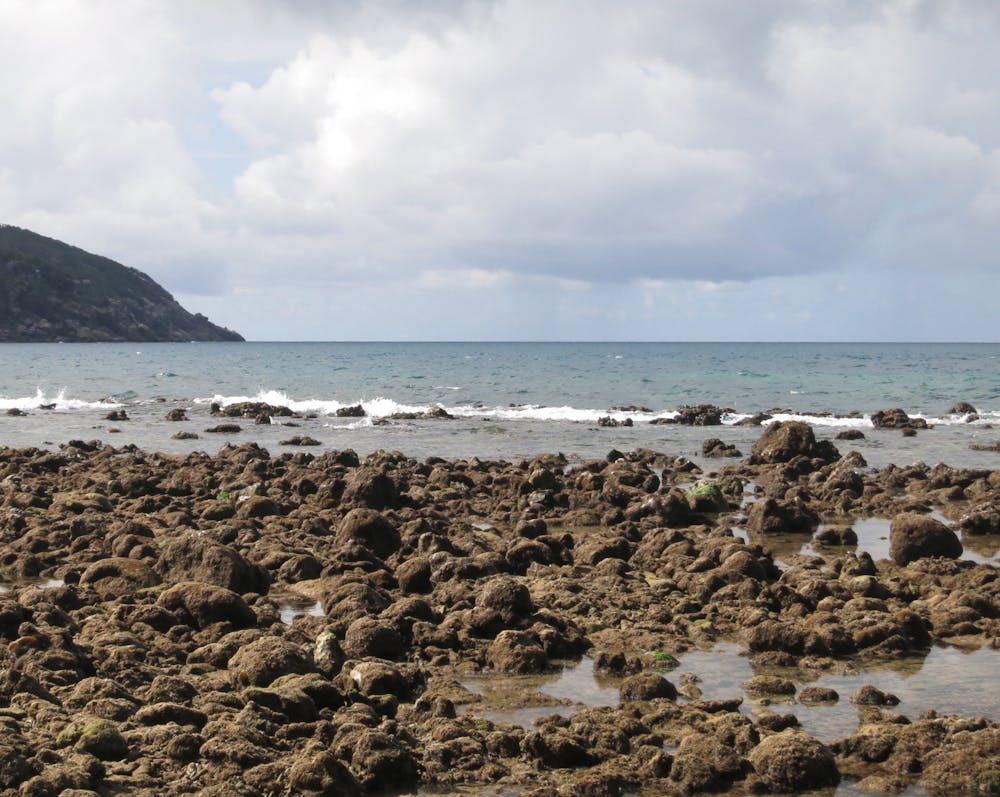 The same reef flat at Orpheus Island after further bleaching in 2002 and 2016.
Bette Willis and Andrew Baird, Author provided
The same reef flat at Orpheus Island after further bleaching in 2002 and 2016.
Bette Willis and Andrew Baird, Author provided
Each bleaching event so far has a different geographic footprint. Drawing upon satellite data, we measured the duration and intensity of heat stress that the Great Barrier Reef experienced each summer, to explain why different parts were affected during all five events.
The bleaching responses of corals differed greatly in each event, and was strongly influenced by the recent history of previous bleaching. For this reason, it’s important to measure the extent and severity of bleaching directly, where it actually occurs, and not rely exclusively on water temperature data from satellites as an indirect proxy.
We found the most vulnerable reefs each year were the ones that had not bleached for a decade or longer. On the other hand, when successive episodes were close together in time (one to four years apart), the heat threshold for severe bleaching increased. In other words, the earlier event had hardened regions of the Great Barrier Reef to subsequent impacts.
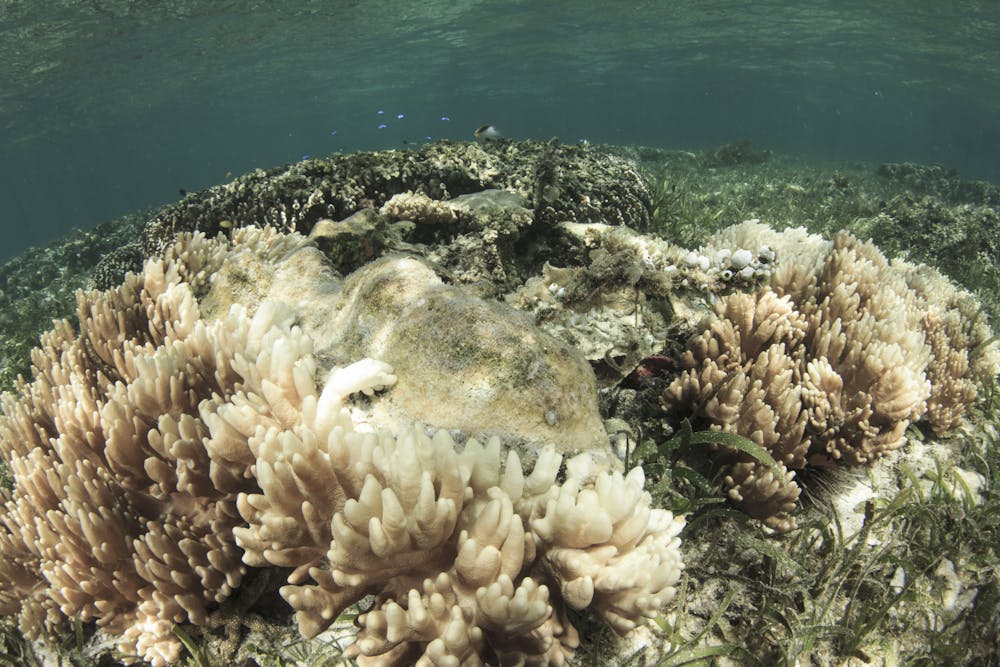 Bleaching is a stress response by overheated corals.
Shutterstock
Bleaching is a stress response by overheated corals.
Shutterstock
For example, in 2002 and 2017, it took much more heat to trigger similar levels of bleaching that were measured in 1998 and 2016. The threshold for bleaching was much higher on reefs that had experienced an earlier episode of heat stress.
Similarly, southern corals, which escaped bleaching in 2016 and 2017, were the most vulnerable in 2020, compared to central and northern reefs that had bleached severely in previous events.
Many different mechanisms could generate these historical effects, or ecological memories. One is heavy losses of the more heat-susceptible coral species during an earlier event – dead corals don’t re-bleach.
Read more: We just spent two weeks surveying the Great Barrier Reef. What we saw was an utter tragedy
Nowhere left to hide
Only a single cluster of reefs remains unbleached in the far south, downstream from the rest of the Great Barrier Reef, in a small region that has remained consistently cool through the summer months during all five mass bleaching events. These reefs lie at the outer edge of the Great Barrier Reef, where upwelling of cool water may offer some protection from heatwaves, at least so far.
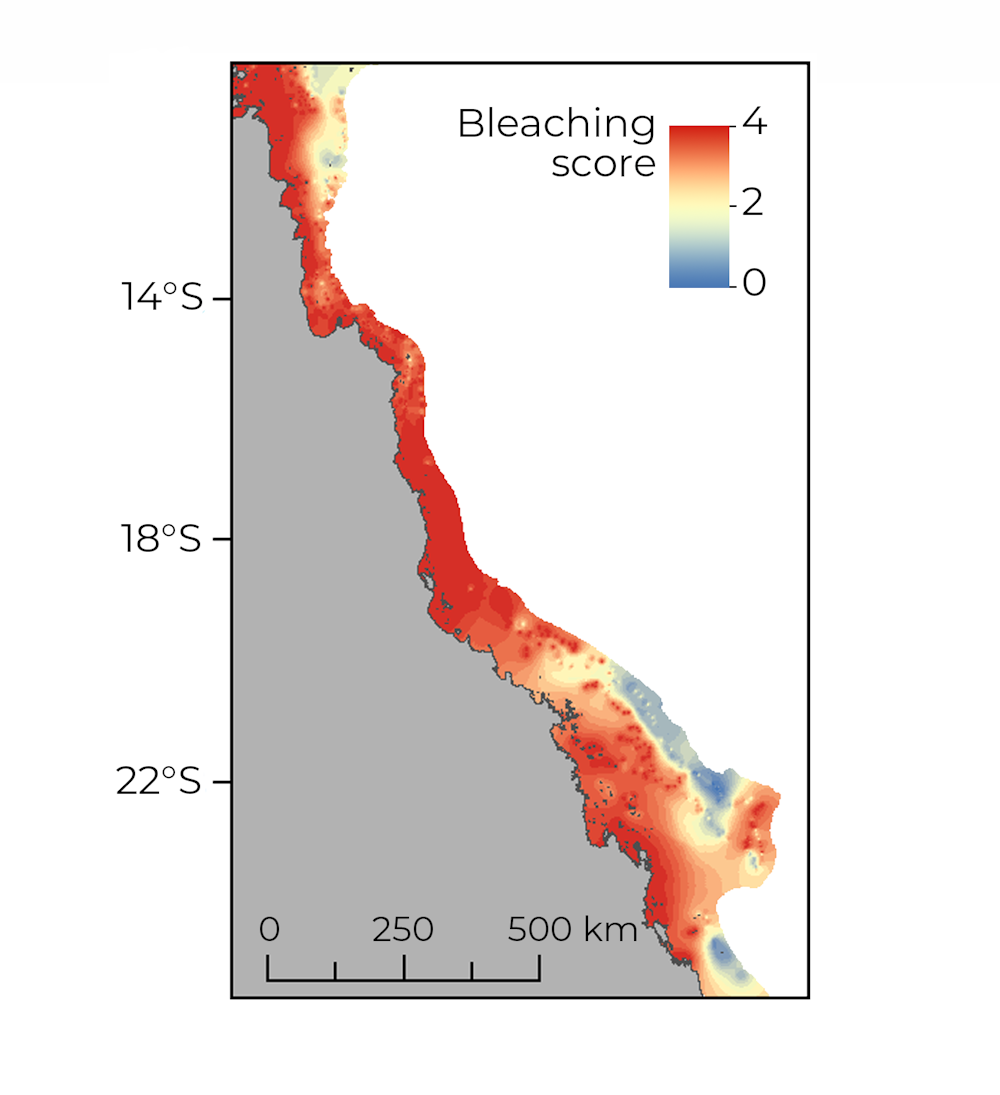 Map of the Great Barrier Reef showing the cumulative level of bleaching observed in 2016, 2017 and 2020. The colours represent the intensity of bleaching, ranging from zero (category 1, dark blue) to severe bleaching that affected more than 60% of corals (category 4, red)
Author provided
Map of the Great Barrier Reef showing the cumulative level of bleaching observed in 2016, 2017 and 2020. The colours represent the intensity of bleaching, ranging from zero (category 1, dark blue) to severe bleaching that affected more than 60% of corals (category 4, red)
Author provided
In theory, a judiciously placed network of well-protected, climate-resistant reefs might help to repopulate the broader seascape, if greenhouse gas emissions are curtailed to stabilise temperatures later this century.
But the unbleached southern reefs are too few in number, and too far away from the rest of the Great Barrier Reef to produce and deliver sufficient coral larvae, to promote a long-distance recovery.
Instead, future replenishment of depleted coral populations is more likely to be local. It would come from the billions of larvae produced by recovering adults on nearby reefs that have not bleached for a while, or by corals inhabiting reef in deeper waters which tend to experience less heat stress than those living in shallow water.
Read more: 'This situation brings me to despair': two reef scientists share their climate grief
Future recovery of corals will increasingly be temporary and incomplete, before being interrupted again by the inevitable next bleaching event. Consequently, the patchiness of living coral on the Great Barrier Reef will increase further, and corals will continue to decline under climate change.
Our findings make it clear we no longer have the luxury of studying individual climate-related events that were once unprecedented, or very rare. Instead, as the world gets hotter, it’s increasingly important to understand the effects and combined outcomes of sequences of rapid-fire catastrophes.
Authors: Terry Hughes, Distinguished Professor, James Cook University

















