

Fair access to university depends on much more than making students 'job-ready'
- Written by Sally Patfield, Postdoctoral Fellow, Teachers and Teaching Research Centre, University of Newcastle
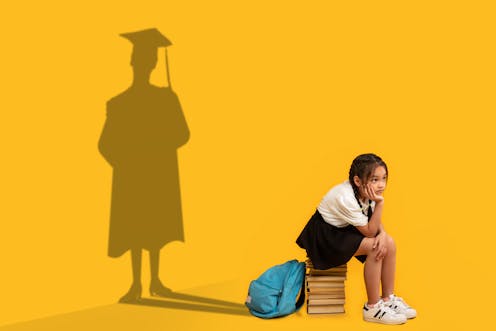
Today is World Access to Higher Education Day, but Australia is still a long way off fair access for students from all backgrounds.
The enrolment share of students from low socio-economic, regional and non-English-speaking backgrounds fell in 2019. And that was before the COVID-19 pandemic hit these students hard, affecting both their expectations and pathways to higher education. Access rates of other equity groups, such as students from remote areas, remain low.
Achieving equitable access is a complex challenge. Our longitudinal study of school student aspirations shows we need to think more broadly about how young people see the meaning and value of higher education.
Of course they see its value for getting a job. But they also value higher education for intellectual enquiry, social interaction, personal growth and the desire to just experience “university life”. And students from equity groups in particular valued these last four aspects the most.
Higher education policy has often focused on the economic goals of participation. However, our research suggests that policies to support fair access need to do more than funnel students into degrees and aim to make them “job-ready”.
To appeal to a more diverse range of young people, equity policy must take heed of what higher education actually represents to prospective applicants.
Read more: Pandemic widens gap between government and Australians' view of education
Equity and ‘Job-Ready Graduates’
The federal government has long had policies targeted at widening participation, including measures in the 2020 Job-Ready Graduates Package. Australian universities have also long had a vocational focus.
The “Job-Ready Graduates” reforms include new funding supports for students from equity groups. For example, there is a Tertiary Access Payment for regional and remote students and a new Indigenous, Regional and Low SES Attainment Fund.
To influence course choice, fees have been reduced in “national priority” areas and increased in areas deemed to not directly benefit the labour market.
This particular change, however, is not about equity. It’s about meeting perceived workforce needs. It may well decrease diversity in certain degrees. The impacts on the workforce profiles of different industries could have wide-ranging consequences.
Read more: 3 flaws in Job-Ready Graduates package will add to the turmoil in Australian higher education
What matters to prospective students
Our longitudinal study of young people’s post-school aspirations looked at the way school students start to form ideas about university during late primary and secondary school. The study drew on focus groups with 310 university aspirants from 30 government schools in New South Wales.
We found young people were interested in higher education for many reasons. But there were important differences in their interest depending on background.
A way to get a job
While students did value higher education for employment, these students tended to match the profile of the “traditional” university applicant – high-achieving and from a higher socio-economic background.
Young people who mentioned employment often focused on the need for a qualification in today’s job market. This view reduced the experience of university to the degree awarded at the end. As one student put it:
“I would definitely go to uni because you can’t really get a job without a piece of paper.”
Its inherent value
Students from a wide range of backgrounds saw inherent value in higher education. But those living in lower socio-economic circumstances tended to focus on this intrinsic value rather than employment. For example, one student told us:
“I’ll definitely go to university, that’s the thing – the top of the list. And that’s the thing with university […] there’s so much that’s being offered to attract more students, it ticks all your interests […] I adore history and geography, and all sorts of things that are not going to be focused on my career, but I’ll still do them anyway.”
Many of these students saw university as an opportunity to meet people who share similar interests and passions. This was particularly the case for young people attending relatively disadvantaged schools:
“It’s going to be a lot of learning opportunities with like-minded people that are open-minded […] They care and they want to do something, not be with people that don’t care and don’t want to do anything.”
Equity is much more than being ‘job-ready’
The social justice and economic goals of higher education have long been in tension within policy. Employability agendas, such as “Job-Ready Graduates”, narrowly link the value of higher education to economic objectives. In doing so, they obscure important philosophical questions about the purpose of higher education, particularly for those from equity groups.
Other research has similarly shown that university students link the purpose of higher education to employment, personal growth and societal change. University students from equity target groups can also have much more expansive views of “success” than what is portrayed in policy.
Read more: What's the purpose of university? Your answer may depend on how much it costs you
There is a clear need, therefore, for the intrinsic value of higher education – not just its economic value – to be more widely promoted in equity policy and practice.
Universities often use outreach activities such as campus visits and mentoring programs to spark interest among young people from equity groups. Such activities should not just narrowly focus on degrees and jobs.
We also need to continue to ask questions about the nature of higher education today, and what young people from equity groups are being asked to participate in, rather than just the outcome of participation.
A more equitable higher education sector can play a critical role in creating a more just society. Again, this is not just in terms of economic value, but in terms of how students see themselves and society. On World Access to Higher Education Day, our research challenges the sector to think more genuinely about fair access.
Authors: Sally Patfield, Postdoctoral Fellow, Teachers and Teaching Research Centre, University of Newcastle

















