

Modern Australian
Men's Weekly

.

How to make roads with recycled waste, and pave the way to a circular economy

  • Written by Salman Shooshtarian, Research Fellow, RMIT University
How to make roads with recycled waste, and pave the way to a circular economy

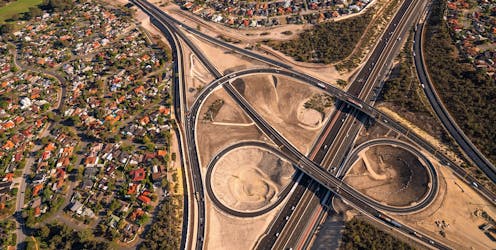
It cost A$49 million to add 12.5 kilometres of extra lanes to Western Australia’s Kwinana Highway, south of Perth’s CBD. That’s not unusual. On average, building a single lane of road costs about about A$5 million per kilometre.

What is unusual about this stretch of extra freeway is not the money but the materials beneath the bitumen: two stabilising layers comprised of 25,000 tonnes of crushed recycled concrete, about 90% of which came from the demolition of Subiaco Oval (once Perth’s premier football ground).

Recycling building and construction materials remains the exception to the rule in Australia. The National Waste Policy agreed to by federal, state and territory governments has a target of 80% resource recovery by 2030. It’s currently about 40%.

Of the 74 million tonnes of waste generated in Australia in 2020, masonry materials comprised about 22.9 million tonnes. Plastics, by comparison, comprised about 2.5 million tonnes. Of the 61.5 million tonnes of “core waste” managed by the waste and resource recovery sector, 44% (27 million tonnes) came from the construction and demolition sector, compared with 20% (12.6 million tonnes) from households and local government activities.

Most of this waste – concrete, brick, steel, timber, asphalt and plasterboard or cement sheeting – could be reused or recycled. It ends up in landfill due to simple economics. It’s cheaper to buy new materials and throw them away rather than reuse and recycle.

Changing this equation and moving to a circular economy, in which materials are reused and recycled rather than discarded in landfill, is a key goal to reduce the impact of building and construction on the environment, including its contribution to climate change.

Read more: A third of our waste comes from buildings. This one's designed for reuse and cuts emissions by 88%

The economics of ‘externalities’

The fact it is more “economic” to throw materials away than reuse them is what economists call a market failure, driven by the problem of “externalities”. That is, the social and environmental costs of producing, consuming and throwing away materials is not reflected in the prices charged. Those costs are instead externalised – borne by others.

In such cases there is a legitimate – and necessary – role for governments to intervene and correct the market failure. For an externality such as carbon emissions (imposing costs on future generations) the market-based solution favoured by most economists is a carbon price.

Read more: COP26: cities create over 70% of energy-related emissions. Here's what must change

For construction material waste, governments have a few more policy levers to help create a viable market for more recycling.

Using procurement policies

One way to make recycling more attractive to businesses would be to increase the cost of sending waste materials to landfill. But this would likely have unintended consequences, such as illegal dumping.

The more obvious and effective approach is to help create more demand for recycled materials through government procurement, adopting policies that require suppliers to, for example, use a minimum amount of recycled materials.

With enough demand, recyclers will invest in further waste recovery, reducing the costs. Lower costs in turn create the possibility of greater demand, creating a virtuous circle that leads to a circular economy.
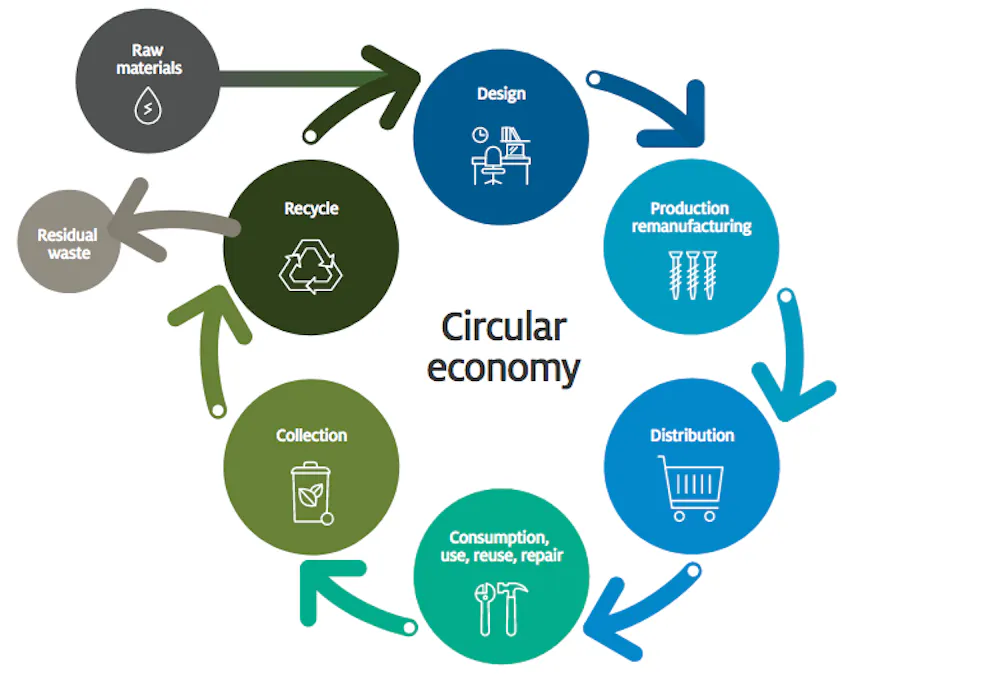

Diagram of the circular economy
Australian Government, Sustainable Procurement Guide: A practical guide for Commonwealth entities, 2021 Australia’s federal, state and territory governments all have sustainable procurement policies. The federal Sustainable Procurement Guide states the Australian government “is committed to transforming Australia’s waste into a resource, where most goods and services can be continually used, reused, recycled and reprocessed as part of a circular economy”. But these policies lack some basic elements. Three key market-making reforms Our research suggests three important reforms could make a big difference to waste market operations. This is based on interviewing 27 stakeholders from the private sector and government about how to improve sustainable procurement. First, government waste policies that set aspirational goals are not supported by procurement policies setting mandatory minimum recycled content targets. All contractors on government-funded construction projects should be required to use a percentage of recycled waste materials. Second, the nature of salvaging construction materials means quality can vary significantly. Cement recycled from a demolition site, for example, could contain contaminants that reduce its durability. Read more: Australia needs construction waste recycling plants — but locals first need to be won over Governments can help the market through regularly auditing the quality of recycler’s processes, to increase buyer confidence and motivate suppliers to invest in production technologies. Third, in some states (such as Western Australia) the testing regimes for recycled construction products are more complex than that what applies to raw materials. More reasonable specifications would reduce compliance costs and thereby the cost of using recycled materials. Authors: Salman Shooshtarian, Research Fellow, RMIT University

Read more https://theconversation.com/how-to-make-roads-with-recycled-waste-and-pave-the-way-to-a-circular-economy-164997

Someone Trips at Your Fundraiser. Now What? Understanding Public Liability for NFPs

Three months of planning. Volunteers giving up their weekends. Sponsorships chased, catering sorted, tables decorated. And then, about an hour into ...

Stainless Steel Tube: A Complete Specification Guide for Engineers, Project Managers, and Industrial Buyers

Few materials in the industrial and manufacturing world are as universally relied upon — or as frequently misspecified — as stainless steel tube...

How to Choose the Right Barber Shears Scissors for Professional Results

Since a barber is only as good as their tool, choosing the right barber shear scissor must not be taken lightly. Most barbers end up buying the first ...

Why Commercial Construction Companies Play A Critical Role In Modern Urban Development

Urban development requires highly organised planning, engineering expertise, and professional construction teams capable of delivering complex build...

Essential Features for Comfortable Family Caravan Trips

Choosing the right van for family travel requires careful consideration of how the space will be used on a daily basis. Families have specific needs...

Chatswood Tutor: Helping Students Achieve Academic Success With Personalised Learning

Education plays a crucial role in shaping a student’s future, and many students benefit from additional academic support outside the classroom. A pr...

How External Consulting Can Guide Enterprise IT Strategy and Procurement

Internal IT teams carry deep operational knowledge, but that familiarity can create blind spots in strategic decisions. An external IT consultant br...

Why Sports Nutrition Australia Is Important for Performance and Recovery

Athletes and fitness enthusiasts place significant demands on their bodies during training and competition. Maintaining energy levels, supporting mu...

How Body Contouring Bundoora Helps Improve Shape And Confidence

Modern aesthetic treatments have made it possible to refine body shape without the need for invasive surgery. One of the most popular non-surgical o...

Why Plantation Shutters Are a Stylish and Practical Choice for Modern Homes

Window coverings play a major role in the comfort, privacy, and overall design of a home. Homeowners often look for solutions that provide both visu...

Why a Retractable Hose Reel Is Essential for Efficient Water Management

Managing hoses efficiently is important for both residential and commercial environments. Whether watering gardens, cleaning outdoor areas, or maint...

Best Ways to Trade In Your Old Tech for Cash in Australia

Upgrading your mobile is exciting, but many Australians are left wondering what to do with the device they no longer use. Instead of leaving it in a...

Why Doctors in Bundoora Play an Important Role in Community Health

Access to quality healthcare is essential for maintaining a healthy lifestyle and managing medical conditions effectively. Visiting experienced doctor...

Backyard Aesthetics Decoded: Mediterranean, Coastal, Retro, Rustic, and Beyond

Backyard design has come a long way from a patch of lawn, a barbecue in the corner, and a few chairs chosen purely for practicality. Today, outdoor ...

What Stops a Home From Feeling Flat-Pack Generic

There is nothing wrong with convenience. Flat-pack furniture, fast styling decisions, and online checkouts have made it easier than ever to furnish ...

5 Best Dental Clinics in Beecroft, NSW

The best dental clinics in Beecroft, NSW are Beecroft Smiles Dental Surgery, Beecroft Elegant Dental Clinic, McConnell Dental, Dentistry for Life, a...

Executive Recruitment: Finding Leadership Talent That Drives Organisational Success

Hiring the right leadership team can significantly influence the direction and performance of any organisation. Strong executives bring strategic thin...

Understanding the Importance of Abrasive Blasting in Industrial Surface Preparation

Surface preparation is an essential step in many industrial processes. Whether preparing metal structures, removing old coatings, or cleaning equipmen...
















