

We identified who's most at risk of homelessness and where they are. Now we must act, before it's too late
- Written by Deb Batterham, Post doctoral research fellow, Launch Housing and Centre for Urban Transitions, Swinburne University of Technology
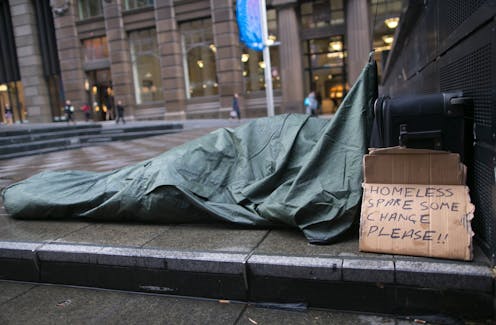
Homelessness is traumatic. It affects not just housing arrangements but whether or not someone can get enough food, feel safe and maintain relationships with friends and family. The physical and mental health effects often persist long after people are rehoused, and the community and government costs are high.
Much of the current response to homelessness is focused on supporting people after they become homeless or just before they do so.
However, to really reduce homelessness we need to prevent those at risk from ever becoming homeless in the first place. It’s akin to turning off a tap at the source to prevent a flood downstream.
Our recent research, published by the Australian Housing and Urban Research Institute, gives critical insights into how we can do that.
Read more: 400,000 women over 45 are at risk of homelessness in Australia
Who is at risk of homelessness?
In our study, people were considered at risk of homelessness if they lived in rental housing and were experiencing at least two of the following:
low income
vulnerability to discrimination in the housing or job markets
low social resources and supports
needing support to access or maintain a living situation due to significant ill health, disability, mental health issues or problematic alcohol and/or drug use
rental stress (when lower-income households put more than 30% of income towards housing costs).
From here, it often doesn’t take much to tip those at risk into actual homelessness.
To estimate the number, profile and geography of the Australian population at risk of homelessness we combined data from two sources: the Household, Income and Labour Dynamics in Australia (HILDA) Survey and the 2016 Census. We estimated the size of the population at risk at the national and also small area (SA2/suburb) level.
We found between 8.5% and 11.7% of the total population aged 15 years and over were at risk of homelessness. This equates to between 1.5 and 2 million people.
These numbers are large but shouldn’t be surprising. In the nine years between July 2011 and July 2020, some 1.3 million people received assistance from specialist homelessness ervices (agencies that provide support to people experiencing homelessness).
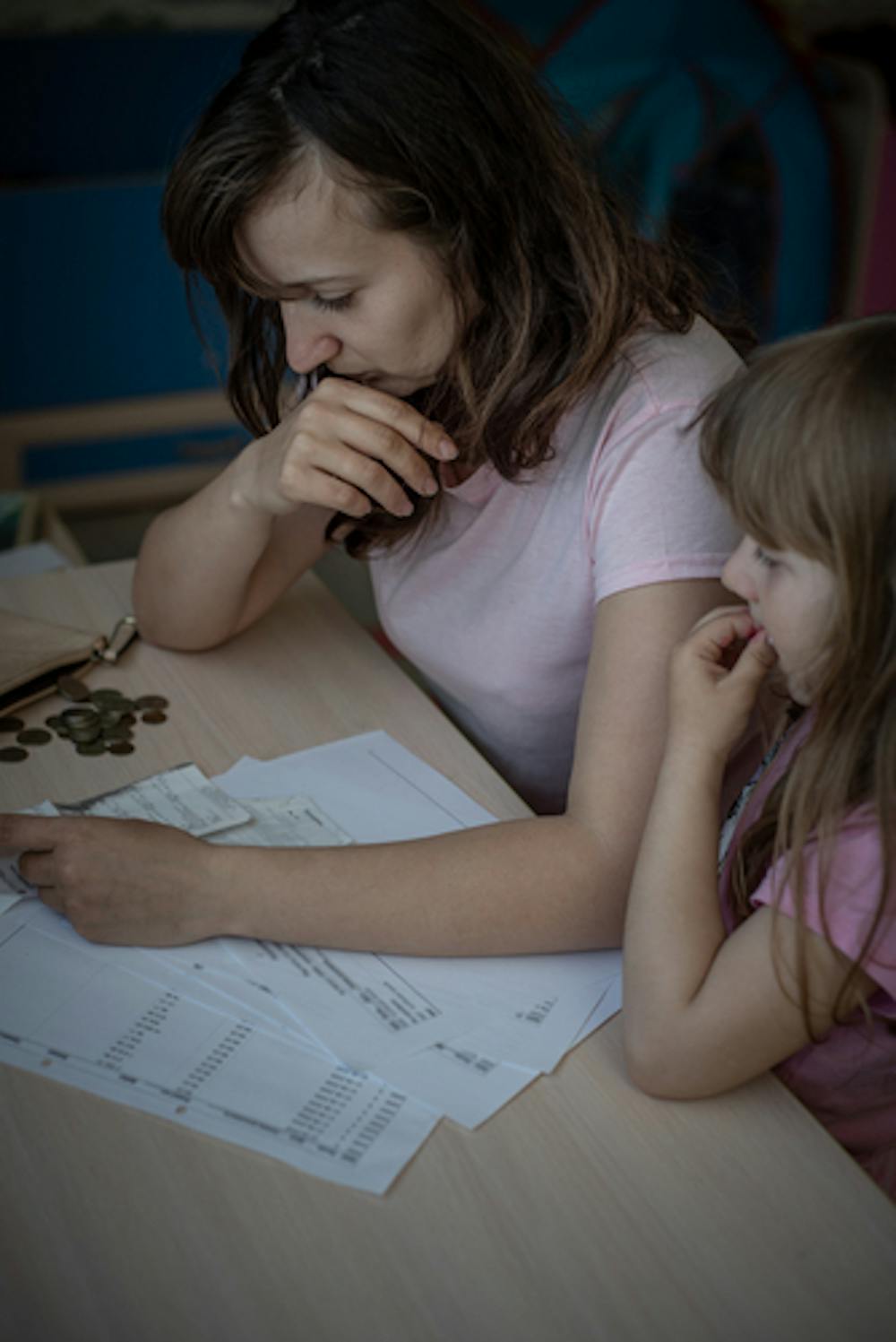
Who’s at risk of homelessness?
Compared to the national population, those at risk of homelessness are more likely to be:
female
Indigenous
living in a lone-person or lone-parent household
low income
unemployed or outside the labour force
in receipt of income support payments.
They are more likely to identify as lesbian, gay or bisexual, and report fair or poor health.
Those at risk have lower levels of education and are more likely to report difficulty paying bills and rent on time.
They are also more likely to experience rental stress and forms of material deprivation such as skipping meals and being unable to heat their home.
A third have children in their care.
Where are they?
The highest rates (per head of population) of homelessness risk are typically found in remote areas and small pockets of capital cities.
However, the greatest numbers of people at risk of homelessness are located in capital cities on the eastern coast of Australia. These high numbers extend well beyond inner city areas and into the suburbs.
In several states (Queensland, New South Wales, Western Australia and South Australia), high rates of homelessness risk are spread across greater capital cities and regional areas.
In Victoria, however, risk is concentrated in Greater Melbourne.
And in the Northern Territory, risk is highly concentrated in remote areas.
Preventing homelessness in Australia
Our findings suggest Australia urgently needs more rental housing specifically targeted to those on low incomes and at risk of homelessness.
Our fine-grain data on homelessness risk can help state and territory governments, as well as local governments, decide where this housing will be most effective to reduce homelessness risk.
Australia also needs more private rental access programs, which provide ongoing subsidies and financial help with rent arrears to people at risk of homelessness. They also provide advocacy help in negotiations with landlords.
Given Indigenous Australians are over represented in the at-risk and homeless populations, especially in remote areas, we need targeted support developed in consultation with Indigenous communities.
Those living with a disability or reporting fair or poor health are particularly vulnerable. There is a clear role for state and territory governments in ensuring access to health and disability supports, especially for those on low incomes.
Key priorities for the federal government and agencies include:
increasing the levels of income support payments and Commonwealth Rent Assistance
increasing the wages for the lowest paid workers;
increasing funding for the construction of social and affordable housing, and;
playing a coordinating role in primary prevention policy through a national housing and homelessness strategy.
The COVID-19 pandemic has highlighted homelessness can be closer than many think – especially after sudden loss of employment or a health crisis.
Now we know who is at risk of homelessness and where they are, it’s time for governments to act.
Read more: Coronavirus puts casual workers at risk of homelessness unless they get more support
Authors: Deb Batterham, Post doctoral research fellow, Launch Housing and Centre for Urban Transitions, Swinburne University of Technology

















