

why sustaining a livelihood in the arts is so hard
- Written by Katherine (Kate) Power, Lecturer in Management, School of Business, The University of Queensland
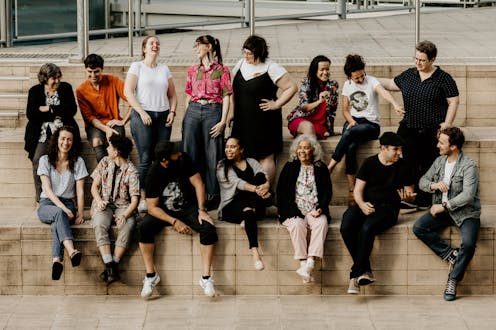
In the arts in Australia, precarious employment, unpaid work and short-lived careers are the norm.
Many artists and arts workers have “portfolio careers”, piecing together a mixture of jobs while competing for limited funding and career opportunities in the arts.
COVID-19 shone a glaring spotlight on this precarity, exposing the lack of permanent jobs in the sector. Some 81% of artists work as freelancers or on a self-employed basis, without access to sick leave or other entitlements many Australians take for granted.
But the unsustainability of creative careers was already well known to artists, academics and governments.
Career sustainability
In 2019, I set out to understand what “sustainability” means to Australia’s arts and culture sector. I analysed 564 annual reports published between 2010 and 2018 and over 2,700 submissions in the 2014 and 2015 Senate Inquiry into arts funding. I also interviewed 33 artists and arts managers representing all parts of the performing arts sector.
One interviewee defined a “sustainable career” as:
one in which you’re employed in your practice to the extent that you can live. For a lot of artists that’s just about a roof over their head and feeding themselves. […] I think we should be able to have mortgages and raise kids […] I look at some of the singers that I work with and that’s really hard for them to do.
Even artists who are successful in multiple facets of their career – including some of our most celebrated theatre directors – can feel like these careers are not sustainable.
One contributor to the Senate Inquiry observed:
Artists can have successful exhibitions, be collected by national and international institutions, and still not make a sustainable living.
Interestingly, I observed significant differences in how different arts companies wrote about sustainability in their annual reports. Career sustainability was mentioned more often by theatre companies than other art forms. Opera and circus tied in second place. While comparable data is not available for Australia, findings from the UK suggest a high percentage of freelancers working in theatre might explain this difference.
Inherent demands
Working in the performing arts involves both physical demands and mental strain. Artists described to me how they have to maintain “the body of an elite athlete” and how the “obsessive requirement to be excellent all the time” leads to “consistent performance-related anxiety.”
The inevitable long hours and extensive travel also make this a family-unfriendly career. Artists explained the expectation they work outside of ordinary business hours, the need to “travel where the work is” and feeling like they needed to leave the arts if they wanted to raise a family.
These pressures arise from both the limited opportunities and intense competition within the arts and culture sector, which make many people feel they have to accept any opportunity – and work under any conditions – in order not to be left behind.
In my research, I found all of these issues became compounded when measures of diversity were considered.
Gender inequity presents one barrier to career sustainability. Interviewees also told me First Nations artists, deaf and disabled artists, regional and remote artists, and artists from lower socio-economic backgrounds face even greater challenges. Recent research by the Australia Council for the Arts reveals the same is true for culturally and linguistically diverse artists.
Read more: The problem with arts funding in Australia goes right back to its inception
Financial constraints
In the interviews taken as part of my research, I repeatedly found financial constraints underpin three problems causing career unsustainability in the arts.
1. Low incomes:
being brutal about it […] I have as good a freelance load as anyone probably going around Australia […] and my wife needs to be working full-time for us to be financially sustainable.
2. Unpaid work:
you really only get paid if you’re performing and if you’re lucky enough, you might get paid for the rehearsals beforehand
3. Excessive workloads:
the level of burnout in this industry is pretty shocking […] we’re all overworked and constantly tired.
The obvious solution is more abundant and ongoing public and philanthropic support. As one interviewee explained:
Increased government funding for the arts is […] the first and most important step in the career sustainability of artists because it flows through everything else.
But other creative solutions are also needed to make artistic careers more sustainable. These include: increasing diversity within arts sector leadership; teaching student artists to develop an “adaptive entrepreneurial identity”; and fostering community and collective support among artists and arts managers.
Read more: NZ Budget 2021: we need the arts to live, but artists need to earn a living
Moving towards ‘decent work’ for all
The United Nations’ Sustainable Development Goal 8 calls for “full and productive employment and decent work for all.”
In 2019, the International Labour Organization began exploring what “decent work” means for arts and culture. Australian politicians, policymakers, and sector leaders need to do the same.
These three steps will help.
1. Recognise artists are workers.
This would mean paying serious attention to the conditions of contemporary artistic labour, which would pave the way to addressing both precarity and structural inequalities within the arts and culture sector.
2. Accept decent work is a human right.
This would mean acknowledging artists and arts managers (like all people) are entitled to gain a living from their work, then developing policies to prioritise the creation of good jobs within the arts and culture sector.
3. Implement decent work for artists.
For artists, this means rejecting any expectation creatives might “work for exposure.” For arts companies, it means putting artists on payroll, embedding fair pay and conditions within all arts organisations, and supporting cultural change across the sector.
Authors: Katherine (Kate) Power, Lecturer in Management, School of Business, The University of Queensland

















