

Why wearable fitness trackers aren't as useless as some make them out to be
- Written by Ben Singh, Research fellow, University of South Australia
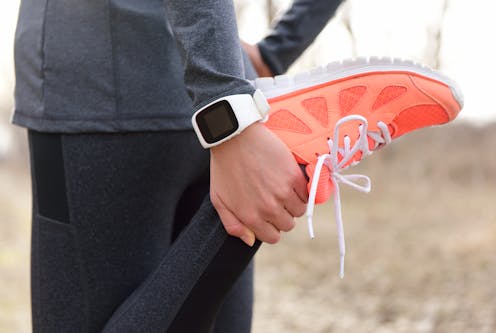
Wearable wrist and ankle fitness trackers will be on many Christmas shopping lists this year, with a vast range of devices (and an ever-increasing number of features) hitting the market just in time for the festive season.
But what does the latest research say about how effective they are?
Fitness trackers are trendy
Currently, about one in five Australians own one of these wearables, and about a quarter use a mobile app or website to monitor their activity levels and health. And sales are predicted to grow over the next five years.
The landscape of the market is fast changing. For years, Fitbit and Garmin were the market leaders. But Australians now favour Apple watches (used by 43% of people owning a wearable tracker) over Fitbit (35%) and Samsung watches (16%) over Garmin (13%).
So far fitness trackers have mostly been taken up by younger people: about one in four Australians aged 20–40 report using one, compared to just one in ten people aged 60 or older.
However, manufacturers are on a mission to change this, by adding features that allow users to monitor not just their fitness activity, but several other aspect of their health.
For instance, recent wearable models from all the leading manufacturers claim to measure a host of medical metrics, such as blood pressure, body fat levels, the amount of oxygen in your blood, your heart activity, and even identify when you’ve taken a fall (with a feature that lets you call for help).
Read more: Do we really need to walk 10,000 steps a day?
Wearables get the basics right
Firstly, a multitude of studies have looked at the accuracy of wearable fitness trackers for measurements related to physical activity, including step counts, heart rate and number of calories burned. They show step counts are generally highly accurate, while heart rate and calories burned are reasonably accurate.
When study participants wear two different activity trackers at the same time, the numbers of steps, minutes of activity and calories burned aren’t exactly the same, but they are correlated. That is, when one goes up so does the other, and vice versa. This suggests they are generally capturing the same information, albeit with slightly different sensitivity.
Evidence for sleep tracking is a little patchier. Wearables are pretty good at detecting bed time, wake time and overall sleep duration. But estimates for more technical metrics such as the “phases” of sleep – such as REM sleep – don’t marry with medical-grade measurements taken by polysomnography.
Sometimes wearables go beyond the basics
In a 2019 Apple-sponsored study reported in the New England Medical Journal, 419,297 participants without known atrial fibrillation wore an Apple Watch. During the study, 2,161 of them received an irregular pulse notification, of which 84% were subsequently confirmed to have atrial fibrillation (an irregular and rapid heart beat).
This is a serious medical condition that requires treatment to prevent stroke. The ability to alert users of a potential undiagnosed cardiac condition seems highly beneficial. Although, others have cautioned the Apple Watch can also miss cases of undiagnosed atrial fibrillation – which emphasises the importance of never relying on wearable metrics for medical purposes.
Another study published in September reaffirmed the Apple watch’s electrocardiogram feature can detect serious cardiac irregularities. A similar study is currently underway to evaluate Fitbit’s electrocardiogram feature, but results aren’t out yet.
Building a more advanced tracker
In terms of detecting falls (which would be very useful for older individuals), scientists are developing wrist-worn devices that can accurately do this using accelerometer technology, which is the same underlying technology already used by wearables. So the technology is there, but at this point it’s unclear whether the promising lab results will translate to accuracy in commercial wearables.
Meanwhile, the newest Samsung watch claims to measure blood pressure and body composition (such as fat mass, muscle mass and bone mass). Body composition is measured using a method called bioelectric impedance analysis.
When the user touches the watch with their opposite hand, it passes a weak electrical signal through the body and back to the watch. The body composition is then calculated using algorithms and the manually entered body weight.
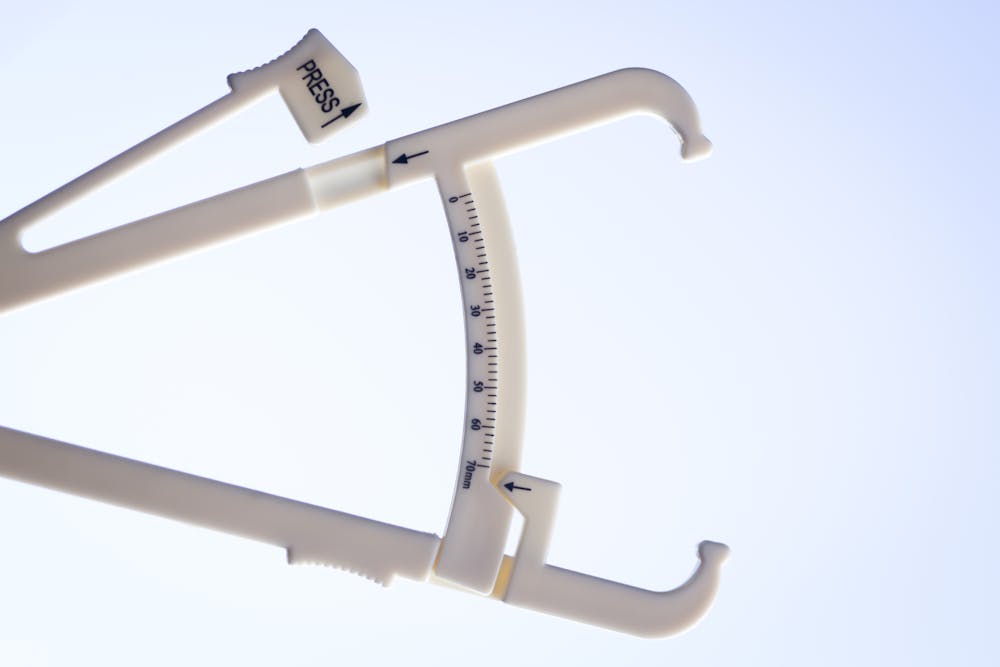
At this stage, there’s no data in the scientific literature to support the accuracy of these measurements, so we’d recommend taking them with a pinch of salt. Then again, only a few years ago the same criticism was made of electrocardiogram measurements from wearables – and these have subsequently shown to have merit.
Evidence says your effort will pay off
So that’s the run down on accuracy, but do fitness trackers make a difference in people’s lives?
Hundreds of studies have used wearable activity trackers to try to increase physical activity in various general and patient populations. Meta-analyses (which involve combining results of multiple studies) suggest the devices are effective in helping people become more physically active and lose weight.
A meta-analysis of 35 studies in various chronic disease populations suggested users added around 2,100 additional steps per day after they started using a wearable activity tracker. Other meta-analyses have suggested weight loss in the order of 1 to 1.5 kilograms, on average, over the duration of the studies (with the duration varying between studies).
And studies that look specifically at step-tracking over long periods suggest the benefits gained are still present (although smaller) up to four years after the device was first worn.
Accuracy and effectiveness aside, wearable users typically report being satisfied with their devices. So if you happen to get one in your Christmas stocking this year, keep in mind it could help with those New Year’s fitness resolutions.
Authors: Ben Singh, Research fellow, University of South Australia

















