

Modern Australian
Men's Weekly

.

Over 300,000 New Zealanders owe more than they own – is this a problem?

  • Written by Max Rashbrooke, Research Associate, Institute for Governance and Policy Studies, Te Herenga Waka — Victoria University of Wellington

Over 300,000 New Zealanders owe more than they own – is this a problem?

New Zealanders, like many of their developed country counterparts, have built up significant debts in recent decades. There are differing views, however, on whether this constitutes a problem.

For some, indebtedness indicates a precarious situation – often described as being “underwater” – in which a person is unable to match their expenses to their income. For others, it represents investment: a temporary borrowing in order to be able to earn more in future.

To investigate this, we used data from the net worth module attached to the Household Economic Survey in 2014–15 and 2017–18. This provides information about individuals in “negative net wealth” – that is, those whose liabilities (debts) exceed their assets (wealth).

What is clear is that the number of New Zealanders with negative net wealth is both large and growing. In 2014–15, there were 314,000 indebted New Zealanders out of an adult (15+) population of 3.55 million, or 8.8%.

Just three years later, that number had increased to 363,000 out of 3.81 million, or 9.5%, despite the absence of a major economic shock – along the lines of the global financial crisis – in that time.

Where the debt sits

To establish whether this constituted a serious policy problem, however, we had to look more closely at these individuals’ characteristics.

Most of them have low incomes: 32% report incomes under NZ$13,240, and 68% under $36,596 (the median individual income at that time). Just 4% are in the highest tenth of income earners. Clearly, most of those in negative net wealth are not lavish-spending high-rollers.

Read more: NZ's unemployment insurance scheme will be the biggest welfare shakeup in generations – is it justified?

This might ring alarm bells: having a low income suggests an inability to repay debts. But that depends on a couple of further characteristics, including age and the nature of the liability.

Those in negative net wealth are disproportionately young: 58% are under 29, and a further 25% are aged 30 to 44. Just 3% or so are over 65.

Nearly two-thirds of the debts are in mortgages, whether for owner-occupied homes or investment properties (51.3% and 13.7%, respectively). This is followed by student loans (21.9%), “other” debts (11.7%), credit cards (1%) and hire purchase (0.4%).

Are debts backed by assets?

Combining the above two forms of analysis, we found that for people in negative net wealth aged 15 to 24, nearly three-quarters of their debts (73.4%) are in student loans, whereas for people aged 55 to 64, 80.6% are in mortgages on their own homes.

This suggests the problems of indebtedness may not be as great as they appear. The major forms of debt – mortgages and student loans – are both backed, at least in theory, by assets: housing, in the case of mortgages, and “human capital” (marketable skills and education) in the case of student loans.

This indicates that many of those in negative net wealth have the ability to repay their debts or, at the very least, are accumulating some kind of asset.

Read more: NZ's government plans to switch to a circular economy to cut waste and emissions, but it's going around in the wrong circles

But there are still several reasons to be concerned. Firstly, the assets mentioned above may not be entirely solid. Although house prices generally rise, and have recently been soaring, they have also been known to fall (in New Zealand as elsewhere). And the long-expected correction in the housing market may finally be about to happen, if bank predictions are to be believed.

Human capital is also somewhat notional: while graduates do on average earn two-thirds more than those with no tertiary qualification, not all degrees lead to high incomes, especially in a labour market characterised by high levels of precarious, insecure and casual work.

Many young people will be burdened by both large student loan debts and significant mortgages (assuming home ownership is attainable at all).

Debt and poverty

It is also not difficult to imagine negative net wealth becoming a problem for, say, a mid-level office worker who suddenly loses their job at the same time that their home – which they borrowed heavily to buy – falls sharply in value.

One of the principal concerns about debt, after all, is that it often represents a vulnerability – in other words, a probable lack of resilience in the face of major economic shocks.

Secondly, even if the forms of debt more generally considered problematic – such as those incurred on credit cards and via hire purchase – are relatively marginal, they are also most likely to affect those in the most difficult financial situations.

Read more: COVID-19 is predicted to make child poverty worse. Should NZ's next government make temporary safety nets permanent?

Charities and NGOs have repeatedly warned about the problems faced by families forced to turn to payday lenders and finance companies charging high interest rates. Research has also highlighted debt as one of the central factors keeping families in poverty.

Thirdly, the burden of negative net wealth is not evenly distributed. Of the 363,000 individuals in that situation, 195,000 are women, against 168,000 men. Just 8.1% of people of European descent are indebted, compared to 11.5% of Asian New Zealanders, 13.3% of Māori and 14.5% of Pasifika.

Read more: NZ's second 'Well-being Budget' must deliver for the families that sacrificed most during the pandemic

The wealth gap

These inequalities then overlap, such that the proportion of Pākehā men in negative net wealth (7.5%) is less than half that for Pasifika women (17.5%). This reflects – and exacerbates – other economic disparities, such as ethnic and gender pay gaps.
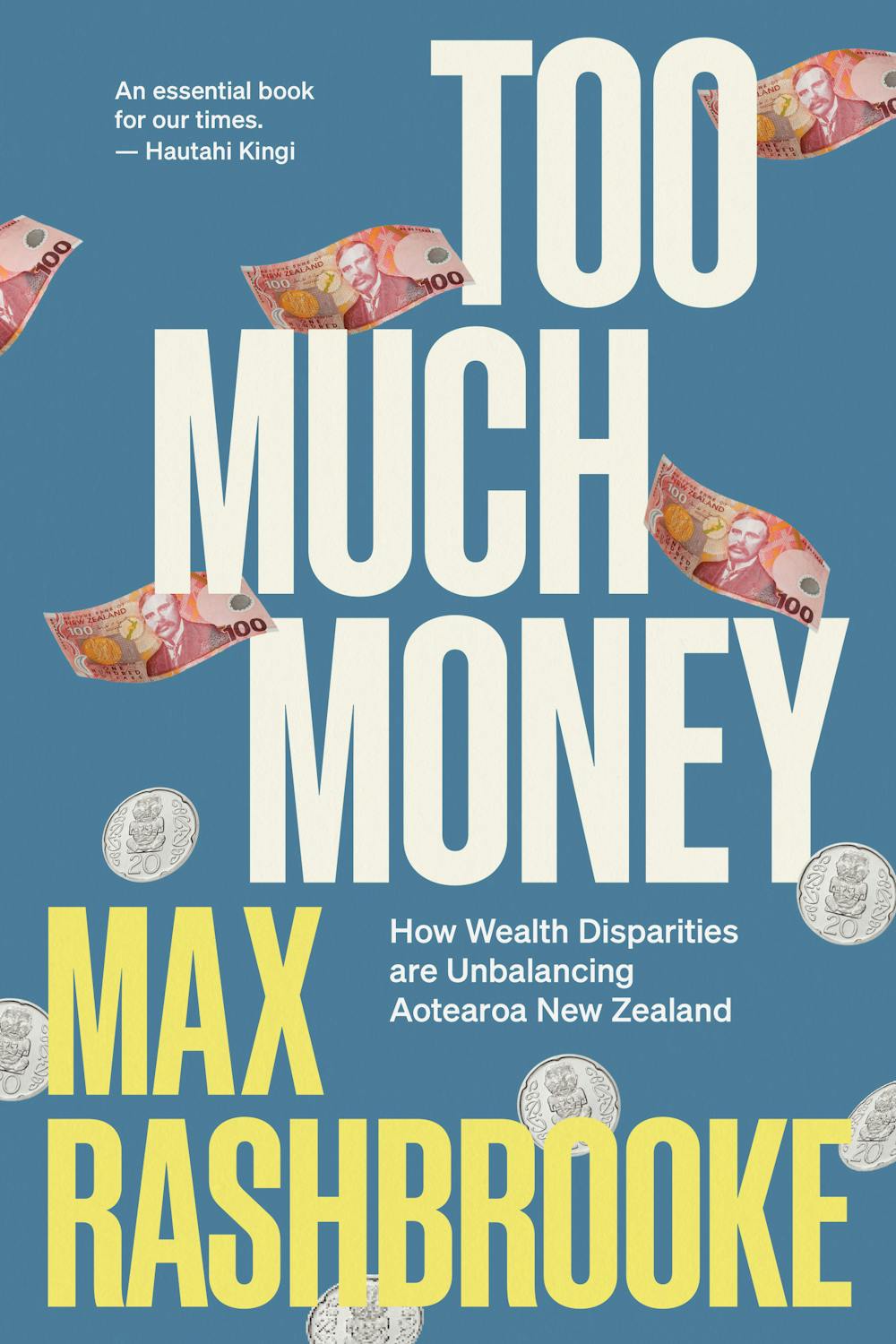

Negative net wealth also has to be viewed against its counterpart, large wealth concentrations at the upper end of the spectrum. As discussed in my recent book, the wealthiest 1% of individuals hold 25% of all assets, once members of the “Rich List” are included. Such large surpluses and deficits contribute to financial instability. One of the dynamics that caused the GFC, for instance, was the significant surpluses owned by wealthy Americans being lent to low-income families whose wages had been suppressed for several decades. Negative net wealth, then, is part of the much larger story of economic inequality – one that is now centre stage in political debates, in New Zealand as elsewhere. The author gratefully acknowledges Geoff Rashbrooke, of the Institute for Governance and Policy Studies, and Albert Chin, of Statistics New Zealand, who collaborated on this research. Authors: Max Rashbrooke, Research Associate, Institute for Governance and Policy Studies, Te Herenga Waka — Victoria University of Wellington

Read more https://theconversation.com/over-300-000-new-zealanders-owe-more-than-they-own-is-this-a-problem-173497

Why an Employer Recruitment Agency Helps Businesses Build Stronger Teams

Finding the right employees is one of the most important responsibilities for any organisation. Businesses rely on skilled professionals who can con...

Why Quality Trailers Are Essential for Transport and Trade Businesses

Transportation plays a major role in industries ranging from construction and landscaping to logistics and agriculture. Businesses that frequently m...

Why Professional Car Removal Services Are The Best Way To Dispose Of Unwanted Vehicles

When a vehicle reaches the end of its useful life, owners often face the challenge of deciding how to remove it safely and responsibly. Old vehicles...

Why Professional Commercial Carpet Cleaning Matters for Modern Workspaces

Clean office environments influence how employees work, how clients perceive a business, and how long workplace interiors last. Carpets in commercia...

Why Hiring Removalists Makes Moving Easier And More Efficient

Relocating to a new home or office can be an exciting yet demanding experience. Packing belongings, organising transport, and ensuring that items ar...

The Importance of Hiring Local Lawyers in Melbourne for Business Protection

When it comes to protecting a business, the legal support you choose matters just as much as the decisions you make day to day. Working with lawyers...

Why Packaging Boxes Are Important for Product Protection and Logistics

Packaging plays a crucial role in modern commerce, ensuring that products are transported safely from manufacturers to consumers. One of the most wide...

Best Practices for Promoting Crypto Payment Options to Your Customers

Promoting crypto payment options is no longer a futuristic concept but a present-day strategy for venues aiming to reduce transaction costs, attract a...

What Is Allocated vs Unallocated Gold?

Gold has been a trusted store of value for thousands of years, prized for its rarity, durability, and universal recognition. Even in the modern financ...

Physiotherapy Strategies for Improving Independence in Daily Living

For many individuals living with permanent and significant disabilities, the concept of "independence" is not about a total absence of support, but ra...

Mobile Patrol Security vs Static Guards: What’s Best for Brisbane Businesses?

Business security is very nuanced; a cookie-cutter approach doesn’t necessarily always work in a city like Brisbane. The bigger the city, the more...

Your Home Needs Regular Maintenance — And More Than Most Think

Why Regular Home Maintenance Is More Important Than Most Homeowners Think For many Australians, the home is more than just a shelter; it is the mos...

Roof Painting Jimboomba: Protect and Transform Your Home

Your roof plays a crucial role in protecting your home from the harsh Australian climate. Over time, exposure to sun, rain, and changing weather con...

Residential Electrical Services: Reliable Solutions for Adelaide Homes

Electrical systems play a vital role in keeping your home safe, comfortable, and functional. From lighting installations to switchboard upgrades and...

Leaking Shower Repair Perth: Fix Hidden Water Damage Before It Gets Worse

A leaking shower might seem like a minor issue at first, but over time it can cause serious structural damage to your bathroom and surrounding areas...

Full Mouth Rehabilitation: A Comprehensive Dental Solution for Patients Seeking Advanced Care Abroad

Dental health plays a vital role in overall well-being, confidence, and quality of life. For individuals experiencing extensive dental issues such a...

Fertility Treatment in Australia | Expert Reproductive Care

One of the most significant journeys in life is the formation or the development of a family. To most couples and individuals, conception, however, ...

Professional Bathroom Builders Sydney: What Defines Professional Standards

Professional bathroom builders in Sydney operate within a regulated construction environment that prioritises safety, compliance, and structural durab...
















