

Shark bites are rare. Here are 8 things to avoid to make them even rarer.
- Written by Adam Smith, Adjunct Associate Professor, James Cook University
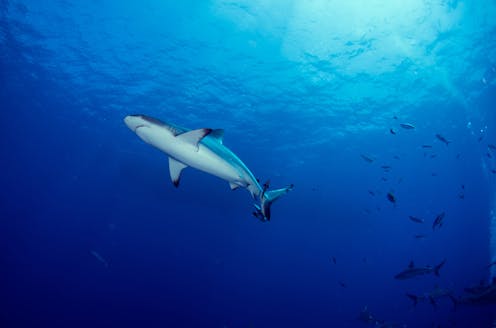
Shark bite incidents are rare but traumatic. They’re usually followed by calls for mitigation strategies, some of which are dangerous or lethal to sharks – despite the fact most sharks are timid and actively avoid people.
The “SharkSmart” approach, adopted by the Queensland government, aims to educate and urge people to take responsibility for reducing the risk of shark bites by changing their own behaviour. But can humans change?
To find out, we teamed up with three companies in the sailing charter industry in the Whitsundays area to better understand how people were using the environment, their knowledge of shark smart behaviours and to see if promoting SharkSmart behaviours led to change.
We found people can and do change behaviour as a result of education – but for some, unfortunately, a “she’ll be right” attitude still prevails.
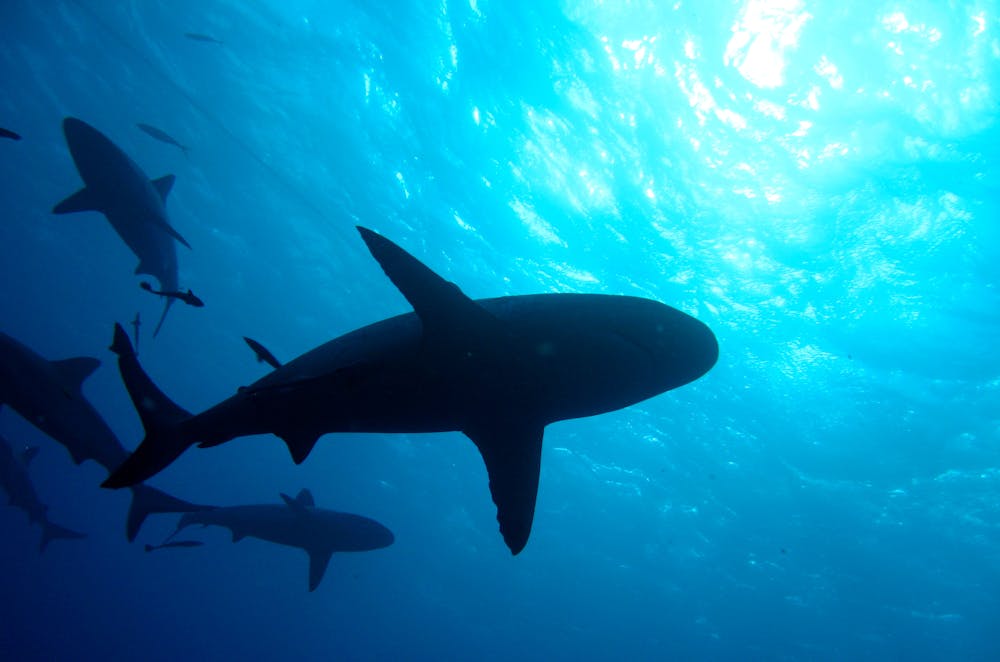
Doing your part to be SharkSmart
Previous surveys had shown many water-users were already aware of many ways to reduce shark risk but there was room for improvement.
Many SharkSmart behaviours are well known, such as not swimming at dusk or dawn when sharks may be more prevalent.
But we wanted to find out what else people were doing in the water and see if some key SharkSmart interventions made a difference. The interventions included:
- showing people a short video before they went out on the water
- putting stickers on boats to remind people how to reduce shark risk
- making SharkSmart brochures available to guests on boats
- dedicated waste disposal bags were given to two of the charter boat operators, with the third acting as a control group.
We did surveys before and after these SharkSmart tools were introduced to see what changed.
We particularly wanted to know whether people were less likely to do eight things linked to higher shark risk in the Whitsundays area:
1. splashing in the water
2. swimming alone
3. swimming near fishers
4. swimming at spots where shark bites have occurred in the past (in this case, in Cid Harbour)
5. throwing fish scraps in the water
6. throwing burley (a type of bait, sometimes known as chum) in the water
7. fishing near swimmers
8. throwing food in the water.
Research suggests that by not doing these eight things, we can make shark bites even rarer than they already are.
As well as the before-and-after surveys, we captured a sample of rubbish coming back on shore. This was so we could get an idea of whether fish and meat were being stored or thrown overboard.
We also wanted to see where and when risk might be higher. For example, snorkelling in a busy anchorage or where people are fishing may increase unnecessary dangers. The warmer months of September to December were mapped as potential higher risk for shark bites.
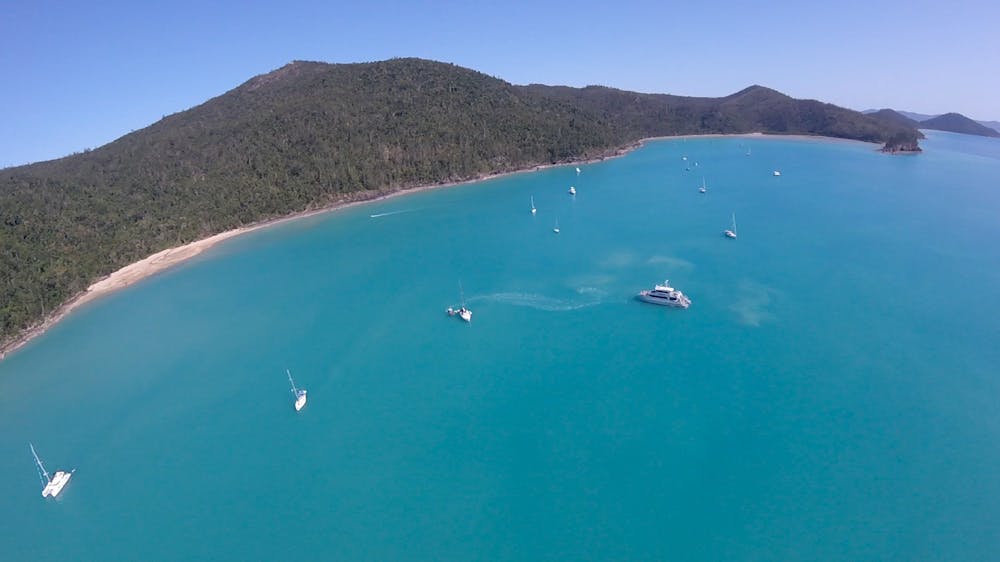 Swimming at spots where shark bites have occurred in the past is associated with higher risk.
AAP/RACQ CQ RESCUE
Swimming at spots where shark bites have occurred in the past is associated with higher risk.
AAP/RACQ CQ RESCUE
Our findings
We surveyed 228 tourists (92 pre- and 136 post-intervention) and found:
- a 8.9% reduction in splashing or making noise when swimming or snorkelling
- a 4.1% reduction in throwing fish scraps overboard and
- a 3.8% reduction in people fishing near people swimming.
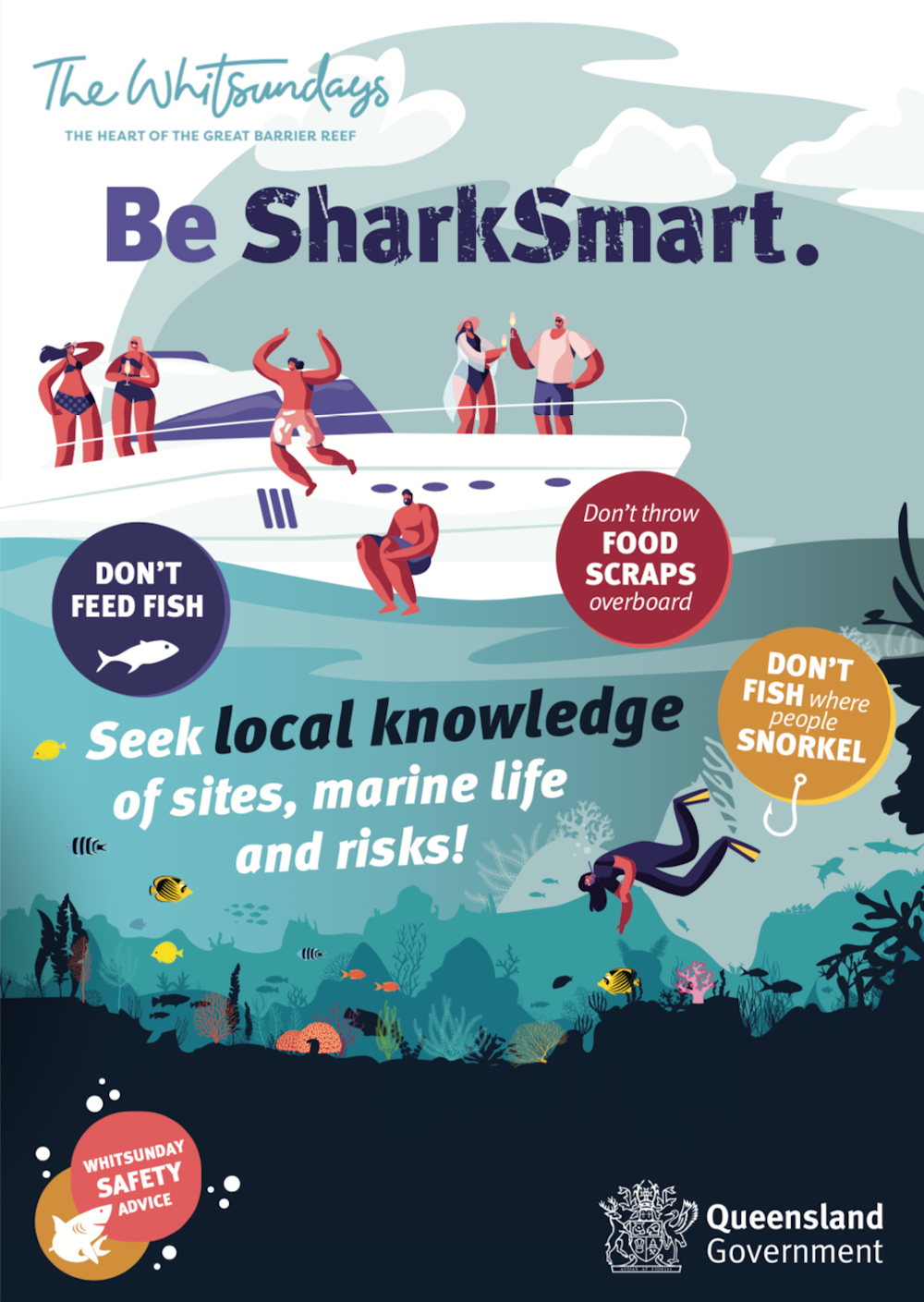 A poster shows SharkSmart behaviours.
Queensland Government, Author provided
A poster shows SharkSmart behaviours.
Queensland Government, Author provided
We found most people were aware of these six behaviours:
- following local signage
- having a buddy when swimming, diving or snorkelling
- avoiding swimming at dawn or dusk
- swimming in clear water
- keeping fish waste and food scraps out of the water where people swim
- avoiding swimming with schools of bait fish or diving birds.
The lowest awareness was for the last one, but after our intervention we saw a 4.7% increase in knowledge of this behaviour.
Although 100% of people were aware of the need to keep fish waste and food scraps out of the water, our pre-surveys between August and October last year found about one-third of tourists still disposed of fish scraps into the water. After the intervention, the share of people doing this dropped to 4-8%.
Shifting the ‘she’ll be right’ attitude
The good news is there is very high awareness of SharkSmart behaviours and most times, people didn’t throw burley in the water, fish near swimmers or swim in Cid Harbour.
Unfortunately, some people continued to splash, swim alone and throw fish waste and food scraps in the water. Changing these norms among swimmers and boaties will take time.
An attitude of “she’ll be right” still exists among some water users and this group may be the toughest to influence; it’s hard to shift attitudes about dangers among people with such a relaxed attitude to risk.
In the Whitsundays and wider Australia, we are lucky to have some of the most incredible beaches, islands and reefs in the world. Most of us are willing to take a small calculated risk to swim in the ocean. Shark bite incidents are extremely rare in Australia but by making small changes, we can drive down the danger even further.
Katie Frisch and Gemma Molinaro from Reef Ecologic contributed to this article.
Authors: Adam Smith, Adjunct Associate Professor, James Cook University

















