

Why kids should not have lots of toys (and what to do if yours have too many)
- Written by Louise Grimmer, Senior Lecturer in Retail Marketing, University of Tasmania
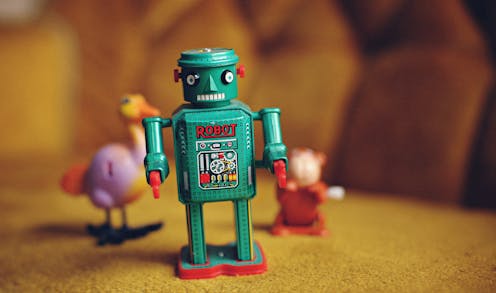
The festive season reinforces something parents and carers already know – many children today have a lot of toys.
In the United States, children receive more than US$6,500 (A$9,073) worth of toys between the ages of two and 12. Here in Australia, the toy industry is worth more than A$3.7 billion annually. Lockdowns have resulted in online toy sales growing by 21.4% during 2021, with the online toy industry now growing faster than the overall online retail sector.
The number of toys in Australian households is likely to increase when Christmas gift giving starts in earnest.
Apart from environmental concerns, having lots of toys can negatively impact children as well as parents and carers.
Here are some ideas for dealing with existing toys, as well as the upcoming influx of new ones.
The problem with having too many toys
Spaces with lots of toys are overstimulating and impact the ability for babies, toddlers and younger children to learn and play creatively.
Similar to cluttered pantries or office spaces, which make it hard for adults to focus, having too many toys around the house can make it difficult for children to concentrate, learn, and develop important skills around play.
Research shows fewer toys at a time leads to better quality playtime for toddlers, allowing them to focus on one toy at a time, build concentration skills, and play more creatively.
The other issue with having lots of toys “in play” is that we tend to place less value on them. By reducing the number of toys, adults can help children develop appreciation and gratitude.
What to do if you have too many toys
De-cluttering is easier said than done, but organising toys has many benefits for children and adults alike.
Fewer toys that are well organised leads to a calmer, less stressful environment which also reduces overstimulation in children and contributes to better behavioural regulation.
Read more: No presents, please: how gift cards initiate children into the world of 'credit'
Reducing the number of toys can also increase opportunities for children to build frustration tolerance and having to focus on one or two toys at a time can improve problem solving skills as well as developing independent play experience and creativity.
Organising toys can also help parents and carers improve general structure and routine in the home, which is great for everyone!
How to organise toys
A good first step is to conduct an inventory of all the toys in your house. Divide toys into “keep and play”, “keep and store” (toys that are sentimental, family heirlooms or part of a collection that can be put in storage) and “give-away or sell”.
Toys that are “keep and play” should be organised in ways that allow children to clearly see and easily access them.
Put two-thirds of these toys away in storage. Every month, rotate the number of toys available ensuring you have an interesting selection of “social” and “solo play” toys available and try to include “good” toys.
Rotating toys can help with space issues and importantly it keeps the novelty alive.
Is there such a thing as ‘good’ toys?
With such a huge variety of toys available, the choice can be overwhelming. But when you are thinking about buying toys, there are some features that make certain toys better than others.
“Good” toys are those that are appropriate for the child’s age and developmental level. If you are not sure if a toy is suitable in this regard, seek advice from staff in specialist toy stores or consult child development websites such as raisingchildren.net.au and earlychildhoodaustralia.org.au.
Toys should stimulate learning and keep a child’s interest at the same time and they should be safe and durable. In addition, toys should be able to stand the test of time (think Lego) and ideally be used in a variety of different ways over the years.
We recognise that with more than 17% of Australian children living in poverty, there are also many families who do not have the problem of having too many toys.
Good toys don’t have to be expensive. While Australians spend millions each year on toys, it’s worth remembering simple, everyday household items - cardboard boxes, saucepans and cooking implements, buckets and tubs, cardboard tubes, plastic containers and stacking cups - make excellent toys for younger children.
Read more: Blind bags: how toy makers are making a fortune with child gambling
Categorising ‘good’ toys
Parents may find it useful to categorise good toys. This ensures when you are organising toys, children have access to a variety of toys suitable for different types of learning and play development.
Here are five ways to categorise toys:
1. manipulative/functional toys - these include construction and building toys, puzzles, stacking and nesting, brain-teasers, dressing toys, beads, blocks, bath toys, and sand and water toys. Manipulative toys are important for helping develop fine and large motor skills, dexterity and coordination, which are vital for drawing, writing, dressing and more.
2. active toys - including various outdoor toys, climbing equipment, sports equipment and ride-on toys. Active toys are great for general physical activity and motor skills development.
3. learning toys - these include board and card games, books, and specific-skill toys such as letter identification and shape and colour sorters.
4. creative toys - such as arts and craft materials, musical toys and instruments including digital music and drawing apps.
5. make-believe - including dress ups and role play (costumes, clothing, hats, masks and accessories), stuffed toys, puppets, dolls, transportation toys.
What to do with toys you don’t need
It can be hard parting with beloved toys, those that have been part of a special collection or even just trying to clear out toys that have accumulated over the years. Many people find it emotionally challenging to give away toys and prefer to keep and pass them on to children and family members.
There are many charitable organisations that will be pleased to find new homes for good quality toys - The Salvation Army, Save the Children and Vinnies - all welcome toy donations, especially at this time of year. Also search “toy donation” in your area to find local organisations and make sure what you are giving is in good condition (if it’s a puzzle, make sure it has all the pieces!).
Online platforms selling used items or secondhand dealers are other options which will give your treasures a second life.
Finally, as we head into Christmas with Australians tipped to spend more than $11 billion on gifts, it’s worthwhile having the list of “good” toys handy so you can easily answer friends and relatives when they inevitably ask “what can we get the kids for Christmas?”.
Authors: Louise Grimmer, Senior Lecturer in Retail Marketing, University of Tasmania

















