

Thar she blows! An expert's guide to whale watching 101
- Written by Vanessa Pirotta, Postdoctoral Researcher and Wildlife Scientist, Macquarie University
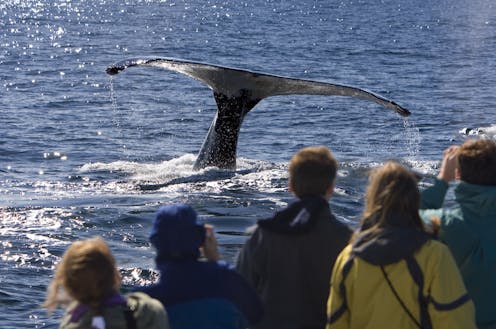
This article is part of a series explaining how readers can learn the skills to take part in activities that academics love doing as part of their work.
There’s no doubt about it, seeing a whale rise from the depths of the ocean is something special. Whether it’s the first time you’ve seen a whale or you’ve seen many like I have, it’s the thrill of hearing and sometimes smelling whale breath that gets you back for more! It’s time to dust off your binoculars because we’re about to dive into learning to whale watch.
When to see whales
Whale watching is a great outdoors activity we can all enjoy from May to November each year in Australia. Thousands of humpback whales migrate from their feeding waters of Antarctica to the warm northern breeding waters off the Kimberley, Western Australia, and the Great Barrier Reef, Queensland.
These giants traverse the sea and play important ecological roles in our marine environment.
What to look for
Ironically, trying to spot an animal the size of a bus is not always easy.
One of the first things to look for is that puffy tell-tail sign of a whale, its blow. Whales are mammals like you and I, which means they breathe air. Their nose is located on top of their head like an in-built snorkel.
This allows whales to breathe on the go and without having to raise their heads out of the water. As they breathe out you can see a spout or puffy blow as a combination of water and air is blasted upwards as they exhale. This air comes directly from their lungs and is also known as whale snot.
Whale blow can stick around for longer when weather conditions are ideal such as times with good visibility and low wind. This is a great advantage for spotting a whale.
If you’re lucky, you may also be able to spot a whale breaching, which is when they jump out of the water. Humpback whales are most famous for this. We don’t exactly know why whales do this but it most likely serves as a form of communication with other whales.
You may also be able to see other behaviours such as pec (arm) and tail slapping, resting at the surface and spy hopping – where a whale brings its mouth and eyes out of the water to look around.
After a dive, whales sometimes leave a whale footprint, which is a circular disruption at the surface caused by the whale’s tail. This is where the whale last surfaced. The whale will now likely be further ahead of this location.
After a whale surfaces, they sometimes leave a visible footprint at the surface.Boat or land-based whale watching, what’s better?
It depends. Some of the best whale watching I’ve ever had has been from land. High land-based viewing platforms such as those in national parks enable you to see further and wider out to sea. This allows you to document a lot more whale action but from a distance.
But if you’re after the salt in your face and the thrill of being on the water, then whale watching with a responsible ecotourism company is your best option. Australia has rules and regulations in place to keep both whales and humans safe from each other. This means humans must keep their distance from whales when on the water.
In some cases, whales may choose to approach your vessel and swim around at close range. This is known as a whale mugging and there is nothing you can do but turn off the boat engines and enjoy the show.
Whale mugging off the New South Wales south coast, Australia.Tools people can use to whale watch
Whale watching is an outdoors activity so prepare for any type of weather. I always suggest a weatherproof jacket to keep warm and protected from the wind and rain. I also recommend sunglasses, sun screen, a hat and comfy shoes.
If you’re a keen wildlife photographer like me, then pack your camera. Alternatively, a phone can be used to video or take photos.
Finally, don’t forget your binoculars. These can be great for seeing whales a little closer, but don’t worry if you don’t own a pair. I personally prefer spotting whales first with the naked eye.
Tips and tricks for success
It’s important to know whales don’t sit at the surface breathing all the time. Depending on what they are doing, they will likely spend time swimming underwater. This can range from a few minutes to up to 20 minutes for humpback whales. So be patient.
Scanning the horizon from left to right is a great tip when starting, especially from land. Start from one side and move along the horizon slowly. This will increase your chances of picking up anything between you and the horizon.
If on a boat, be aware that you’re likely moving, so try to use landmarks or other boats as potential navigational markers. Keep an eye out for anything at the surface that moves or pops up suddenly. I’ve seen some amazing things while waiting for whales, such as jumping sharks and sunfish.
Dive in
Whale watching is a great annual outdoor activity anyone can do. Whether you’re watching from land or sea, keep an eye out because you never know when you might spot your next or very first whale.
You can read other articles in this series here.
Authors: Vanessa Pirotta, Postdoctoral Researcher and Wildlife Scientist, Macquarie University
Read more https://theconversation.com/thar-she-blows-an-experts-guide-to-whale-watching-101-171954

















