

A climate scientist on India and Pakistan's horror heatwave, and the surprising consequences of better air quality
- Written by: Andrew King, Senior Lecturer in Climate Science, The University of Melbourne
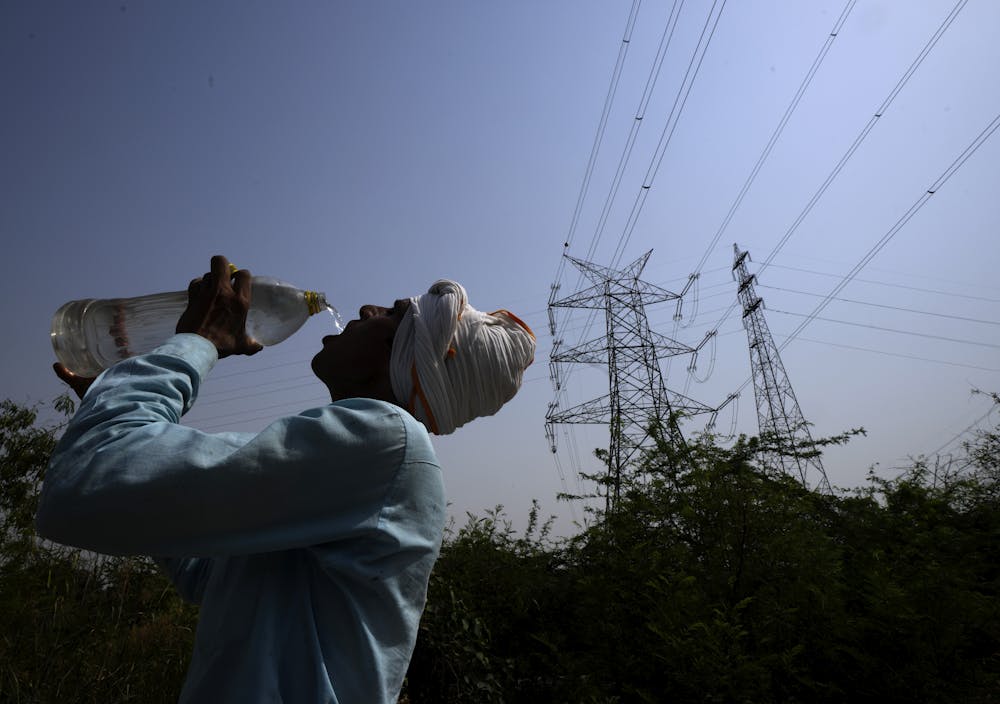
The record-shattering heatwave that engulfed most of India and Pakistan through March and April brought temperatures exceeding 45℃ in many areas, leading to critical electricity and water shortages.
Indeed, the maximum temperatures forecast for Delhi, India, will continue to reach over 40℃ for several days. The severe heat has strained healthcare systems across both nations, which are already stretched due to the continuing high numbers of COVID cases.
Temperatures overall have eased back to near-average in the last few days, but unfortunately as the planet continues to warm, such extreme heat will become more commonplace.
This is particularly dire for India and Pakistan, as steps to improve air quality is an added factor that will actually increase temperatures during heatwaves. Let’s take a closer look at why this heatwave is exceptional, and what the future may hold for the region.
Smashing heatwave records
India’s climate is different from many other regions of the Northern Hemisphere. Unlike most land areas north of the equator, the highest temperatures typically occur in May rather than in July or August.
This is because the monsoon brings huge amounts of moisture and rain to the Indian subcontinent from June and July, and this has a significant cooling effect.
Severe heatwaves have occurred in recent years, but usually in May. Notably, in May 2016, temperatures exceeded 50℃ in Rajasthan, northwestern India.
The 2022 heatwave has been exceptional in its area, persistence and how early it occurred.
India and Pakistan both experienced their warmest March in at least 60 years with an average maximum temperature of 33.1℃ for India.
The hot weather continued in April. And by the end of the month the temperature hit 49℃ in Jacobabad, Pakistan.
Parts of both India and Pakistan had their hottest April on record too, such as in northwest and central India.
Nowhere to hide from the heat
This extended heatwave affected hundreds of millions of people in one of the most densely populated and vulnerable regions of the world.
Heatwaves in any country cause surges in hospital admissions for a large range of illnesses as well as excess deaths. The heatwave culminating in Victoria’s Black Saturday bushfire in 2009, for example, claimed 374 lives.
Continuing high COVID cases adds an additional stress, with around 50,000 cases recorded over the course of April in India. This means healthcare systems have little capacity to cope with public health emergencies caused by extreme weather in many countries.
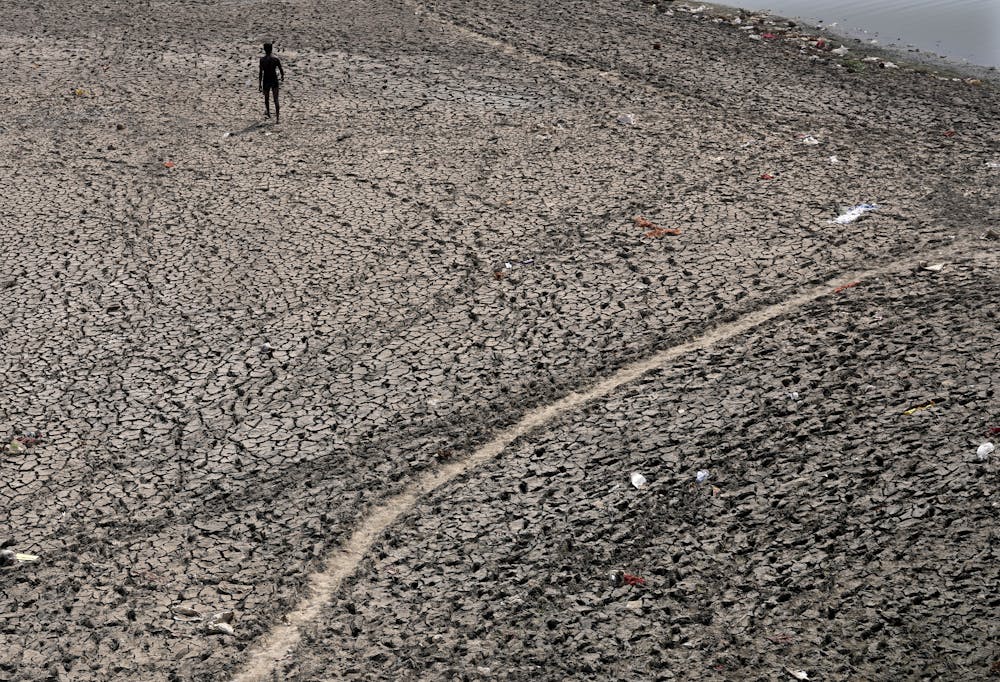 The dried bed of river Yamuna, where water levels have reduced drastically following the brutal heatwave in New Delhi, India.
AP Photo/Manish Swarup
The dried bed of river Yamuna, where water levels have reduced drastically following the brutal heatwave in New Delhi, India.
AP Photo/Manish Swarup
In wealthy regions of the world, most people can retreat indoors during severe heatwaves and many have access to air conditioning. But, in less wealthy areas such as in India and Pakistan, millions of people work outdoors, with few ways to find relief from the brutal heat.
Landfills are reportedly catching fire. Critical wheat crops are dying in the dry heat. And the electricity network is also less able to cope, with spikes in demand and frequent hours-long power outages.
Worse heat to come as air quality improves
Worryingly, the trend towards more frequent heatwaves has been accelerating across most regions, particularly over the last 40 years, as the planet has warmed. There’s no sign this acceleration will stop anytime soon under climate change.
The story is more complicated in South Asia as, in some parts of India and particularly the south, the most extreme high temperatures have become less hot in the last few decades. Yet, the overall number of heatwave days has increased.
Read more: The world endured 2 extra heatwave days per decade since 1950 – but the worst is yet to come
There are two main reasons India is bucking the trends in “heatwave intensity” (how hot it gets during a heatwave) seen in other parts of the world: pollution and irrigation.
The increase in population, along with the expansion of heavy industry and transportation, has meant there are more particles in the atmosphere that block sunlight from reaching the surface.
In places such as North America and Europe, clean air laws introduced in the mid-20th century helped drive down air pollution, but in southern and eastern Asia, aerosol levels remain high.
Irrigation use in agriculture has also increased across India, and its associated evaporation has had a slight cooling effect on temperatures.
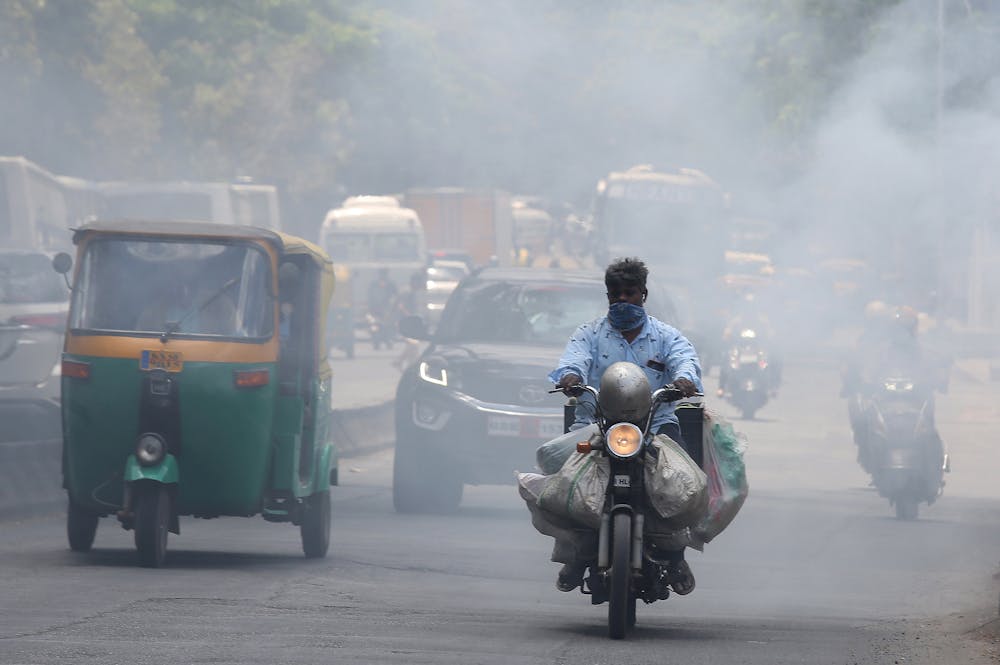 Aerosols from pollution help block sunlight, keeping temperatures relatively cool.
EPA/JAGADEESH NV
Aerosols from pollution help block sunlight, keeping temperatures relatively cool.
EPA/JAGADEESH NV
India, Pakistan and other Southern and Eastern Asian countries are starting to take steps to improve air quality, but progress is slow. Reducing pollution will have an unintended consequence of likely accelerating warming at a local scale, as pollution has helped mask some of the greenhouse gas-induced warming in the region.
While reduced air pollution will have many health benefits, it will also likely lead to greater heatwave intensity and frequency over the Indian subcontinent, as less sunlight is reflected by aerosols.
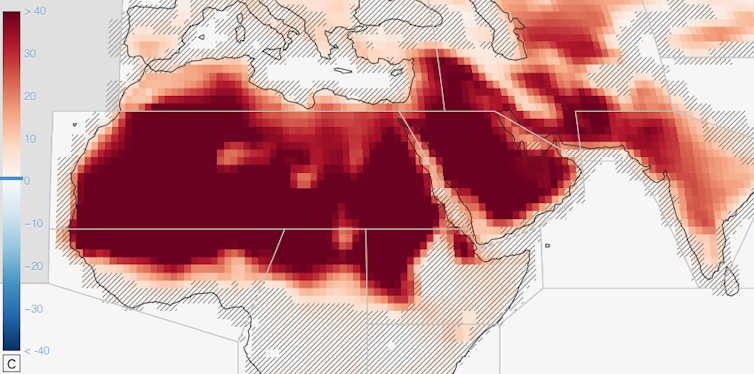
If Earth warms by 2℃ this century, which is roughly how much the world will warm if all government pledges are met, then we can expect large increases in hot temperature extremes over South Asia.
This includes parts of Pakistan and northwest India, which will endure more than 30 additional days over 40℃, compared with an early-industrial climate.
 Map of projected change in number of days exceeding 40℃ at 2℃ of global warming relative to late 19th century climate.
IPCC AR6 Interactive Atlas, CC BY-ND
Map of projected change in number of days exceeding 40℃ at 2℃ of global warming relative to late 19th century climate.
IPCC AR6 Interactive Atlas, CC BY-ND
Adapting to inevitable disasters
The tremendous threats heatwaves pose should not be ignored, and it’s crucial governments take measures to help countries adapt to the inevitable severe heat, to greatly reduce the worst impacts.
In Europe, the 2003 heatwave resulted in tens of thousands of deaths, but another that struck in 2006 led to almost 70% fewer deaths in France than expected.
Sadly, one reason is that the deaths of thousands of vulnerable people occurred only three years earlier. But France had also taken steps to reduce vulnerability to heat, including fit-for-purpose warning systems and public education on keeping cool during heatwaves.
India and Pakistan are both working to reduce heatwave impacts through plans that also focus on early warning of heatwaves and improved public communication of ways to find relief from heat.
We can only hope this will have reduced the number of excess deaths in the recent heatwave.
Authors: Andrew King, Senior Lecturer in Climate Science, The University of Melbourne


















