

Why did gas prices go from $10 a gigajoule to $800 a gigajoule? An expert on the energy crisis engulfing Australia
- Written by: Samantha Hepburn, Professor, Deakin Law School, Deakin University
Australia’s east coast has been plunged into an energy crisis just as winter takes hold, which will see many people struggle to heat their homes due to soaring gas bills.
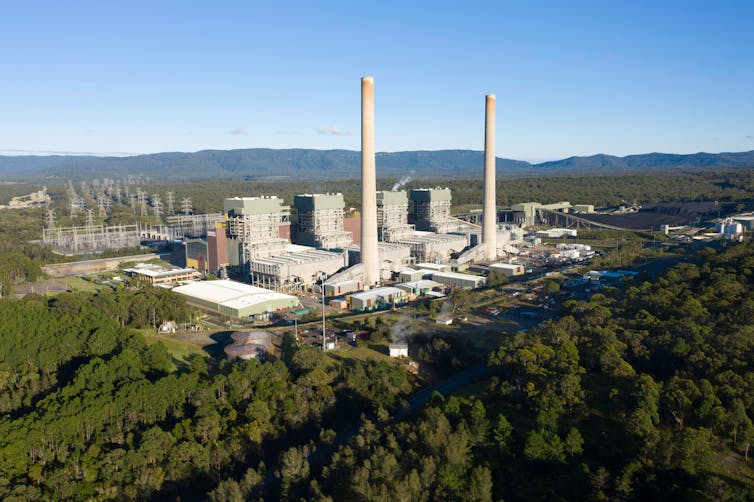
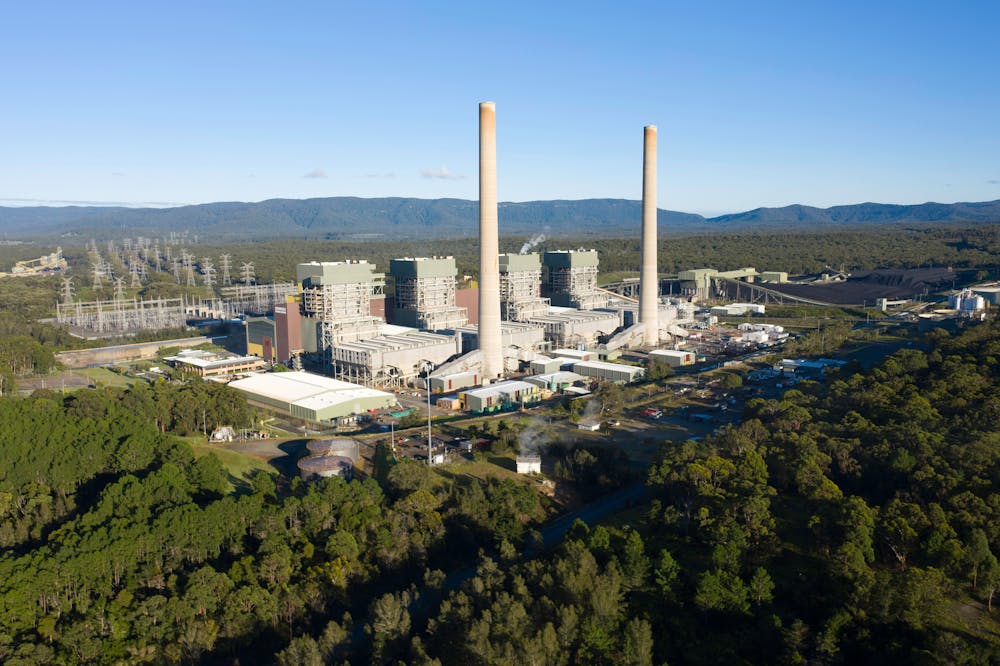
Meanwhile, Origin Energy this week confirmed it could not source enough black coal to power Australia’s largest coal plant at full capacity, deepening shocks to the energy market.
The electricity price surge is so dire, small energy retailers such as ReAmped Energy are advising customers to switch energy providers or be hit with much higher bills.
So what on Earth is going on? It has a lot to do with Russia’s war on Ukraine, which has disrupted the global energy market. Sanctions on Russian coal and gas exports mean there’s simply not enough supply to meet demand. As a consequence, the global price of gas and coal has soared.
Why are energy prices are getting so high?
Australia is a net exporter of gas and coal. This means we export most of our fossil fuels overseas. As the global price of coal increases, the cost of generating domestic electricity from coal is increasing.
What’s more, many of Australia’s coal generators are ageing, which means they fail more often. At present, nearly 30% of our coal generation is offline.
The price spike comes as coal plant owners look for the exit. Australia’s largest coal plant, Eraring, has been operating for 35 years. In February, Origin announced it would shut Eraring seven years ahead of schedule in 2025 because renewable energy was impacting profitability.
Origin’s new challenge is securing enough coal to run Eraring at its full 2.8 gigawatt capacity. The problem is set to persist into 2023.
This is not only due to a difficult global environment, but also domestic delivery difficulties due to supply chain disruptions.
In an attempt to meet rising electricity demand, some energy generators have increased gas-powered generation. However, given Australia exports so much of its domestic gas resources, any additional gas for domestic consumption must be acquired from the rising international market.
To make matters worse, this week’s cold snap along the east coast led to a spike in demand for electricity as people heated their homes.
Read more: 4 reasons why a gas-led economic recovery is a terrible, naïve idea
So what’s the overall effect? To give you an idea, a few months ago gas was trading at approximately A$10 a gigajoule. This week, wholesale prices in Victoria reached up to $800 a gigajoule – more than 80 times normal levels.
This gargantuan spike caused the Australian Energy Market Operator to step in, temporarily capping prices at $40 a gigajoule until June 10.
Will these prices continue?
These extraordinary prices will likely continue once the Australian Energy Market Operator’s cap is removed.
The Australian Energy Regulator has warned wholesale power prices are likely to remain high for at least two years. This will hit energy retailers and consumers hard.
However, those likely to experience the most pain are small energy retailers on the east coast because of the so-called “default market offer”.
Established in 2019, the default market offer serves as a price safety net for residential and small business customers by setting a price cap on how much energy retailers can charge households and businesses.
When advertising or promoting offer pricing, retailers must show the price of their offer in comparison to the default market offer price.
The default market offer for 2022 was released last week.
Alarmingly, it shows that from July 1, default offers will rise by 14% in New South Wales, 11% in Queensland and 7% in South Australia. In Victoria, the Essential Services Commission determines the default offer, and set the cap at 5%.
Read more: 4 reasons our gas and electricity prices are suddenly sky-high
So, while consumers will pay a bit more under the increased price cap, energy retailers will pay a lot more in a dramatically rising wholesale electricity market.
Large retailers such as AGL may cope, but smaller players will be hit hard and may not be able to survive given these price hikes are on top of rises in 2021.
This is what led ReAmped Energy, a small energy retailer with 70,0000 customers, to advise customers to look elsewhere.
Should we be surprised?
The state of the energy market reflects a deepening global resource crisis. However, in Australia, the writing has been on the wall for a long time.
Australia exports 85% of its gas. Between 2000 and 2015, Australia’s gas exports tripled. Between 2015 and 2019 they tripled again.
As more Australian gas is exported overseas, the domestic electricity price has risen. Exporting most of our gas means we often do not have enough for domestic consumption and purchasing it on the international spot market is costly.
The price of electricity rose a whopping 130% between 2015 – when liquefied natural gas exports began at Gladstone in Queensland – and 2019.
Read more: Australia has plenty of gas, but the price is extreme. The market is broken
Despite these increases, robust export controls have not been implemented. Unlike Western Australia where liquefied natural gas producers must reserve 15% for the domestic market, the east coast has no reservation policy.
Adding to this is the failure to support a swift integration of renewables into the national grid through stronger, focused regulatory mechanisms and improved policy has not occurred.
All this has created, as new federal climate and energy minister Chris Bowen put it, a “perfect storm”.
In his press conference today, Bowen blamed the previous government’s stalling on renewables and changing energy policies, saying:
Their ad hoc-ery, their changes of policy approaches, have left Australia ill-prepared and our energy markets ill-prepared for the challenges we are facing today in relation to gas and energy supply.
Is the government doing anything about it?
One response could be for the government to trigger an emergency domestic gas pricing mechanism and declare this to be a shortfall year, a 2017 mechanism which hasn’t yet been used.
If 2022 is deemed to be a shortfall year, export restrictions would be imposed upon liquefied natural gas producers to protect domestic supply. This could help pricing, because gas reservations can change the supply balance and allow domestic prices to adjust.
It may also assist with supply, given the recent cold snap resulting in the Australian Energy Market Operator to issue a separate warning of gas supply shortfalls in Victoria, South Australia and Tasmania.
However, Bowen today ruled out using the emergency mechanism to deal with the energy price hikes. He said it wasn’t designed to limit prices, and wouldn’t have any impact until January next year.
We are only in the early days of June, and more colder-than-normal weather is forecast for coming winter months. Whether it uses the domestic gas pricing mechanism or not, the federal government must take steps to address rising energy prices and make the coming winter easier for Australians to bear.
Read more: Why is it so cold right now? And how long will it last? A climate scientist explains
Authors: Samantha Hepburn, Professor, Deakin Law School, Deakin University


















