

5 areas where the hard work starts now
- Written by Bruce Glavovic, Professor in Natural Hazards Planning and Resilience, Massey University
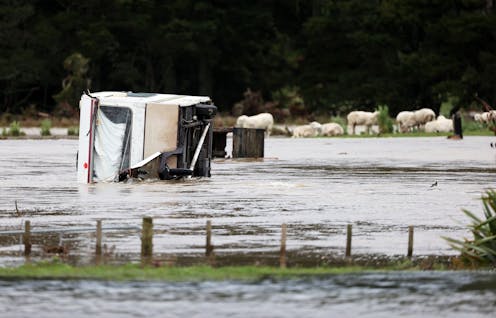
New Zealand’s first climate adaptation plan, launched his week, provides a robust foundation for urgent nation-wide action.
Its goals are utterly compelling: reduce vulnerability, build adaptive capacity and and strengthen resilience.
Recent reports by the Intergovernmental Panel on Climate Change (IPCC) have underscored the need for effective and transformative efforts to cut emissions urgently while also adapting and preparing for inevitable impacts of climate change.
But this national adaptation plan is just the beginning. The hard work is yet to come in its implementation. It is regrettable that proposed new law that would provide the institutional architecture for climate adaptation has been delayed until the end of next year.
Based on my experience as an IPCC author and working with communities around Aotearoa New Zealand and overseas, there are five key areas that need sharper focus as we begin to translate the intentions of the plan into practical reality.
Reducing risk for people on the ‘frontline’ of impacts
First, climate change will affect every aspect of life. These impacts will often be the result of climate-compounded extreme events that are already becoming more frequent and intense.
The people hardest hit are invariably those who are more vulnerable. We need to pay more focused attention to the root causes and drivers of vulnerability – and actions to reduce vulnerability and, ultimately, climate risk.
This means addressing poverty, marginalisation, inequity and other structural causes of vulnerability. Historically, much risk-based work has centred on calculations based on a formula that considers risk as a product of hazard and vulnerability. This approach is too technical.
We need to focus on reducing social vulnerability to climate change impacts, especially for those on the “frontline” of exposure to climate impacts, such as coastal communities facing rising sea level. Every region and locality needs to be able to identify and prioritise who is most exposed and vulnerable and catalyse proactive actions to reduce this vulnerability.
A climate-resilient future
Second, the plan clearly recognises the vital role of all governance actors in implementing it. However, in practice, local government will carry an especially significant responsibility in translating this plan into action.
There does not appear to be sufficient attention focused on how the adaptive capacity of local government will be built in this first stage of implementation. Local government will be the fulcrum for enabling – or hampering – adaptation at the local level.
Transformational capability building, from the political to operational level of local government, is imperative and needs to happen in partnership with tangata whenua, central government, the private sector (which receives scant attention in this plan) and civil society.
Third, introducing the concept of climate-resilient development is a welcome framing. This is an emerging concept, highlighted in a chapter of the IPCC report on adaptation. Climate-resilient development recognises the inherent intertwining of mitigation and adaptation efforts to advance sustainable development.
The plan limits the concept to climate-resilient “property development”. There is work to be done to deepen and extend this framing along the lines of the IPCC work.
Who should pay if people have to move?
Fourth, managed retreat looms large with so many New Zealanders living along rivers and the shoreline. We can only enable proactive retreat from imminent danger if the government determines who should pay.
At present, the trigger for retreat is usually an extreme event, often at huge cost to those impacted. In many cases, those in harm’s way cannot afford to retreat without government support. Often they are in localities approved by governing authorities.
Who should contribute to measures that reduce risk and enable retreat from climate-compounded hazards? What proportion of costs should be borne by those exposed or impacted and what proportion should be contributed by local and central government? And who makes the call for managed retreat and whether it should be voluntary or compulsory?
The “who pays” question is a tough call. The plan doesn’t provide an answer but we can’t avoid it if it is to be implemented.
Read more: When climate change and other emergencies threaten where we live, how will we manage our retreat?
Fifth, it is inevitable there will be “winners” and “losers” in the ongoing struggle to adapt to a changing climate. Values and interests will collide and contestation will escalate as climate impacts become more intense and frequent.
We’ll need to find more constructive ways to resolve climate-compounded conflict. At times government will be only one of several parties involved and won’t be in a position to enable or guide conflict resolution. For this, we’ll have to develop institutional processes and capabilities to facilitate independent mediated negotiation solutions for escalating climate conflicts.
Authors: Bruce Glavovic, Professor in Natural Hazards Planning and Resilience, Massey University

















