

Why migrant and refugee women and children remain in the shadows of health reforms in New Zealand
- Written by Reem Abbas, Research Fellow, Auckland University of Technology
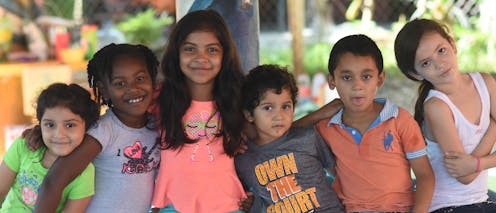
New Zealand’s healthcare policies for migrants rate among the top five countries globally. Yet research shows persistent health inequities among women and children with migrant and refugee backgrounds.
The current health system reforms create opportunities to improve publicly funded migrant health policies and to achieve health equity, particularly in maternal and child health services.
Annual migration to New Zealand was estimated at 46,100 in March 2022. This includes the annual refugee and family reunification quotas which have recently increased from 1,300 to 2,100.
By 2038, a quarter of New Zealand’s population is projected to identify with African, Asian, Latin American or Middle Eastern heritage backgrounds. In 2018, almost four in five of these people were born overseas and nearly two-thirds of the women were of childbearing age.
Our recent studies highlight several interlocking factors that affect access and acceptability of maternal and child health services for migrant and refugee women and their children.
They include cultural and language barriers, stereotyping and systemic racism, inequities in access to information and lack of support to navigate services.
The health reforms emphasise attention to voices from marginalised communities for the development of primary care “localities”. However, eliciting migrant and refugee women’s voices requires a bottom-up approach that acknowledges and addresses the profound barriers to community engagement.
Read more: Coronavirus shows how hard it is for ethnic minority and migrant women to access healthcare
Health system challenges for migrant and refugee women
Migrant mothers face substantial challenges as they raise their children in a new country. These include social isolation, emotional distress, financial constraints and different cultural norms.
Our own lived experiences as migrant women demonstrate the personal impact of these issues. This motivated our studies with the ultimate aim of improving policy and practice.
Sexual and reproductive health services in Aotearoa fail to cater adequately for African women because cultural taboos around “sex talk” and family planning impose a strong barrier to accessing such services. These taboos are based on longstanding African religious and gender norms, accompanied by attitudes and social mores about women’s morality and sexual conduct.
One research participant explains:
So even though the services are there, we are not accessing them. We know it’s there but it’s not for us. Everybody knows everybody. When they see you walk into that clinic you’re going to be talked about.
Stereotyping and discrimination, and lack of support and information during and after birth are problems. An African colleague shared her experience of being refused pain relief medication during birth, despite noting it in her birth plan and asking for it during labour.
The midwives said they had seen African women going to fetch wood and water with the newborn strapped on their back a few hours after delivery.
An opaque healthcare system
Newly migrated, first-time pregnant Indian women found it difficult to understand the process of finding a midwife and other maternal health services. One research participant said:
I had a pretty hard time finding a good midwife because when I was pregnant for the first time, I didn’t know anything. And New Zealand is a new country. And I didn’t have anyone, I didn’t know anyone, and I have no family, no friends.
This resonated with a Canadian Indian researcher among us:
I’ll just say that – like I had a lot of privilege coming here – and the healthcare system was really hard to navigate and especially when I recently had a child.
Communication issues are another common challenge. An African team member said:
I only found out from my birthing partner that the cord was wrapped around the baby’s [neck]. Yet it was omitted as it is considered to be common.
And a Chinese research participant said:
I have a feeling of uncertainty. I am concerned that what if I cannot understand what the doctor says.
Refugee mothers noted insufficient information provided about vaccines and post-vaccination management. They explained that ineffective communication hinders childhood immunisation experiences:
When [nurses] say side effect, we don’t know what’s being affected.
Our Iranian researcher noted:
The only time that I received a document in my language was during the COVID pandemic when an instruction was translated.
Read more: Building trust with migrant and refugee communities is crucial for public health measures to work
Responsive and inclusive maternity and childhood services that tackle language barriers and include a culturally competent workforce will have profound impacts on achieving health equity for migrants and refugees.
The Pae Ora (Healthy Futures) Act now includes a women’s health strategy that requires health entities to improve outcomes for women. This opportunity to include planning, delivery and evaluation of work which fulfils the potential of migrant and refugee women should not be missed.
Only then will Aotearoa New Zealand achieve social justice strategies that resonate with the 2030 Sustainable Development Agenda of “leaving no one behind”.
Authors: Reem Abbas, Research Fellow, Auckland University of Technology

















