

why we must act on the reasons some communities are facing higher risks
- Written by Bruce Glavovic, Professor in Natural Hazards Planning and Resilience, Massey University
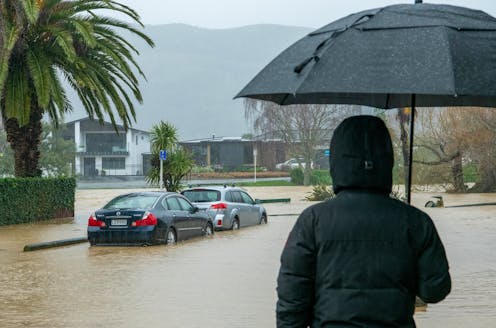
The New Zealand town of Nelson remains in a state of emergency, with nearly 500 homes evacuated, after the region received more than three times its average August rainfall in less than five days last week.
The prospect of yet more flooding is devastating, but thankfully there has been no loss of life.
Extreme weather is making life increasingly precarious in many other parts of the world, often with a terrible death toll.
As we prepare for a more turbulent future, fuelled by a changing climate, we can learn from the experiences of another New Zealand city, Ōtautahi Christchurch.
People there have lived through a decade of extreme events. They have experienced devastating earthquakes, floods, a terrorist attack, the COVID-19 pandemic, air pollution, growing social inequality and more.
In a new book, A Decade of Disaster Experiences in Ōtautahi Christchurch: Critical Disaster Studies Perspectives, we argue that our traditional response to disasters is no longer sufficient and we must begin to address the underlying causes that make some communities more vulnerable than others.
The failures of ‘traditional’ disaster studies
Traditionally, disaster studies and practices have centred on putting in place measures to contain natural hazards. For example, stop banks are erected to contain flooding.
Risk analysis and treatment options enable specialists to determine the probability and consequences of extreme events and prescribe optimal solutions. In Aotearoa New Zealand, robust legislation and policy such as the coastal policy statement are in place to improve natural hazard management and build community resilience.
These measures have unquestionably helped to reduce the impacts of extreme events. They have minimised loss of life. However, traditional approaches have not prepared our communities for the disruptive events we face now and in the future.
Climate change is a game changer. Sea-level rise is unstoppable. Flooding is commonplace.
We describe a new approach to research, policy and operational practice, based on a critical disaster studies perspective.
Focusing on underlying causes of vulnerability
The book provides an account of what people in and around the city of Christchurch have lived through in the face of disaster upon disaster upon disaster.
It reveals important lessons from real-world experiences and shares vital insights from Māori and migrant communities on response and recovery efforts as well as by individuals, civil society, the private sector and government.
A critical disaster studies perspective is distinguished from traditional approaches through its focus on the underlying drivers and root causes of vulnerability and risk that predispose people to harm.
It leverages the social sciences and humanities. It works in cross-disciplinary ways to better understand and address the influence of power, inequity and injustice in constructing vulnerability. It uncovers the everyday reality of disasters for those most susceptible to harm.
Disasters hit some people harder than others
Traditionally, a disaster is framed as an abnormal situation in which people, cities and regions are overwhelmed by extreme natural hazard events that exceed coping capacity.
A critical disaster studies perspective recognises that disasters are much more than naturally occurring ruptures. It views disasters as socially constructed and mediated.
In other words, historical and contemporary conditions, like social marginalisation and oppression, impoverishment, racism, sexism, inequity and injustice, predispose some people to much more harm than others in the face of shock and disruptive changes.
Vulnerability is not merely periodically revealed by occasional extreme events. It can be an “everyday reality” for some people – made much worse during extreme events.
Inevitably, the root causes of disasters are manifold and interconnected. This was laid bare in the decade of disaster experiences in Ōtautahi Christchurch from 2010. The lessons from these experiences should inform future responses to unfolding climate-compounded disasters and help us navigate the challenging times ahead.
Lessons from past disasters
Ōtautahi has become a laboratory for the world – a prelude to a turbulent future. Our book reveals several lessons.
First, vulnerability has a history. Building a city in a drained swamp, at sea level and by a capricious river, made it a disaster waiting to happen. Many of the problems the city’s rebuild has had to reckon with predate the earthquakes. They include colonisation, the declining central city, car dependency and the wellbeing of communities in poorer parts.
Second, rebuilding the city is much more than physical reconstruction. Recovery is chiefly the reconstruction of the city’s soul, its culture and social fabric. It involves ongoing restoration and rebuilding of the lives of individuals, whānau, communities and more.
Restoring and building trust to enable innovation and collaboration turns out to be even more important than marshalling bricks and mortar. And crucially, who is the city for?
Third, disaster recovery cannot be dictated from on high. A critical disaster studies perspective recognises the limits of central government. It underscores the importance of mana whenua and local communities to be supported by both local and central government. When it comes to recovery, it is neither top-down nor bottom-up, but both.
Fourth, authentic public engagement and a common vision and purpose are foundational to revealing and addressing the drivers of vulnerability.
From these lessons, we can draw conclusions and advice for future planning and disaster response and recovery:
do not allow new development in hazardous locations and avoid putting people in harm’s way
take action now to contain the compounding impacts of climate change, which is driving more intense and frequent extreme events, such as storms, floods and unavoidable sea-level rise
create space for young people to be part of planning and preparedness – it is their future
leadership by women enables empathy and emancipation
reinvigorate local democracy
avoid privatisation of disaster risk, because civil society holds collective responsibility for past, present and future choices about human development – it is best supported by the private sector and government
resilience (within limits) is founded upon diversity of people and the ecosystems on which we depend
put vulnerable people first. This is the cardinal rule of a critical disaster studies perspective.
Authors: Bruce Glavovic, Professor in Natural Hazards Planning and Resilience, Massey University

















