

Modern Australian
The Times

Empty mollusc shells hold the story of evolution, even for extinct species. Now we can decode it

  • Written by Kerry Walton, Researcher, University of Otago
Empty mollusc shells hold the story of evolution, even for extinct species. Now we can decode it

Most people have collected shells at the beach. Some have even started a shell collection. But few people realise these shells are a unique genetic resource that scientists are only beginning to tap into.

For over a decade it has been possible to extract and sequence ancient DNA from empty mollusc shells up to tens of thousands of years old. However, these techniques have so far proven very expensive and unreliable.

Our new international research represents a major advance towards doing so consistently and (relatively) cheaply. We employed these methods to better understand the evolutionary relationships between diverse populations of Aotearoa New Zealand’s smallest abalone/pāua species, Haliotis virginea.

The author in the lab with some pāua shells.
Newly developed techniques can unlock the genetic secrets of mollusc shells like New Zealand pāua. Guy Frederik/University of Otago, Author provided

Our results show the evolutionary history in this group was a lot more complicated than it appeared. Understanding how different populations are related to one another, and indeed what species they are, is critical in managing and conserving marine areas and resources.

Natural history collections across the world contain tens of millions of mollusc shells. Broader application of our methods would increase the proportion of samples in museum collections that can be used for genetic research by several orders of magnitude. Normally, only freshly collected and preserved tissues are used for genetic research.

We can now sequence DNA from thousands of mollusc species that have never been found alive, including those that went extinct recently, or those living in difficult-to-access places such as on deep-sea mountains. Such palaeogenetic studies of shells can reveal how species and populations have changed through time.

Read more: New Zealand should celebrate its remarkable prehistoric past with national fossil emblems – have your say!

A rich and varied biological menagerie

Molluscs are an extraordinarily diverse animal group that includes snails, clams and octopuses.

In New Zealand, culturally important kaimoana (seafood) species such as green-lipped mussels are farmed extensively and are worth hundreds of millions of dollars to the economy.

Molluscs can also be carnivorous, such as New Zealand’s giant, worm-eating Powelliphanta snails, many of which are critically endangered.

One of New Zealand's land snails, the critically endangered Powelliphanta hochstetteri.
Many of New Zealand’s giant land snails are critically endangered, including Powelliphanta hochstetteri from the top of the South Island. Kerry Walton/University of Otago, Author provided

Blue sea dragons drift in the open ocean and feed on dangerous bluebottle jellyfish. Some cone snails shoot poisoned darts to catch fish, and have been known to kill humans. Fortunately, those in New Zealand are unlikely to be deadly.

Blue sea dragon - a shell-less sea slug that feeds on dangerous jellyfish.
Blue sea dragon – a shell-less sea slug that feeds on dangerous jellyfish. Sylke Rohrlach/Wikipedia, Author provided

Molluscs can also be parasitic, living inside or attached to other marine species. Tropical vampire snails suck the blood of sharks while they sleep.

Scaly-foot snails secrete metal scales like a suit of armour. Other species rely on camouflage for protection. Carrier shells glue rocks and other shells onto their own shell to blend in on the seafloor.

The New Zealand carrier shell - a species that covers itself with rocks and other shells for camouflage.
The New Zealand carrier shell – a species that covers itself with rocks and other shells for camouflage. Kerry Walton/University of Otago, Author provided

Most molluscs are really small. Tiny, almost transparent snails, often less than a millimetre in size even when fully grown, live deep underground in aquifers and caves. Conversely, giants such as the colossal squid, which live in Antarctic waters, can exceed 500kg and would produce a calamari ring larger than a hula hoop.

The living dead of natural history collections

Some molluscs living today were born before Europeans arrived in New Zealand. Icelandic clams have been recorded as living for more than 500 years.

However, death may not be the end of their story. Most mollusc species produce a robust shell that can persist in the environment for thousands of years. Molluscs are, accordingly, very well represented in the fossil record, and have significantly improved our understanding of biodiversity changes through time.

Read more: 'Micro snails' we scraped from sidewalk cracks help unlock details of ancient earth's biological evolution

Amazingly, only half of New Zealand’s roughly 4,000 living mollusc species have been seen or collected alive. This includes tiny tree-top-dwelling snails that have been sieved out of leaf litter, or shells scooped out of sediments around the base of undersea mountains that are too rocky to sample directly.

A large proportion of the known mollusc species have yet to be given scientific names.

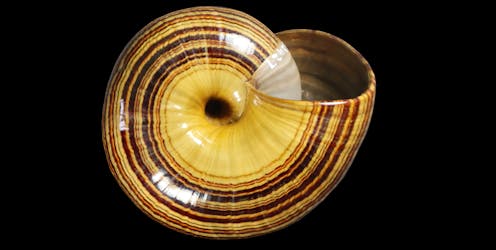
Shells of pāua (abalone)
Virgin pāua live in subtidal habitats all around New Zealand, including on isolated islands, which makes sampling difficult. Kerry Walton/University of Otago, Author provided

Natural history collections represent an invaluable and undervalued resource: an archive of knowledge and the solutions to questions never before thought possible, or that were held back by technological limitations of the time.

Read more: Museum specimens could help fight the next pandemic – why preserving collections is crucial to future scientific discoveries

With congruent climate and biodiversity crises, museum collections are no mere Victorian-era flights of fancy. They are critical to help us to better understand and protect our unique fauna and flora. These collections are essential to connect present and future generations with these amazing species.

Authors: Kerry Walton, Researcher, University of Otago

Read more https://theconversation.com/empty-mollusc-shells-hold-the-story-of-evolution-even-for-extinct-species-now-we-can-decode-it-187927

Road Signs: Understanding Their Role in Clear and Effective Signage

Effective signage and display hardware can help businesses communicate information, promote products and organise customer or visitor movement. Road...

Bottle Label Printing: Key Factors to Consider Before Your Next Packaging Run

Effective packaging begins with understanding the product, bottle material, artwork and production requirements when planning bottle label printing. H...

Planning a Long-Distance Move With Interstate Movers Melbourne

Moving between states involves more planning than a typical local relocation. Along with packing and transporting household belongings, you need to...

Understanding the Role of an I/O Controller in Industrial Automation

Modern industrial systems depend on accurate communication between sensors, machines and control systems. An I/O controller can help manage this commu...

How the Right Mining Hose Supports Demanding Operations

Mining environments place considerable demands on equipment used for material transfer, water management and processing. Hoses operating in these co...

Simple Ideas for Making Social Gatherings More Memorable

We have all been to those parties where everyone just stands around the kitchen island, staring at their phones, waiting for someone else to make a mo...

Outdoor Wall Lights: Improving Exterior Lighting Around Your Home

Lighting can influence how a room looks, feels and functions, so the right fitting should be selected according to both appearance and practical req...

Commercial Office Cleaning: Combining Routine Office Cleaning With Melbourne Service

Keeping a workplace clean requires a service that can accommodate everyday tasks as well as the particular needs of the business. Professional comme...

Caravan Sales in Queensland: How to Find the Right Caravan for Sale QLD

Caravan ownership is about more than having somewhere to sleep while travelling. For many Queenslanders, it is one of the best ways to explore regio...

What Sir Walter Buffalo Turf Actually Costs in 2026 (And Why Quotes Vary So Much)

Two quotes landed on a Hills District homeowner's kitchen table last spring for the exact same 80-square-metre backyard. One said $12 a metre. The o...

Nearly 1,300 NSW Hospital Beds Are Occupied By People Who Are Ready To Go Home

1,276 people in NSW hospitals have been medically cleared for discharge but remain in hospital because they're still waiting for NDIS or aged care sup...

National Survey Launched to Measure Operational Impacts of Federal NDIS Policy Reforms

The effects of recent NDIS reforms are beginning to move beyond policy papers and into day to day service delivery. A new national survey is asking ...

Beyond the Nappy Cake: Baby Shower Gifts That Get Used

What new Australian parents unwrap, keep, and quietly thank you for months later. Six weeks after my daughter was born, I did an audit of the baby sh...

Parent-Advocates Are Reshaping Frontline Disability Service Delivery

Parents have always been part of the disability sector. They advocate, coordinate services, challenge decisions and often become the person holding ev...

Vista Cruises Enters "Two-Flagship Era" as Vista Aurora Completes Inaugural Voyage

Vista Aurora Sets Sail along the Yangtze. (Photo courtesy of the company)YICHANG, China — August 5, 2026 — Vista Aurora, a high-end interprovinc...

A Digital Preparation Checklist For International Medical Conferences

An international medical conference compresses many responsibilities into a few days. A delegate may need to present research, move between venues, ...

The Growing Popularity of Lab Grown Diamonds in Sydney and Hong Kong

The diamond industry has changed significantly in recent years as more buyers seek ethical, affordable, and sustainable alternatives to mined diamon...

Modern AI SEO Agency vs Traditional SEO: What’s the Difference

Search engine optimisation has changed dramatically over the past few years. Search engines have become smarter, user behaviour has evolved, and bus...
















