

Plunger, espresso, filter? Just because your coffee is bitter, doesn't mean it's 'stronger'
- Written by Emma Beckett, Senior Lecturer (Food Science and Human Nutrition), School of Environmental and Life Sciences, University of Newcastle
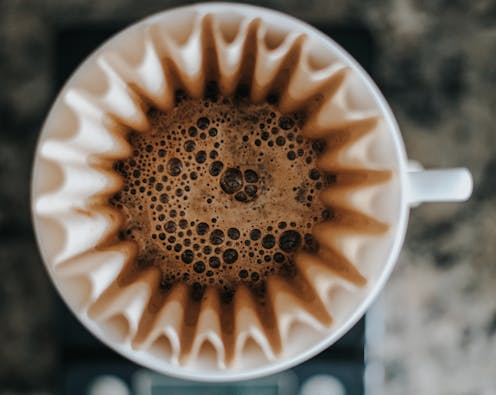
Coffee – one bean with many possibilities. A big choice is how to brew it: espresso, filter, plunger, percolator, instant and more. Each method has unique equipment, timing, temperature, pressure, and coffee grind and water needs.
Our choices of brewing method can be cultural, social or practical. But how much do they really impact what’s in your cup?
Which is the strongest brew?
It depends. If we focus on caffeine concentration, on a milligram per millilitre (mg/ml) basis espresso methods are typically the most concentrated, able to deliver up to 4.2 mg/ml. This is about three times higher than other methods like Moka pot (a type of boiling percolator) and cold brewing at about 1.25 mg/ml. Drip and plunger methods (including French and Aero-press) are about half that again.
Espresso methods extract the most caffeine for a few reasons. Using the finest grind means there is more contact between the coffee and water. Espresso also uses pressure, pushing more compounds out into the water. While other methods brew for longer, this doesn’t impact caffeine. This is because caffeine is water soluble and easy to extract, so it’s released early in brewing.
But these comparisons are made based on typical extraction situations, not typical consumption situations.
So, while espresso gives you the most concentrated product, this is delivered in a smaller volume (just 18–30ml), compared to much larger volumes for most other methods. These volumes of course vary depending on the maker, but a recent Italian study defined a typical final serve of filter, percolator and cold brews as 120ml.
Based on this maths, cold brew actually comes out as the highest dose of caffeine per serve with almost 150mg – even higher than the 42–122mg totals found in finished espresso. Although cold brew uses cold water, and a larger grind size, it is brewed with a high coffee to water ratio, with extra beans needed in the brew. Of course, “standard serves” are a concept not a reality – you can multiply serves and supersize any coffee beverage!
With the rising price of coffee, you might also be interested in extraction efficiency – how much caffeine you get for each gram of coffee input.
Interestingly, most methods are actually pretty similar. Espresso methods vary but give an average of 10.5 milligrams per gram (mg/g), compared to 9.7–10.2mg/g for most other methods. The only outlier is the French press, with just 6.9mg/g of caffeine.
‘Strength’ is more than just caffeine
Caffeine content only explains a small part of the strength of coffee. Thousands of compounds are extracted, contributing to aroma, flavour and function. Each has their own pattern of extraction, and they can interact with each other to inhibit or enhance effects.
The oils responsible for the crema – the rich brown ‘foam’ on top of the brew – are also extracted more easily with high temperatures, pressures, and fine grinds (another potential win for espresso and Moka). These methods also give higher levels of dissolved solids, meaning a less watery consistency – but, again, this all depends on how the final product is served and diluted.
To further complicate matters – the receptors that detect caffeine and the other bitter compounds are highly variable between individuals due to genetics and training from our usual exposures. This means the same coffee samples could invoke diverse perceptions of their bitterness and strength in different people.
There are also differences in how sensitive we are to the stimulant effects of caffeine. So what we are looking for in a cup, and getting from it, is dependent on our own unique biology.
Is there a healthier brew?
Depending on the headline or the day, coffee might be presented as a healthy choice, or an unhealthy one. This is partly explained by our optimism bias (of course we want coffee to be good for us!) but may also be due to the difficulty of studying products like coffee, where it is difficult to capture the complexity of brewing methods and other variables.
Some studies have suggested that coffee’s health impacts are brew type specific. For example, filter coffee has been linked to more positive cardiovascular outcomes in the elderly.
This link might be a coincidence, based on other habits that coexist, but there is some evidence that filter coffee is healthier because more diterpenes (a chemical found in coffee which might be linked to raising levels of bad cholesterol) are left in the coffee and the filter, meaning less make it to the cup.
The bottom line?
Each brewing method has its own features and inputs. This gives each one a unique profile of flavour, texture, appearance and bioactive compounds. While the complexity is real and interesting, ultimately, how to brew is a personal choice.
Different information and situations will drive different choices in different people and on different days. Not every food and drink choice needs to be optimised!
Read more: A dark brew: coffee, COVID and colonialism have left millions struggling to make a living
Authors: Emma Beckett, Senior Lecturer (Food Science and Human Nutrition), School of Environmental and Life Sciences, University of Newcastle

















