

'Stealth privatisation' in iconic national parks threatens public access to nature's health boost
- Written by Ralf Buckley, International Chair in Ecotourism Research, Griffith University
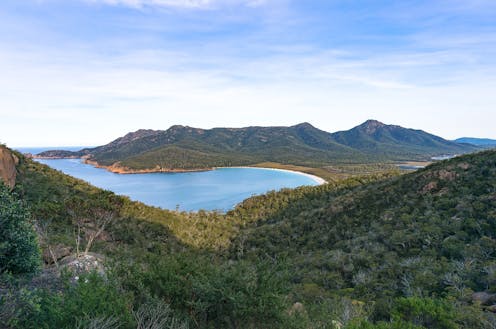
Australia’s national parks in several states are under siege from privatisation by stealth. Developers are using the lure of ecotourism to build posh private lodges with exclusive access deep inside many iconic parks.
The problem is, not everyone can afford private lodges. There’s a real danger in letting developers take over precious parts of nature. We know nature is good for our mental health – and the wilder the better. One in five Australians report at least one episode of mental illness in the previous year.
Our new research shows protected areas in Australia boost the mental health of visitors, seen in productivity gains of up to 11% for people who visit at least once a month. Nationwide, that means our national parks give us a productivity gain of 1.8% and cut healthcare costs by 0.6%. We found the therapeutic effects of nature for mentally unhealthy park visitors are 2.5 times greater than for mentally healthy visitors.
Access to nature in national parks is one of the few free mental health boosts available to the less well-off as well as the wealthy. If creeping privatisation takes root in our parks – replacing campsites with expensive accommodation – those who most need the boost from nature will find it harder to get.
The public doesn’t want private development in parks
In national parks, the public wants signs, tracks, toilets, and tent sites, run by parks agencies and available to everyone. The public almost always opposes permanent accommodation in parks, whoever owns it, based on the belief private lodges and camps should be on private land.
But state governments in New South Wales, Queensland, Tasmania and South Australia have enabled this regardless. Think of the pristine Ben Boyd National Park near Eden in NSW, slated for eco-tourism cabins at the expense of campers. Or of the Cooloola Recreational Area in Queensland’s Great Sandy National Park near Noosa, where luxury cabins are planned.
The examples go on: ecotourism cabins in Main Range National Park in Queensland, Tasmania’s private Three Capes walk in Tasman national park and a resort in Freycinet National Park, as well as Kangaroo Island in South Australia.
Read more: Buzz off honey industry, our national parks shouldn’t be milked for money
While visitors to ecotourism developments report improved wellbeing and mental health, the issue is about who gets access. Private developments exclude the wider public, both physically and financially.
Some 70% of Australians visit a national park at least once a year. These visits reduces our healthcare costs by A$12.3 billion a year, and increases economic productivity by A$35 billion a year.
Worldwide, we have estimated the money saved through better mental health deriving from visits to protected areas to be around A$8.5 trillion per year.
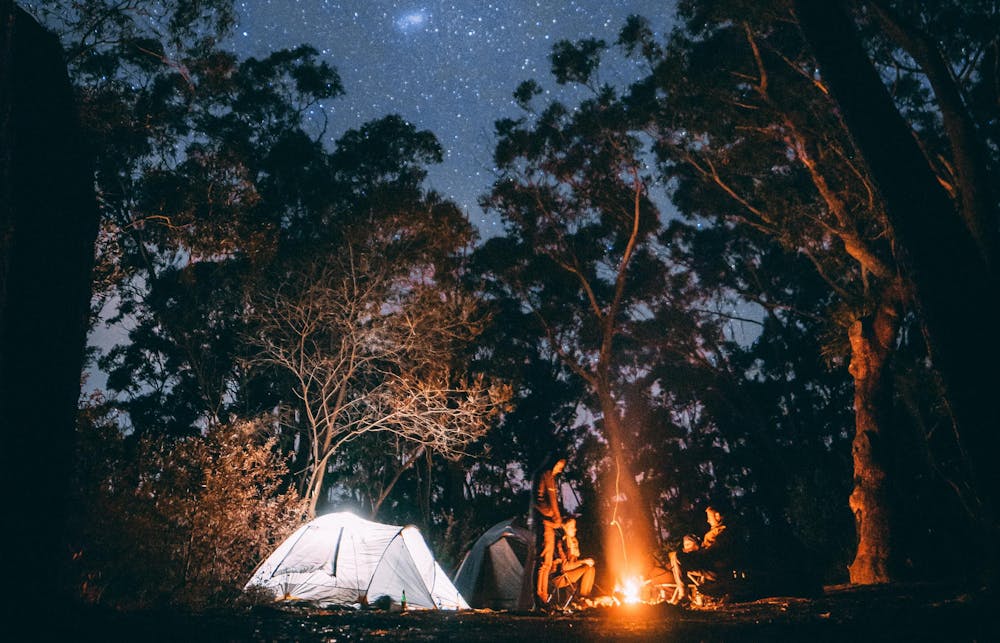 Privatisation of public areas like campgrounds could make it harder for many to camp in national parks.
Jonathan Forage/Unsplash, CC BY
Privatisation of public areas like campgrounds could make it harder for many to camp in national parks.
Jonathan Forage/Unsplash, CC BY
Socialise the costs?
Private lodges impose costs on cash-strapped parks agencies, due to their fixed footprints, permanent occupation and need for new access roads and paths. Lodges can also increase management costs for park staff through weed control, pathogens, feral animals, noise, bushfires and water pollution.
When some in-park enterprises collapse, they can leave large clean-up costs for the taxpayer, as we’ve seen at Queensland’s Hinchinbrook Island.
Read more: From Kangaroo Island to the Great Barrier Reef, the paradox that is luxury ecotourism
Parks agencies sometimes have to buy back rights given away free, such as after the collapse of the Seal Rocks centre on Victoria’s Phillip Island.
Private development also comes with increased legal and financial risks for the state, such as after the Thredbo landslide in 1997.
All these costs cut into funds allocated for conservation.
If we let the tourism industry take greater control over park access for private profit, we risk turning famous natural places into exclusive havens for people with money.
This is not to say tourist ventures have no place. Commercial nature tourism businesses can benefit, and contribute, by guiding inexperienced visitors to visit national parks. But the parks themselves, and all their facilities, should remain publicly owned and accessible to all.
National parks are a major tourism drawcard. Commercial enterprises benefit from visitor spending along access routes, in gateway settlements outside park boundaries, and by operating mobile guided tours inside parks under similar conditions to independent visitors. Private lodges inside parks compete with these existing businesses.
We don’t have to give private interests everything they ask for
While some other countries do allow private lodges in national parks, the models are very different from those in Australia.
In Botswana, for example, private leases in protected areas are short, facilities are fully removable, and private tour operators pay 80% of the parks agency budget.
For comparison, proposals for a private island heli lodge in Tasmania’s Lake Malbena offered only A$4,000 a year.
In the US, the National Parks Service subcontracts visitor services to private concessionaires, but owns the facilities, requires bonds equal to 100% of capital value, and sets all conditions and prices.
In India, luxury lodges must generally be located outside park gates, while private hotels inside parks in China have been removed by the parks agency.
The quiet privatisation of access to national parks risks restricting nature’s mental and physical health benefits to the well-heeled. We need to protect public access to wild places meant for the public.
Read more: Is nature-based tourism development really what our national parks need?
Authors: Ralf Buckley, International Chair in Ecotourism Research, Griffith University

















