

Labor's biodiversity market scheme needs to be planned well – or it could lead to greenwashing
- Written by Felicity Deane, Associate Professor, Queensland University of Technology
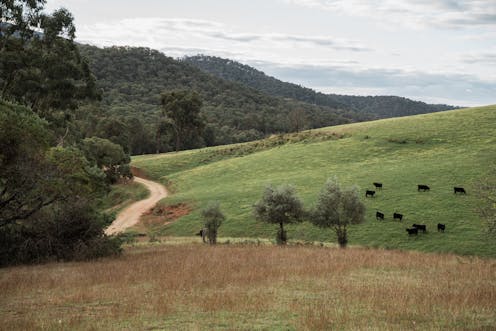
Businesses and philanthropic organisations are looking to invest in projects to protect and restore nature. We need to make this easier.
Which major political party’s minister said this? If you guessed Labor, correct – it was environment minister Tanya Plibersek last week. But the phrase is strikingly similar to one made by the Coalition’s David Littleproud.
In fact, Labor’s proposed biodiversity market borrows heavily from the previous government’s approach. In brief, landholders would be able to buy and sell biodiversity certificates. A farmer seeking to clear land could buy a certificate created by another farmer who has restored native vegetation elsewhere.
The federal government should tread very carefully here. New South Wales’ environmental offset scheme has been slammed for failing to do what it was meant to do, and with the major problems in Australia’s carbon offset program.
If not designed well, schemes like this can very easily be gamed and fail to actually achieve their goals.
Passing the baton
In February this year, the Morrison government introduced a bill aimed at creating a market for farmers to boost biodiversity on their land. It was heralded as a world first – but that is not quite true.
While both the Coalition and Labor governments want to claim credit for the invention of the scheme, similar biodiversity schemes have been introduced in other countries. The United Kingdom and Canada have matched market-based approaches with policies aimed at ensuring a biodiversity net gain. That is, any biodiversity loss through development must be offset with certificates that represent an even greater biodiversity gain. That is the theory at least.
The Coalition’s proposed market was designed to reward landholders on farmland with a tradeable certificate when they agreed to undertake projects to protect and enhance native species. These certificates can be sold to a third party, who may use them to compensate for biodiversity loss through development or to support their sustainability goals.
Just six months later, Labor announced a seemingly very similar proposal, though details are currently sparse. We do know Labor’s version is intended to eventually be funded largely by the corporate sector.

This approach could help – but only if planned properly
One key difference is the scale. Prime Minister Anthony Albanese made it clear the market would be open to all land managers, whether farmers, conservationists looking to re-wild land, or Indigenous land managers.
Although the government suggests the scheme would operate in a similar way to existing carbon credit legislation, the rhetoric indicates certificates may not only compensate for projects which cause biodiversity loss, but allow corporations to meet their environmental, social and governance goals. This is potentially legitimate, but could also be used for greenwashing.
Read more: We can't stabilise the climate without carbon offsets – so how do we make them work?
The problem is, offsets don’t always work. In the environment sector, offsets are seen as a measure of last resort, which can – depending on the specific transaction – actually lead to an overall loss of species or habitat.
The government must learn from the integrity questions around Australia’s carbon credit scheme.
For a biodiversity market to be effective, you need available land and willing participants, who expect a positive return on investment. That means the price for certificates has to be worth the cost of actually doing restoration work.
And the government must ensure the scheme is watertight, given the major integrity and transparency issues in the carbon credit scheme called out by whistleblowers and academics.
To avoid this, it is vital these biodiversity certificates represent provable biodiversity gains and that the details of these gains are known to any purchasers. Buyers will be a lot more confident if they know the certificates they are buying come from, say, a farmer restoring native vegetation along a previously cleared creek.
The government is aware of this. They are still deciding how best to measure and verify biodiversity benefits. This will be one of the greatest challenges of introducing this scheme.
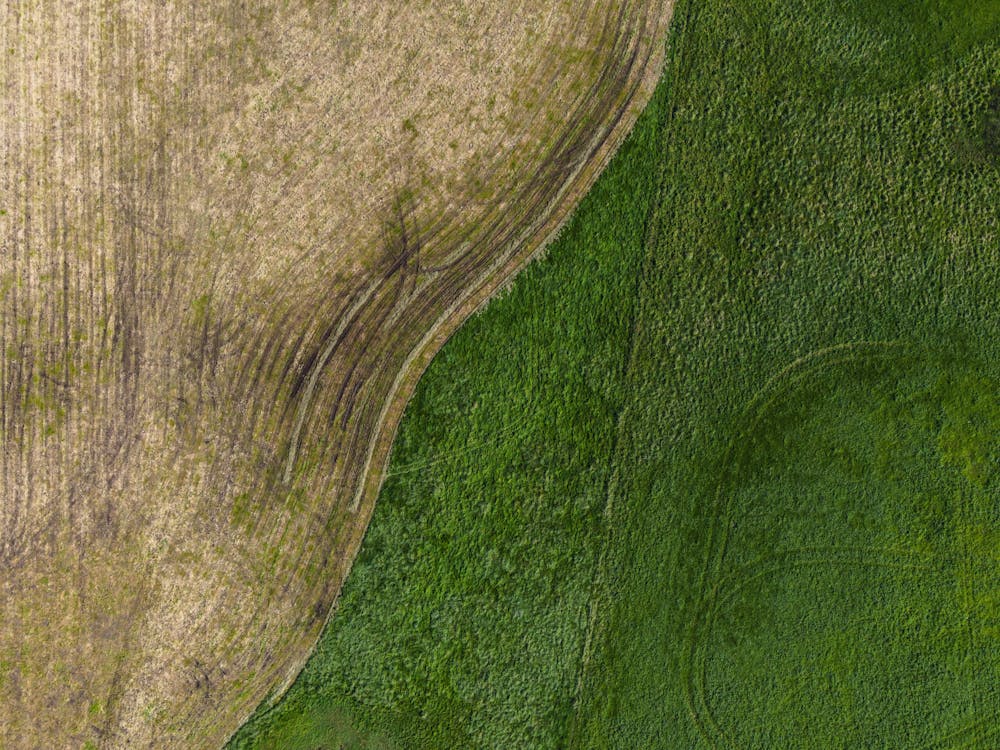 A key question is how to measure biodiversity improvements.
Nathan Jennings/Unsplash, CC BY
A key question is how to measure biodiversity improvements.
Nathan Jennings/Unsplash, CC BY
A biodiversity market cannot stop degradation by itself
Sceptical commentators claim environmental markets are a false solution to a serious ecological emergency. This is true, if we rely on the market approach in isolation.
A biodiversity market is not a silver bullet to our many serious and overlapping environmental problems. Improving the outlook for our many ailing species and ecosystems will require work on many fronts, such as funding protected areas, working to bring back threatened species, tackling land clearing, working on carbon banking and accelerating climate action.
To give the scheme teeth, Australia should look to the UK and Canadian approach of requiring a net environmental gain on a national level.
Many Australian states already require no net loss of biodiversity from developments and policies. Even so, these policies have not always stopped large scale land clearing due to exemptions. Similarly, the loss of one habitat is not always compensated by gain of another habitat. Labor must tighten up these loopholes.
We must see this biodiversity market scheme clearly. It is only one method of improving environmental outcomes in this country. We’ll need many more.
.
Authors: Felicity Deane, Associate Professor, Queensland University of Technology

















