

Modern Australian
The Times

With a COVID 'variant soup' looming, New Zealand urgently needs another round of vaccine boosters

  • Written by John Donne Potter, Professor, Research Centre for Hauora and Health, Massey University
With a COVID 'variant soup' looming, New Zealand urgently needs another round of vaccine boosters

Almost three years into the COVID pandemic, it clearly isn’t over.

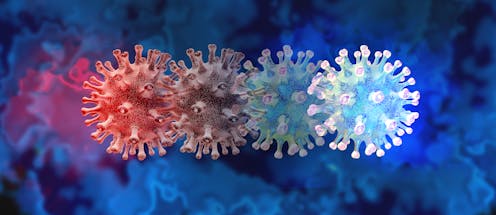
New offshoots of the Omicron variant of SARS-CoV-2 continue to proliferate worldwide. The virus is mutating extensively and convergently (meaning the same mutations are popping up along different family trees) and, as a result, we now have what is increasingly being called a “variant soup”.

The current range of immunity-evading descendants of the Omicron variant is unprecedented in its diversity, which makes it harder to predict coming waves.

Although some may feel infection has now become inevitable, we must not forget that vaccination substantially lowers the risk of infection (including Omicron), hospitalisation and death, and staying free of infection means not having to face the risk of long COVID.

Vaccine protection is even better after receiving at least one booster, compared with just having the primary series. This is why Aotearoa New Zealand needs to embark on another round of boosters to better protect the population.

At present, just over 90% of the population aged 12 years or older have completed the primary course. More than 70% aged 18 or older have received the first booster, but only just over 40% of those over 50 have received the second booster. We look like an increasingly vulnerable population.

Read more: Omicron-specific vaccines may give slightly better COVID protection – but getting boosted promptly is the best bet

What we also need now, but do not yet have, is a sterilising vaccine of the sort we have for measles. This kind of vaccine eliminates the pathogen before it can replicate. The vaccinated person does not get ill, nor can they pass it on to others. Research is underway, including in New Zealand, but we are not there yet.

The variant soup and waning immunity

The growing prevalence of the variant soup in the US is clear from the latest data.

We don’t yet have a clear idea of the differences in transmissibility and severity among the new variants, although there are hints from France that the dominant new variant, BQ.1.1, and its sub-variants do not cause as much severe disease as we have seen earlier.

Graph showing the changing proportion of Omicron variants in the US
Author provided We do know that immune responsiveness and vaccine effectiveness against Omicron sub-variants fade rapidly. The later variants have been better able to evade immunity than earlier ones. The new variants have the same collection of mutations, which shows they are being selected for by the host (human) immune response, which in turn is influenced by our collective vaccination and infection history. The most immunity-evasive variants are BQ.1.1 (the most rapidly increasing variant in the US), XBB and BA.2.75.2. As immunity wanes and as the virus mutates, we should take our guidance from how we handle these issues with other infectious diseases. Because tetanus immunity wanes, we get a booster every ten years. Because influenza viruses both mutate and re-emerge regularly as different variants, we get a yearly influenza vaccination as our best, albeit imperfect, protection against severe illness. Read more: Five reasons why young people should get a COVID booster vaccine Do the new boosters work? Small early studies, which are not yet peer reviewed, suggest the new bivalent boosters (targeting more than one Omicron variant) result in about the same level of neutralising antibodies as monovalent boosters. However, one study, which used a more appropriate way of assaying (live virus rather than pseudo-virus), showed robustly higher neutralising antibody responses to recent variants, compared to monovalent boosters. The fact that boosters raise protection overall, and that the bivalent version may do so even against recent variants, means making them available is crucial to us as individuals and as a community. Read more: Millions of Australians still haven't had their COVID boosters. What message could convince them now? Boosters as the best strategy The strongest immunity seems to arise as a result of vaccination and a breakthrough infection. This finding has resulted in a tendency towards advising that the best strategy is to be vaccinated and to become infected. Such a hope-based strategy might obviate – after some ill-defined number of vaccinations and an ill-defined passage of time – the need for a further booster. Eventually, if we follow this line of reasoning, vaccination and other public-health measures might no longer be needed. This is a strategy that fits our desperate need to no longer have to deal with this pandemic: many of us are in deep denial about the pandemic’s ongoing threat. Even more, we are in denial about the pandemic eventually morphing into a new influenza-like endemic disease with recurring waves, probably with a higher risk of long COVID. We’ll probably see a permanent new entity in our biological environment. But given our multi-generational experience of specific infectious diseases disappearing entirely or largely from our environment, definitely in the developed world and in some cases in the whole world, our denial means we are really not ready to “welcome” a new one in. Read more: Reinfection will be part of the pandemic for months to come. Each repeat illness raises the risk of long COVID This denial is futile. The virus is neither sentient nor capable of responding to our wishes. Even if we were all willing to pursue the vaccination-plus-infection strategy, there is a price to pay for individuals and whānau – and for the healthcare system. That price is a growing burden of long COVID syndromes, which we don’t yet understand well – and certainly don’t manage well. As the proportion of reinfections is going up (currently at 19% of daily cases) and the variant soup looms, we need to provide another round of boosters supported by clear reasons: to protect the most vulnerable; to reduce the risk of severe disease, hospitalisation, intensive care and death; to reduce the likelihood of long COVID; and to ensure our already stressed healthcare system is not overwhelmed. We also need to strengthen our commitment to public-health measures: masks, distance and better ventilation. These have, to date, protected us quite well in Aotearoa and even better in countries like Japan that learned these lessons a century ago and have embedded them deeply in the social structure.

Authors: John Donne Potter, Professor, Research Centre for Hauora and Health, Massey University

Read more https://theconversation.com/with-a-covid-variant-soup-looming-new-zealand-urgently-needs-another-round-of-vaccine-boosters-193616

What’s Trending in Men’s Jewellery This Father’s Day!

Finding a Father’s Day gift that feels personal, stylish and genuinely wearable is not always easy. While socks and novelty mugs have traditionall...

Road Signs: Understanding Their Role in Clear and Effective Signage

Effective signage and display hardware can help businesses communicate information, promote products and organise customer or visitor movement. Road...

Bottle Label Printing: Key Factors to Consider Before Your Next Packaging Run

Effective packaging begins with understanding the product, bottle material, artwork and production requirements when planning bottle label printing. H...

Planning a Long-Distance Move With Interstate Movers Melbourne

Moving between states involves more planning than a typical local relocation. Along with packing and transporting household belongings, you need to...

Understanding the Role of an I/O Controller in Industrial Automation

Modern industrial systems depend on accurate communication between sensors, machines and control systems. An I/O controller can help manage this commu...

How the Right Mining Hose Supports Demanding Operations

Mining environments place considerable demands on equipment used for material transfer, water management and processing. Hoses operating in these co...

Simple Ideas for Making Social Gatherings More Memorable

We have all been to those parties where everyone just stands around the kitchen island, staring at their phones, waiting for someone else to make a mo...

Outdoor Wall Lights: Improving Exterior Lighting Around Your Home

Lighting can influence how a room looks, feels and functions, so the right fitting should be selected according to both appearance and practical req...

Commercial Office Cleaning: Combining Routine Office Cleaning With Melbourne Service

Keeping a workplace clean requires a service that can accommodate everyday tasks as well as the particular needs of the business. Professional comme...

Caravan Sales in Queensland: How to Find the Right Caravan for Sale QLD

Caravan ownership is about more than having somewhere to sleep while travelling. For many Queenslanders, it is one of the best ways to explore regio...

What Sir Walter Buffalo Turf Actually Costs in 2026 (And Why Quotes Vary So Much)

Two quotes landed on a Hills District homeowner's kitchen table last spring for the exact same 80-square-metre backyard. One said $12 a metre. The o...

Nearly 1,300 NSW Hospital Beds Are Occupied By People Who Are Ready To Go Home

1,276 people in NSW hospitals have been medically cleared for discharge but remain in hospital because they're still waiting for NDIS or aged care sup...

National Survey Launched to Measure Operational Impacts of Federal NDIS Policy Reforms

The effects of recent NDIS reforms are beginning to move beyond policy papers and into day to day service delivery. A new national survey is asking ...

Beyond the Nappy Cake: Baby Shower Gifts That Get Used

What new Australian parents unwrap, keep, and quietly thank you for months later. Six weeks after my daughter was born, I did an audit of the baby sh...

Parent-Advocates Are Reshaping Frontline Disability Service Delivery

Parents have always been part of the disability sector. They advocate, coordinate services, challenge decisions and often become the person holding ev...

Vista Cruises Enters "Two-Flagship Era" as Vista Aurora Completes Inaugural Voyage

Vista Aurora Sets Sail along the Yangtze. (Photo courtesy of the company)YICHANG, China — August 5, 2026 — Vista Aurora, a high-end interprovinc...

A Digital Preparation Checklist For International Medical Conferences

An international medical conference compresses many responsibilities into a few days. A delegate may need to present research, move between venues, ...

The Growing Popularity of Lab Grown Diamonds in Sydney and Hong Kong

The diamond industry has changed significantly in recent years as more buyers seek ethical, affordable, and sustainable alternatives to mined diamon...
















