

Modern Australian
The Times

Humans are going back to the Moon, and beyond – but how will we feed them?

  • Written by Kim Johnson, Senior lecturer, La Trobe University
Humans are going back to the Moon, and beyond – but how will we feed them?

NASA’s Artemis I launch is a major step forward in humans going deeper and spending longer in space than ever before.

Future Artemis missions plan to take crew to the Moon and eventually Mars, which is likely to be a three-year round-trip.

But what will the astronauts eat? There are only so many protein bars and vitamins one can tolerate and survive on for years on end.

Plants are the basis of life on Earth with their amazing ability to convert light, water and carbon dioxide (CO₂) into food, and are the logical solution to support humans in space.

The challenges of a space garden

Astronauts have already eaten space radish, chilli peppers and lettuce grown on the International Space Station, and having freshly grown veggies in microgravity can support health and wellbeing. But there are a number of challenges in growing a flourishing space garden.

Space environments are CO₂-rich, lack soil microbes, have altered gravity, are exposed to potentially harmful solar radiation, and need to use recycled, high-salt water. For plants to thrive in space and offer the full range of nutrients for human health, they need a redesign.

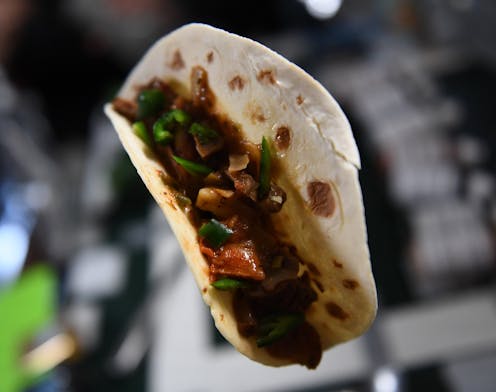
After months of freeze-dried or prepackaged space food, imagine going to your space garden, picking a ripe juicy tomato and spicy chilli to add to your tacos. Adding fresh produce has been a good way to improve astronaut wellbeing, supply essential vitamins and minerals, and add variety and flavour, especially as low-gravity environments affect our taste and smell.

A renewable source of fresh food is essential to future long-term space missions, to avoid astronauts experiencing “food fatigue”, malnutrition and weight loss.

A man looking at bright red chilies growing in a rectangular opening in the wall of a space capsule
Chilies have been successfully grown on the ISS, and astronauts have consumed some of them in tacos. NASA Johnson, CC BY-NC-ND

Space plants are currently grown in closed boxes with low energy LED lights, porous clay “soil” with water, nutrients and oxygen supplied to roots; high-tech sensors and cameras monitor plant health. Plants did not evolve to grow in a box and use energy and resources in readiness for changes in light, temperature and disease, limiting full growth potential.

So there is great opportunity to adapt plant genetics to produce faster-growing “pick and eat” food crops such as tomato, carrot, spinach and strawberry designed to reach their maximum potential in closed, controlled environments.

A black tray of small green leafy plants laid out in a grid
Astronauts have also successfully grown radishes on the ISS, providing further data on space gardening experiments. NASA Johnson, CC BY-NC-ND

A sustainable space plant future

Future plant growth systems for space will need to be entirely sustainable. That means working alongside all the other systems on a space station or a lunar/Martian base, recycling water and nutrients.

All plant parts will need to be food, compost or converted into useful products such as fuels and plastics. Human waste, including urine, offers a nutrient source for plants, yet they also need to be able to cope with this salty water supply. However, there’s one plant that could be particularly suited to the task.

Duckweed may not be available at your local supermarket, but this very fast-growing plant could be in all space gardens thanks to its ability to thrive in recycled water and be zero waste, with the whole plant being eaten.

Duckweed doubles its weight in just two days, is harvested continually, and is high in protein, nutrients, antioxidants and vitamins. Only a few essential elements (such as vitamin B12/D) are missing that could make it a reliable base source for complete human nutrition.

Read more: Duckweed is an incredible, radiation-fighting astronaut food – and by changing how it is grown, we made it better

Recent technical advances in genome editing, gene regulation, and methods to analyse nutrients can be harnessed to adapt duckweed and other plants for optimal growth, minimal waste and complete nutrition.

New plants developed in this way can contain proteins perfectly balanced for human digestion and use, healthy plant oils for an energy boost, and soluble fibre for better gut and cardiovascular health.

Specks of round green leaves on a dark background
Duckweed, a fast-growing aquatic plant, could be the next space ‘superfood’. Onushi/Shutterstock

Striving to explore space has brought us thousands of innovations we use in everyday life. We can expect that inventions we come up with to support humans thriving in space will deliver multiple and essential sustainability benefits to Earth, especially to on-demand supply of nutrition and biomaterials. Experts across the globe are working together toward these dual goals, including plant biologists, engineers, food chemists, psychologists, sensory experts, nutritionists, ethicists, and legal experts.

A new frontier of human achievement is on the horizon – humans will soon not only be looking up to the night skies in wonder, but also travelling to those destinations beyond our own atmosphere, and in so doing planting seeds of a new way of life on Earth and beyond.

Authors: Kim Johnson, Senior lecturer, La Trobe University

Read more https://theconversation.com/humans-are-going-back-to-the-moon-and-beyond-but-how-will-we-feed-them-189794

What’s Trending in Men’s Jewellery This Father’s Day!

Finding a Father’s Day gift that feels personal, stylish and genuinely wearable is not always easy. While socks and novelty mugs have traditionall...

Road Signs: Understanding Their Role in Clear and Effective Signage

Effective signage and display hardware can help businesses communicate information, promote products and organise customer or visitor movement. Road...

Bottle Label Printing: Key Factors to Consider Before Your Next Packaging Run

Effective packaging begins with understanding the product, bottle material, artwork and production requirements when planning bottle label printing. H...

Planning a Long-Distance Move With Interstate Movers Melbourne

Moving between states involves more planning than a typical local relocation. Along with packing and transporting household belongings, you need to...

Understanding the Role of an I/O Controller in Industrial Automation

Modern industrial systems depend on accurate communication between sensors, machines and control systems. An I/O controller can help manage this commu...

How the Right Mining Hose Supports Demanding Operations

Mining environments place considerable demands on equipment used for material transfer, water management and processing. Hoses operating in these co...

Simple Ideas for Making Social Gatherings More Memorable

We have all been to those parties where everyone just stands around the kitchen island, staring at their phones, waiting for someone else to make a mo...

Outdoor Wall Lights: Improving Exterior Lighting Around Your Home

Lighting can influence how a room looks, feels and functions, so the right fitting should be selected according to both appearance and practical req...

Commercial Office Cleaning: Combining Routine Office Cleaning With Melbourne Service

Keeping a workplace clean requires a service that can accommodate everyday tasks as well as the particular needs of the business. Professional comme...

Caravan Sales in Queensland: How to Find the Right Caravan for Sale QLD

Caravan ownership is about more than having somewhere to sleep while travelling. For many Queenslanders, it is one of the best ways to explore regio...

What Sir Walter Buffalo Turf Actually Costs in 2026 (And Why Quotes Vary So Much)

Two quotes landed on a Hills District homeowner's kitchen table last spring for the exact same 80-square-metre backyard. One said $12 a metre. The o...

Nearly 1,300 NSW Hospital Beds Are Occupied By People Who Are Ready To Go Home

1,276 people in NSW hospitals have been medically cleared for discharge but remain in hospital because they're still waiting for NDIS or aged care sup...

National Survey Launched to Measure Operational Impacts of Federal NDIS Policy Reforms

The effects of recent NDIS reforms are beginning to move beyond policy papers and into day to day service delivery. A new national survey is asking ...

Beyond the Nappy Cake: Baby Shower Gifts That Get Used

What new Australian parents unwrap, keep, and quietly thank you for months later. Six weeks after my daughter was born, I did an audit of the baby sh...

Parent-Advocates Are Reshaping Frontline Disability Service Delivery

Parents have always been part of the disability sector. They advocate, coordinate services, challenge decisions and often become the person holding ev...

Vista Cruises Enters "Two-Flagship Era" as Vista Aurora Completes Inaugural Voyage

Vista Aurora Sets Sail along the Yangtze. (Photo courtesy of the company)YICHANG, China — August 5, 2026 — Vista Aurora, a high-end interprovinc...

A Digital Preparation Checklist For International Medical Conferences

An international medical conference compresses many responsibilities into a few days. A delegate may need to present research, move between venues, ...

The Growing Popularity of Lab Grown Diamonds in Sydney and Hong Kong

The diamond industry has changed significantly in recent years as more buyers seek ethical, affordable, and sustainable alternatives to mined diamon...
















