

Frank Bongiorno's political history of Australia is a grand synthesis, but takes a narrow view of its subject
- Written by Marilyn Lake, Professorial Fellow in History, The University of Melbourne

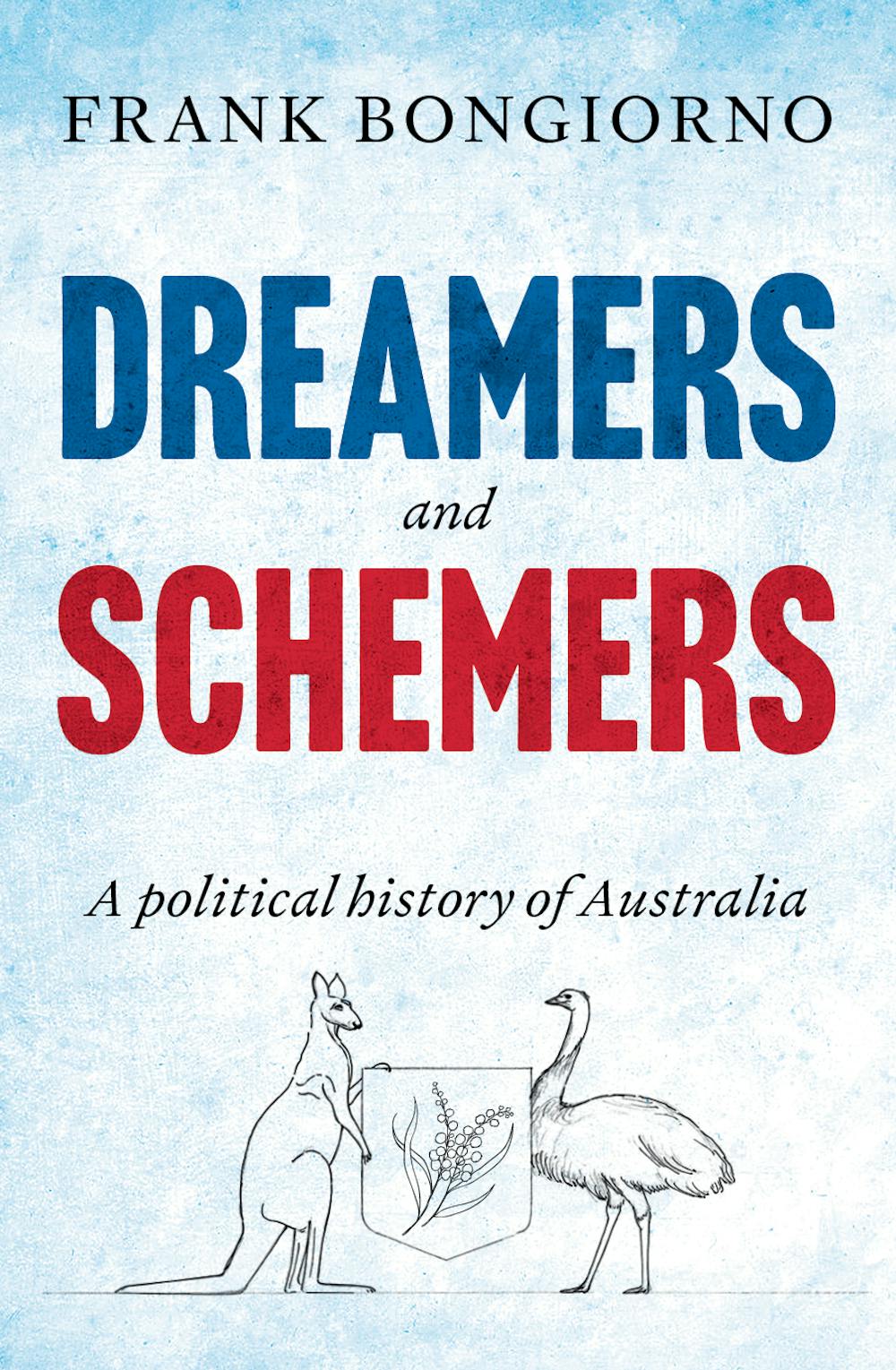
Dreamers and Schemers: A Political History of Australia by Frank Bongiorno is a comprehensive account of the history of Australian parliamentary politics. It examines political parties and their leaders, factional divides and national elections.
Encompassing federal, state and sometimes municipal politics, it will be a useful reference for any journalist wanting to check a fact, and an invaluable text on many a survey course. A large volume of nearly 500 pages, the book is based on very wide reading and years of university teaching. It represents a prodigious effort and Bongiorno is to be congratulated on his grand synthesis.
Review: Dreamers and Schemers – Frank Bongiorno (La Trobe University Press).
The book takes a long view, beginning with some speculative discussion of the political arrangements among some First Nations peoples prior to invasion. It goes on to provide detailed accounts of the colonial transition from autocracy to democracy, the creation of the Commonwealth of Australia, the consolidation and re-shaping of the two-party system in the 20th century, the impact of war and reconstruction, and the consequences of neoliberal economic reform.
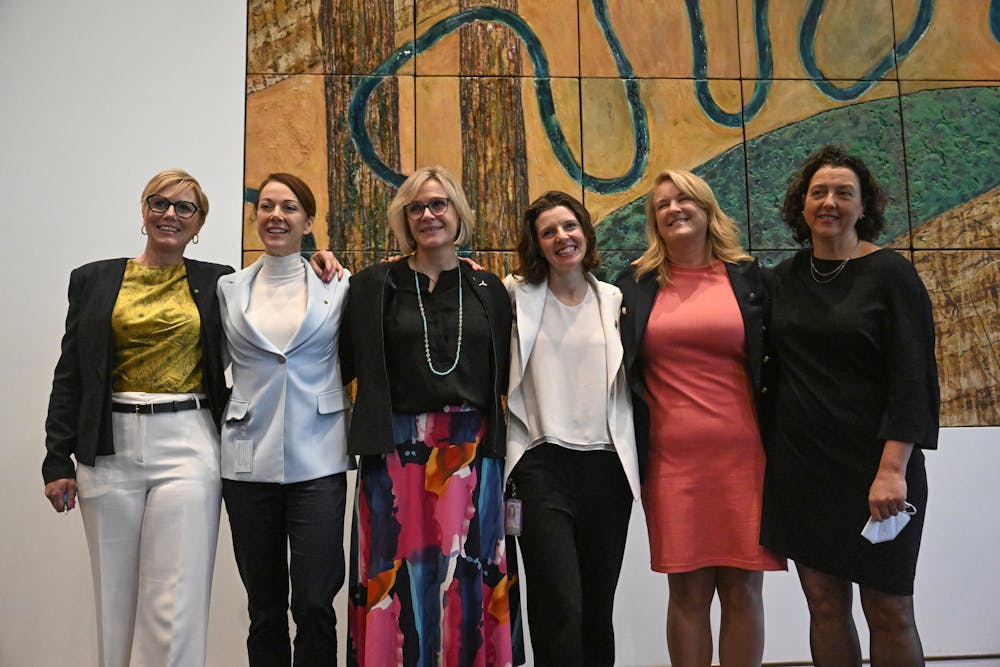
It ends with the surprising outcome of the May 2022 elections – “arguably the most drastic electoral shift to the left since the elections of 1969 and 1972” – which might perhaps be characterised as the revenge of the dreamers on the schemers.
Read more: Book extract: Dreamers and schemers and the election that changed us
Narrative history
Bongiorno documents a long history of dreaming and scheming, but it would seem that the schemers have lately come to dominate the Australian political story.
Recent revelations about the breathtaking Medicare rorts have followed fast on the heels of scandals concerning community, carpark and sports rorts, widespread wage theft, the systematic exploitation of workers and burgeoning economic inequalities. The striking lack of integrity in 21st-century Australian politics was one reason for Greens, “Teal” candidates, and other independents surging into parliament at the recent federal election.
But how did the schemers come to predominate? Bongiorno offers little explanation. This is narrative history, not a work of thematic analysis.
The narrative really comes to life when Bongiorno writes about the political machinations of men seeking high office – “tests of manhood”, as he characterises their political striving. He writes vividly of colonial governors dealing with ambitious emancipists and pastoralists, the contest in colonial politics between free traders and protectionists, World War I leader Billy Hughes trying to introduce conscription for overseas service, and the post-World War II conflict over bank nationalisation.
Then there is Gough Whitlam’s impatience to bring about federal intervention in the Victorian branch of the ALP – to clear the way for his party’s election to national office – and the plotting of Governor General John Kerr, who, with the apparent connivance of the British Crown, sacked Prime Minister Whitlam and paved the way for the rise of the paradoxically progressive Malcolm Fraser.
Bongiorno’s previous books on The Sex Lives of Australians and The Eighties flavour his racy account of the 1970s and 1980s, where the mistresses of leading politicians seem to get as much attention as the radicals who formed the Women’s Liberation Movement.
In Bongiorno’s lively account, male politicians are sexualised in an admiring way. Andrew Peacock is “stylish”; Jim Cairns and Harold Holt are “handsome”.
It was a sexualised culture. Labor’s 1972 election campaign was helped to victory by “nubile young women” wearing “It’s Time” T-shirts. Although the Labor conference at Terrigal, New South Wales, in 1975 was important in policy terms, “it was sex rather than money that is most recalled about Terrigal”. Bob Hawke, who led Labor into government in 1983 had, we are told, “a large sexual appetite”, all the while exuding “sexiness and charisma”. Paul Keating’s eloquence and wit left some journalists “nearly besotted”.
 Malcolm Fraser, Gough Whitlam and Bob Hawke at the 100th anniversary of the first session of the Commonwealth Parliament, Royal Exhibition Building, Melbourne, May 2001.
Julian Smith/AAP
Malcolm Fraser, Gough Whitlam and Bob Hawke at the 100th anniversary of the first session of the Commonwealth Parliament, Royal Exhibition Building, Melbourne, May 2001.
Julian Smith/AAP
Narrow focus
The qualifier in the book’s subtitle – it is a political history of Australia – warns of a restricted focus. But Bongiorno’s conception of what counts as “political” is surprisingly narrow.
There is no sustained discussion of the philosophical basis of the challenges to mainstream parliamentary politics posed by the environmental movement or the women’s movement, or by First Nations’ calls for collective land rights, truth-telling and a treaty.
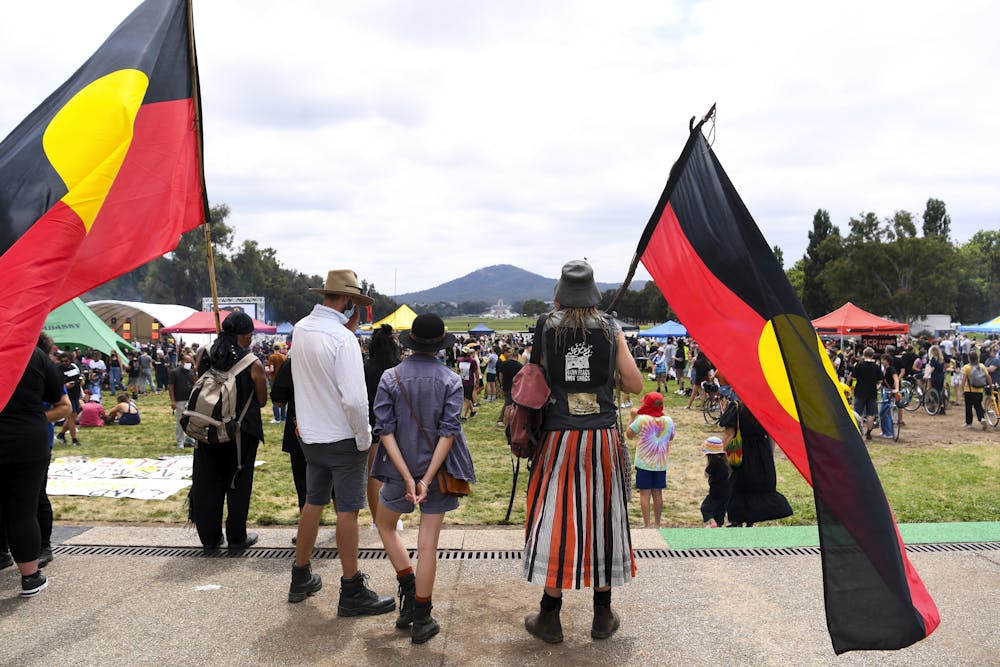 People attend an event marking the 50th anniversary of the The Aboriginal Tent Embassy in Canberra in January.
Lukas Coch/AAP
People attend an event marking the 50th anniversary of the The Aboriginal Tent Embassy in Canberra in January.
Lukas Coch/AAP
Nor does Bongiorno reflect on the impact of internationalism on national politics – for example, the influence of the International Labour Organisation’s conventions on Equal Remuneration in 1951 and Indigenous and Tribal Populations in 1957. The latter was crucial for activists in conceptualising land rights.
Bongiorno is attentive to the “marginal status” of Chinese men, white women and Aboriginal people in the self-governing 19th-century Australian colonies, and the subsequent under-representation of First Nations peoples, migrants and women in state and federal parliaments. But he does not see the challenge posed by “difference” in a white man’s democracy in conceptual terms, as discussed by political theorists such as Anne Phillips and Seyla Benhabib.
A history of the dreams that sustained different political activists in Australia might have included the Chinese Australian vision of “cosmopolitan friendship and sympathy” and their pioneering calls for recognition of “common human rights” in the 1880s. It should certainly include the founding feminist vision of (in the words of Rose Scott) a “mother-woman’s world with loving heart and sheltering arms” and Aboriginal calls from the 1920s for a common citizenship based in recognition of their difference as the original owners of the country with a right to self-determination.
And should not we expect to read more about environmentalist claims in support of the radical idea that land, water, flora and fauna represent political interests in their own right?
Read more: Plenty of resilience, but little resistance in a new account of Australia's Great Depression
Differing interests
Drawing on the work of British political theorist Bernard Crick, Bongiorno tells us that politics is
the activity by which differing interests within a given unit of rule are conciliated by giving them a share of power in proportion to their importance to the welfare and survival of the whole community.
This represents an invitation, surely, to think more broadly about the “differing interests” that constitute the national polity – the majority of whose members are not white men – and which groups might be most important to the “welfare and survival” of the whole community. Perhaps we now think about care workers in these terms – “the heroes of the pandemic” – as Prime Minister Albanese recently hailed them. Do they have power in proportion to their importance?
Australian political history tells us that care workers have long demanded more from the national political economy. When Queensland feminist, Irene Maud Longman, told a federal Royal Commission in the late 1920s that mothers, as paradigmatic care workers, should be paid a regular wage by the state that allowed them to be free of economic dependence on men and the vulnerabilities that entailed, her male interlocutor was puzzled:
Women could live apart from their husbands? That is an alteration of the existing conditions?
Longman replied:
Yes, absolutely, it is revolutionary and that is what we wish.
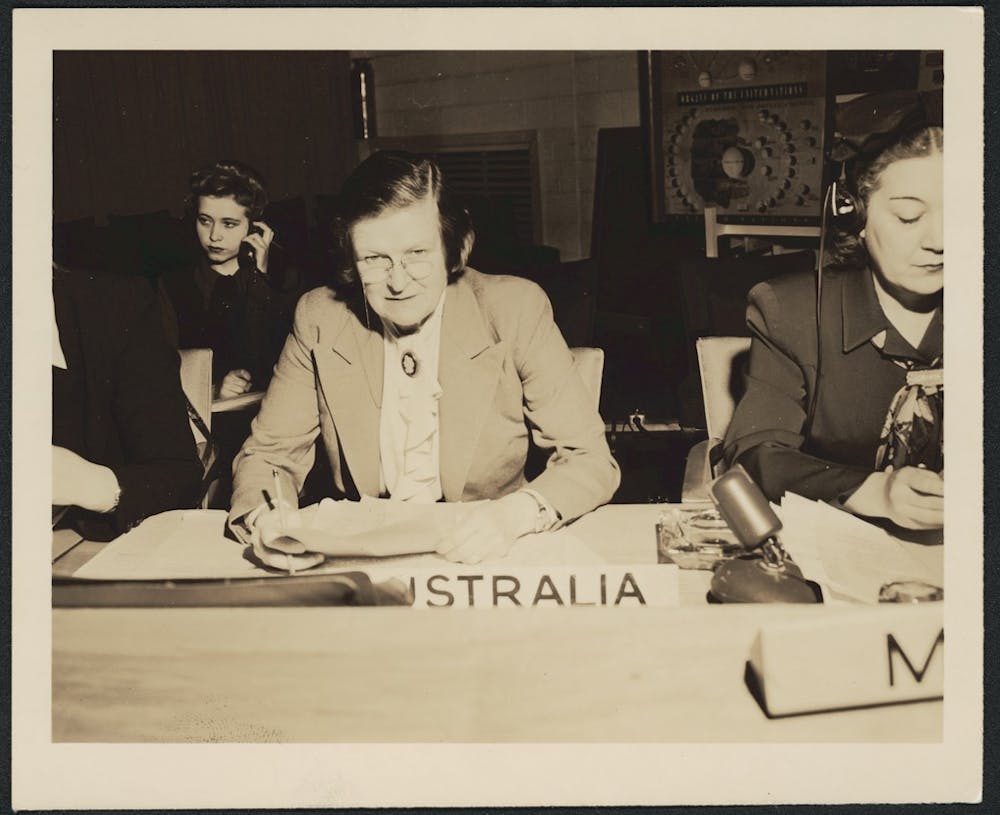 Jessie Street representing Australia at the United Nations, 1945.
National Library of Australia
Jessie Street representing Australia at the United Nations, 1945.
National Library of Australia
This revolutionary dream was carried forward by feminist leader Jessie Street, who founded the United Associations of Women in 1929. Its members produced radio broadcasts and published booklets making the case for the economic independence of care workers. Referring to mothers’ work as “the most indispensable and most important work done anywhere by anyone”, Street called for “adequate remuneration by the State” for this work. Their proposals caused “great hilarity” among men in positions of power.
Street also helped organise the large “Women’s Charter” conferences in 1943 and 1946 and co-authored the petition, launched in 1957, calling for the referendum on Aboriginal citizenship that would be held ten years later.
Yet for all this, Street (“the wife of a leading judge”) only gets a single mention in Dreamers and Schemers, as an ALP election candidate. She is a good example of the way in which casting national political history as the story of state and federal parliamentary politics narrows our conception of politics.
 To discuss the radical diversity of dreams that have animated different political groups in Australia – dreams arising from different life experiences, perspectives, values and priorities – would require a political history less focused on male political elites and more attuned to the politics of difference.
Bongiorno is aware of the questions posed by political “marginalisation”, but seems unable to fully explore them within his chosen genre. While saluting his major achievement – his grand synthesis – I also look forward to reading new kinds of national political history better able to fully address the conceptual, historical and political implications of difference and the radical challenges posed by alternative dreams.
Authors: Marilyn Lake, Professorial Fellow in History, The University of Melbourne
To discuss the radical diversity of dreams that have animated different political groups in Australia – dreams arising from different life experiences, perspectives, values and priorities – would require a political history less focused on male political elites and more attuned to the politics of difference.
Bongiorno is aware of the questions posed by political “marginalisation”, but seems unable to fully explore them within his chosen genre. While saluting his major achievement – his grand synthesis – I also look forward to reading new kinds of national political history better able to fully address the conceptual, historical and political implications of difference and the radical challenges posed by alternative dreams.
Authors: Marilyn Lake, Professorial Fellow in History, The University of Melbourne 
















