

We asked people why they don't donate their eggs or sperm. Their responses could help us attract more donors
- Written by Karin Hammarberg, Senior Research Fellow, Global and Women's Health, School of Public Health & Preventive Medicine, Monash University

The demand for donor eggs and sperm outstrips supply in Australia. To find out what can make donor recruitment more successful, we surveyed 1,000 people about whether they had ever donated gametes (eggs or sperm) and if they hadn’t, we asked for the reasons why.
Only eight people had donated their gametes. Of those who hadn’t donated, some gave reasons that showed that they would never even consider being a donor. However, others indicated that, under some circumstances, they might be willing to donate.
Read more: Problems conceiving are not just about women. Male infertility is behind 1 in 3 IVF cycles
Who needs donor eggs and sperm?
In Australia and some other countries including the United Kingdom, New Zealand and Sweden, egg and sperm donors can’t be paid, and must agree that their identity can be known by any child born as a result of their donation once they turn 18. In other counties, including the United States and some countries in Europe, donors can be paid and remain anonymous.
Donor eggs and sperm allow people who otherwise are unable to have children to become parents. Men in same-sex relationships can become parents with the help of an egg donor and a surrogate.
For women in same-sex relationships, single women, and heterosexual couples where the male partner doesn’t produce sperm, donor sperm makes parenthood possible. And for women who, due to their age, don’t produce viable eggs, eggs donated by a younger woman give them a good chance of having a baby.
In countries where donors are paid to donate their eggs and sperm and can remain anonymous, donor eggs and sperm are available for those who need it and can afford it.
But in most countries where only altruistic donations are permitted and where donors can’t be anonymous, there is a shortage of donors. This means some people who need donor eggs or sperm have to join a waiting list, try to find their own donor (friend or relative), or travel to a country where they can access donor eggs or sperm.
The Victorian government recently announced Australia’s first public sperm and egg bank will be established in Victoria. The announcement didn’t elaborate how this bank would find donors. The findings of our research about why people don’t donate their eggs or sperm might help recruitment strategies for donors to this and other donor programs.

Why people don’t donate
We know most people who donate their eggs and sperm are motivated by altruism and a desire to help infertile people have children. Where donors are paid, financial compensation is also a motivator.
But little is known about the vast majority of people who don’t donate. We conducted an online survey where people were asked if they had ever donated sperm or eggs and if they hadn’t, we asked them to tell us why.
Of the 1,035 people who completed the survey, only eight had donated eggs or sperm. The written responses non-donors gave for why they hadn’t donated eggs or sperm were analysed and revealed four distinct themes.
1: Barriers:
Some people couldn’t donate, perhaps because they had had a vasectomy or were themselves infertile.
2. Conscientious objectors:
Some considered donating eggs or sperm to be against their religious beliefs or cultural norms, and some made comments which reflected a firm refusal without mention of any specific reason, for example, “There is no way I would do this in a million years.”
3. Conditional willingness:
Some comments suggested that some non-donors might consider becoming an egg or sperm donor if specified requirements were fulfilled. This included things like if they had more information about what donation entails, a family member or close friend needed eggs or sperm, they had completed their own family, a future partner supported them to donate eggs or sperm, or if they were paid to donate.
4.Unconsidered:
Some people had never thought about or made an active decision about whether they would donate or not. This was reflected in comments such as “I’ve never really thought about it”, or “Nobody has asked me”.
Some people gave multiple reasons for not donating, and these sometimes fell into more than one theme. The most common theme was conditional willingness (approximately 65%) followed by the “unconsidered” (approximately 35%), and “barriers” themes (approximately 20%). The least common theme was the “conscientious objector” (approximately 12%).
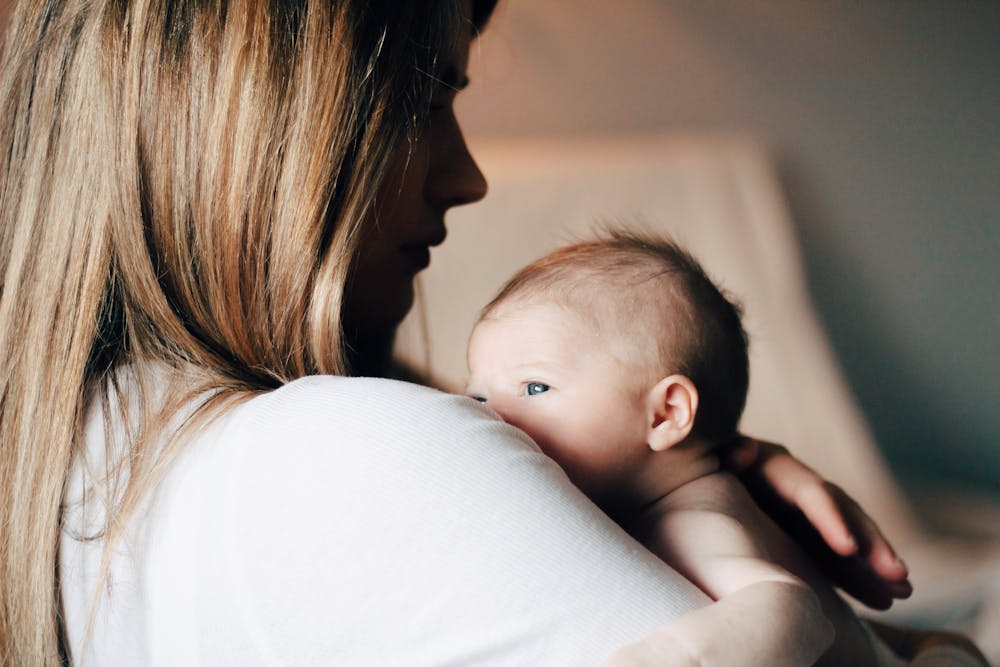 In countries with only altruistic donation, there are shortages of donor eggs and sperm.
hollie santos/unsplash, CC BY
In countries with only altruistic donation, there are shortages of donor eggs and sperm.
hollie santos/unsplash, CC BY
How can we attract more donors?
This study shows there is potential to increase the number of egg and sperm donors by improving awareness about the need for donors and how donations can help people who can’t have children any other way.
The Independent Review of Assisted Reproductive Treatment commissioned by the Victorian government also emphasised the importance of public education, stating “a social marketing campaign that speaks to the value of donation and seeks to influence social views on donation” is needed to grow the pool of local donors.
Donors’ wellbeing also needs to be a priority if we want more people to volunteer to donate their eggs or sperm. Access to counselling and support before and after donation, out-of-hours options for donating, user-friendly booking systems, and exceptional and person-centred care are essential in donor programs.
And finally, although altruism is a cornerstone in egg and sperm donation regulation in Australia, reasonable compensation for time and effort might increase the number of people willing to donate to help others achieve parenthood.
Read more: Thinking about freezing your eggs to have a baby later? Here are 3 numbers to help you decide
Authors: Karin Hammarberg, Senior Research Fellow, Global and Women's Health, School of Public Health & Preventive Medicine, Monash University

















