

Why do I sprain my ankle so often? And how can I cut the risk of it happening again?
- Written by Gordon Waddington, AIS Professor of Sports Medicine Research, University of Canberra

Are you one of those people who seems to be forever spraining their ankle?
To some extent, ankle sprains are part and parcel of being active.
But if it’s happening again and again, here’s what may be going on – and how you can reduce your risk of recurrent ankle sprain.

Read more: How to prevent injury from sport and exercise
One sprain can lead to another… and another
A large review of ankle sprain studies in the journal Sports Medicine found most people who actively play sport or train can expect to have a fairly low incidence of ankle sprain per 1,000 hours of training time. But it also said:
Females were at a higher risk of sustaining an ankle sprain compared with males and children compared with adolescents and adults, with indoor and court sports the highest risk activity.
The most frequent type of ankle sprain occurs if the ligaments on the outside of the ankle are stretched or torn when the joint moves beyond the normal range of movement. This is known as an inversion or lateral ankle sprain.
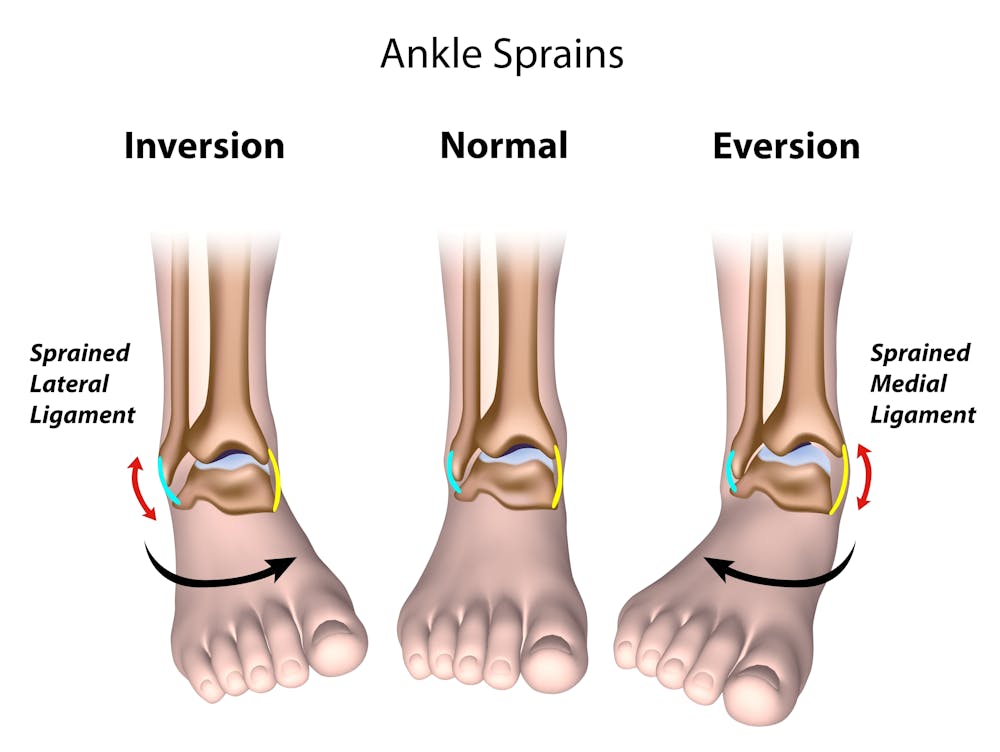 The most frequent type of ankle sprain occurs if the ligaments on the outside of the ankle are stretched or torn.
Shutterstock
The most frequent type of ankle sprain occurs if the ligaments on the outside of the ankle are stretched or torn.
Shutterstock
Strong evidence from studies suggests once people sprain their ankle, they are more likely to re-sprain it. As one review of the evidence put it:
a history of lateral ankle sprain is known to disrupt the structural integrity of the ligaments and sensorimotor function, likely impairing an individual’s ability to avoid injurious situations.
Some ankle sprains might seem to be very minor, with almost no swelling or mobility problems. But some people can end up with what’s known as chronic ankle instability, where they tend to re-sprain their ankle again and again.
Another review looking at factors contributing to chronic ankle instability found
feelings of instability and recurrent ankle sprain injuries (termed chronic ankle instability, or CAI) have been reported in up to 70% of patients. The subsequent development of CAI has adverse health consequences including reduced quality of life and early-onset osteoarthritis.
Once an ankle fracture is excluded, busy hospital emergency departments often send patients home with instructions to ice the ankle and keep off it for a day or two. There’s often no advice to follow up with a physio for rehabilitation.
This is unfortunate, as evidence suggests people with a history of ankle sprains will likely:
Even the other ankle may be at risk
Research suggests people who sprain their ankle may be more likely to have injuries to other joints on the same leg, or even the opposite leg. A review in the International Journal of Sports Physiotherapy noted “an ankle sprain is linked to both re-injury and subsequent injury to the contralateral side”.
 If you’re getting recurrent ankle sprains, see a physiotherapist.
Photo by Kindel Media/Pexels, CC BY
If you’re getting recurrent ankle sprains, see a physiotherapist.
Photo by Kindel Media/Pexels, CC BY
Why? It may have something to do with the brain’s tremendous ability to continually adapt.
Just as extended bed rest or prolonged microgravity exposure in astronauts can cause changes in the brain and the way it relates to movement, perhaps our brains subconsciously compensate after an ankle injury.
That could be by, for example, via limping or a slight change in the way you walk; perhaps you subconsciously don’t want to challenge the ankle due to fear of re-spraining. This may put other joints or the opposite limb at heightened risk.
This neuroplasticity adds new challenges to the assessment or rehabilitation of ankle injury, and to predicting who is likely to be at increased risk of subsequent injuries.
Read more: Can supplements or diet reduce symptoms of arthritis? Here's what the evidence says
What can you do to reduce the risk of re-spraining your ankle?
If you’re getting recurrent ankle sprains, see a physiotherapist. They will be able to teach you how to reduce the risk.
Currently the best evidence for reducing the chances of re-spraining your ankle sprain comes down to two main things:
1) Protecting the joint with an ankle brace when active
This could mean using a professionally fitted external support brace (not an elastic sleeve). This is a relatively low cost and effective means of risk reduction.
2) Using balancing exercises and ‘proprioceptive training’
Examples of proprioceptive training include:
balancing on each leg, one at a time, while throwing and catching a ball against a wall
balancing on an ankle disc or wobble board for three to five minutes daily.
 Balancing exercises may help.
Shutterstock
Balancing exercises may help.
Shutterstock
These exercises can help strengthen the muscles and ligaments in your ankle. As one literature review put it:
Proprioceptive training is a cost- and time-effective intervention that can benefit patients who have sustained a previous ankle sprain during physical activity and can subsequently reduce the risk of further complications.
Authors: Gordon Waddington, AIS Professor of Sports Medicine Research, University of Canberra

















