

Adapting to a hotter planet has never been more important, and progress edged forward at COP27
- Written by Johanna Nalau, Research Fellow, Climate Adaptation, Griffith University
As the COP27 climate summit drew to a close over the weekend, it’s important to acknowledge that progress was made on climate adaptation – even if more can be done.
“Climate adaptation” is a term for how countries adapt to the impacts of climate change. It could be, for instance, by strengthening infrastructure to better withstand disasters, moving towns out of floodplains, or transforming the agriculture sector to minimise food insecurity.
As the costs of disasters climb, working out who will finance climate adaptation has become increasingly urgent for developing nations. For decades, they’ve called upon wealthy countries – largely responsible for causing the climate crisis in the first place – to foot the bill.
So let’s explore what COP27 achieved, how these achievements might translate into tangible commitments, and what must happen now to give everyone a fighting chance to survive on a hotter planet.
Adaptation & Agriculture day at COP27.A thorny issue
The thorniest issues at climate change negotiations are about finance: who is giving, who is receiving, how is the money received and what kind of finance is made available.
Developed countries don’t have a good track record on this. In 2009, they committed to mobilising US$100 billion per year of climate finance by 2020 – a target that remains unmet.
Read more: COP27: one big breakthrough but ultimately an inadequate response to the climate crisis
What’s more, most climate finance so far has been directed towards helping developing nations mitigate their emissions, rather than for adaptation.
As Dina Saleh, the Regional Director of the United Nations International Fund for Agricultural Development, explained during the conference, failing to help rural populations adapt could lead to more poverty, migrations and conflict. She said:
We are calling on world leaders from developed nations to honour their pledge to provide the $100 billion a year in climate finance to developing nations and to channel half of that [for] climate adaptation.
Adaptation finance still falls short
The United Nations has established different funds to channel adaptation finance, including the Least Developed Countries Fund, Special Climate Change Fund and Adaptation Fund.
At COP27, eight countries pledged US$105.6 million for adaptation via the Least Developed Countries Fund and Special Climate Change Fund, including Sweden, Germany and Ireland. Others, such as the United States and Canada, expressed potential future financial commitments.
These funds are in addition to the US$413 million promised at COP26 in Glasgow last year, via the Least Developed Countries Fund. The money will target the most urgently needed adaptation efforts, such as strengthening infrastructure, social safety nets and diversifying livelihoods.
There is also a specific new funding for small-island developing states. While this development has been welcomed by the Alliance of Small Island States, it also says faster processes are needed to make the money available.
Small island nations such as Tuvalu are already experiencing severe climate impacts, and the projections are dire. For example, the Intergovernmental Panel on Climate Change found some atoll islands are likely to experience coral bleaching every year by 2040.
These islands are also particularly vulnerable to tropical cyclones. One single large event can set development back years. For example, in 2016 tropical cyclone Winston took out over a third of Fiji’s GDP in about 36 hours.
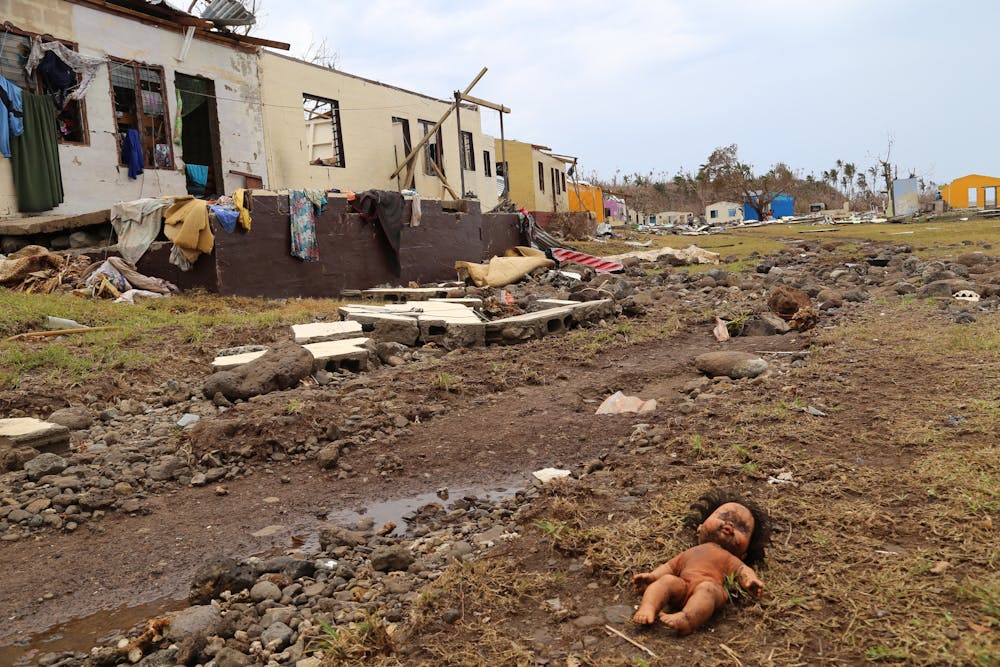
Similarly, other highly vulnerable nations across Africa and Asia are asking for easier access to adaptation finance. The Adaptation Fund included an innovation that gave countries easier access to money, and ensured it responds directly to each country’s needs.
At COP27, this fund received over US$230 million in new pledges. However, it currently has unfunded adaptation projects worth US$380 million in the pipeline, signalling the urgent need to ramp up finance.
Progress is edging forward
The Paris Agreement in 2015 set the “global goal on adaptation” to drive collective progress on climate adaptation worldwide. At COP27, countries agreed to develop a framework for this goal in 2023. This includes gender-responsive approaches, and science-based metrics and targets to track progress.
Another big-ticket item is the “global stocktake” on adaptation, which measures progress at the national level on fulfilling Paris Agreement obligations.
At COP27, it was noted only 40 countries so far have submitted their national adaptation plans, which identify adaptation priorities and strategies for reducing climate vulnerability. Questions remain about how to accelerate the planning, implementation and financing of these plans.
The Sharm-el-Seikh Adaptation Agenda was also launched by the two UN-appointed High-Level Climate Champions. These seek to engage non-state actors, such as cities, businesses and investors, to boost ambition for climate adaptation.
The agenda’s ultimate aim is to help 4 billion people become more resilient to climate change impacts by 2030. It has 30 adaptation outcomes to aim for, including:
protecting 3 billion people from disasters by installing smart and early warning systems in the most vulnerable communities
investing US$4 billion to secure the future of 15 million hectares of mangroves worldwide
mobilising US$140-300 billion across both public and private finance sources for adaptation.
 Simon Stiell, UN climate chief, speaks during a closing plenary session at the COP27.
AP Photo/Peter Dejong, File
Simon Stiell, UN climate chief, speaks during a closing plenary session at the COP27.
AP Photo/Peter Dejong, File
What now?
Many pledges on adaptation finance have been made in COP26 and COP27, and the next step is to get the money where it is most urgently needed.
As climate impacts are already unfolding rapidly, communities worldwide must develop the capacity to plan for climate adaptation. This requires action at every level, and shouldn’t be left to local communities alone.
Making progress on climate adaptation in the coming years is crucial. Early action and planning can save thousands of dollars, but only if we have robust processes in place to make decisions before impacts occur. This calls for more planning, investments and collaboration across local, regional, state and international levels.
But most important is the willingness to change our mindset. We must stop operating in a business-as-usual model and push for a more sustainable world in this changing climate.
Read more: Climate change's impact on mental health is overlooked and misunderstood – here's what can be done
Authors: Johanna Nalau, Research Fellow, Climate Adaptation, Griffith University

















