

Stripping carbon from the atmosphere might be needed to avoid dangerous warming – but it remains a deeply uncertain prospect
- Written by Jonathan Symons, Senior Lecturer, Macquarie School of Social Sciences, Macquarie University

Australia’s latest State of the Climate Report offers grim reading. As if recent floods weren’t bad enough, the report warns of worsening fire seasons, more drought years and, when rain comes, more intense downpours. It begs the question: is it too late to avoid dangerous warming?
At the COP27 climate summit in Egypt some states began to question whether the target to limit global warming to 1.5℃ this century should be dropped. The commitment was ultimately retained, but it remains unlikely we’ll meet it.
This means attention is turning to other options for climate action, including large-scale carbon removal.
Carbon removal refers to human activities that take carbon dioxide from the atmosphere and store it (ideally permanently) – in rock formations, land or ocean reservoirs. The more common, and least controversial, forms of carbon removal are tree-planting, mangrove restoration and enhancing soil carbon.
All forms of carbon removal - including natural and high-tech measures - are defined as forms of geoengineering. All are increasingly part of the global climate discussion.
Proponents argue carbon removal is required at a massive scale to avoid dangerous warming. But the practice is fraught. Successfully stripping carbon from the atmosphere at the scale our planet requires is a deeply uncertain prospect.
Read more: State of the climate: what Australians need to know about major new report
Limiting global warming to 1.5℃ is getting harder
In 2015 the international community set a goal of limiting warming to well below 2℃, and preferably to 1.5℃ this century, compared to pre-industrial levels. Seven years later, global emissions are not on track to achieve this.
The State of the Climate Report released this week found Australia has already warmed by 1.47℃. The Intergovernmental Panel on Climate Change (IPCC) says the planet overall has heated by 1.09℃.
Renewable energy is growing rapidly, but so too is the use of oil and coal. The emissions “budget” that would limit warming to 1.5℃ is almost spent.
The IPCC said in a report this year that large-scale deployment of carbon dioxide removal was “unavoidable” if the world is to reach net-zero greenhouse gas emissions.
It followed an IPCC report in 2018 containing scenarios in which warming could be limited to 1.5℃. These scenarios required significant emission reductions along with carbon removal of between 100–1,000 billion tonnes of CO₂ by 2100. For context, global annual energy emissions are now approximately 31 billion tonnes of CO₂.
Today, policy planners often assume large-scale carbon removal will become necessary. Meanwhile, critics worry that the promise of carbon removal will delay other actions to mitigate climate change.
Indeed, some critics question if large-scale removal will ever be feasible, saying it’s unlikely to be developed in time nor work effectively.
What does carbon removal look like?
Cramming centuries of carbon pollution into the biosphere won’t be easy. One key challenge is making the storage permanent.
Consider trees. While forests store a lot of carbon, if they burn then the carbon goes straight back into the atmosphere. What’s more, there’s not enough land for forests to deliver negative emissions on the scales we require to limit global warming.
Carbon removal by planting new forests (afforestation) can also create social injustices. In some cases Indigenous communities have lost control of homelands appropriated for carbon storage.
Read more: Land, culture, livelihood: what Indigenous people stand to lose from climate 'solutions'
As a result, some experts and civil society groups are calling for more complex methods of carbon removal. Two widely discussed examples include “direct air capture and storage” (use fans to force air through carbon-capturing filers) and “bioenergy, carbon capture and storage” (grow forests, burn them for electricity, capture and store the carbon).
In each case, the goal is to permanently sequester captured carbon in underground geologic formations. This will likely offer more permanent carbon removal than “natural solutions” such as planting trees. Their lower land requirements mean they should also be easier to scale.
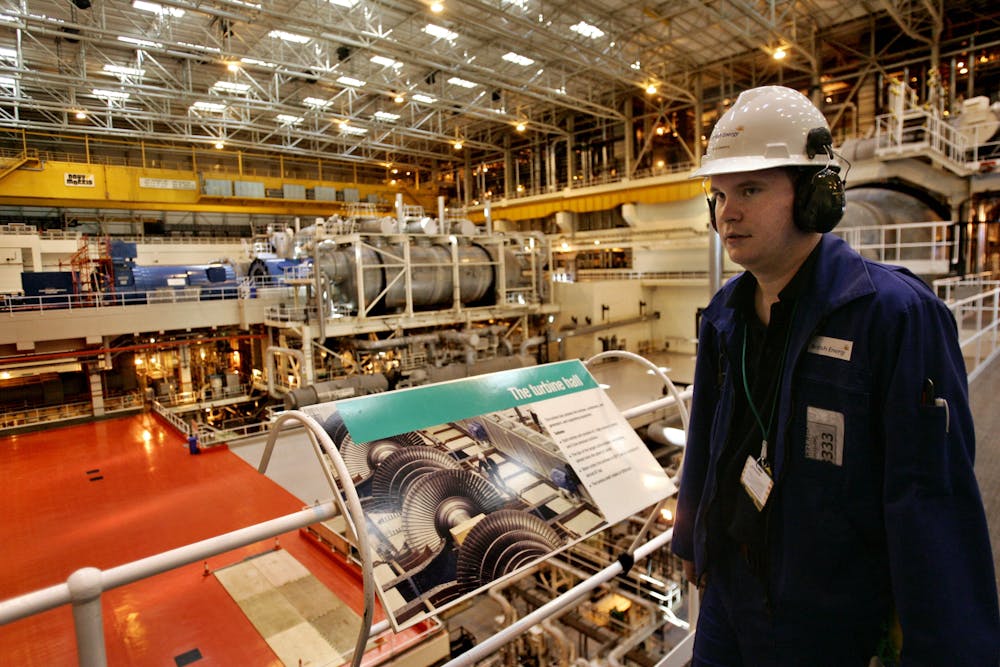
However, these higher-tech methods are also more expensive and often lack public support. Consider plans for the Sizewell Nuclear Power Station in the United Kingdom to power “direct air capture” of carbon dioxide. Sizewell is promising carbon negative electricity, but nuclear-powered negative emissions are unlikely to be popular or cheap.
One Australian start-up has plans for solar-powered direct air capture of CO₂. However, this project’s costs are prohibitively high.
Much social learning will be needed before large-scale carbon removal of any type can become a thing. For now, we need to democratically review which, if any, carbon removal methods are actually a good idea.
Carbon removal credits could be dodgy
As governments begin to grasp the difficulties in decarbonising sectors such as agriculture and aviation, they have begun to look to carbon removal technologies to meet their net-zero emissions pledges.
For example, in the United States, the Biden administration’s Inflation Reduction and CHIPS Acts promise massive new carbon removal programs.
At COP27, negotiators considered how carbon removals should be defined internationally. At stake is which carbon removal projects will be able to generate “tradeable” offsets.
Most decisions at COP27 ended up being delayed or referred to working groups. Nevertheless, civil society observers worried that dodgy carbon removal credits might undermine the Paris Agreement’s integrity.
When credits are awarded to projects that don’t really capture carbon or do so only temporarily, then carbon reduction schemes lose all credibility.
How to avoid integrity issues
Assessing the material and social impacts of carbon removal – whether via a “natural solution” or a new technology – will first require small-scale deployment.
To avoid integrity issues, the world will need robust regulations on how carbon removal is conducted. This includes:
agreed standards to measure carbon removal in ways that rule out dodgy or temporary carbon removal
more advanced carbon removal technologies that bring down the cost and reduce land and energy requirements
more sophisticated ways of aligning carbon removal with social justice so that sovereignty and humanity rights are prioritised over carbon markets
a system of incentives to encourage carbon removal. States, companies and other actors should be rewarded for their climate restoration work, but these efforts must be additional to actual emissions reduction.
Of course, the best thing to do is to stop emitting carbon. However, preserving a safe climate will likely require us to go further. It’s time to start a democratic discussion about carbon removal.
Authors: Jonathan Symons, Senior Lecturer, Macquarie School of Social Sciences, Macquarie University

















