

Why do nurse home visits stop a few weeks after giving birth? Extending them to 2 years benefits the whole family
- Written by Anna Price, The Erdi Foundation Child Health Equity (COVID-19) Scholar, Centre for Community Child Health | Honorary, Department of Paediatrics, University of Melbourne | Team Leader / Senior Research Officer, Murdoch Children's Research Institute
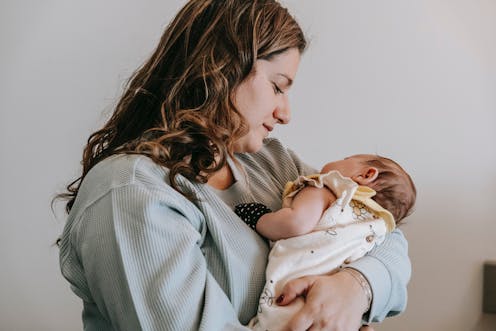
Bringing home a new baby can be one of the most exciting and stressful times in your life. A nurse might visit a couple of times, then other than routine check-ups at the nurse’s office, you’re largely on your own.
Some people have a particularly hard time with a new baby because the challenges of parenting come on top of existing adversity, such as financial hardship, or poor physical or mental health.
Experiencing adversity from when a baby is conceived can affect the child’s health and development as they grow older. So rather than stopping nurse visits a week or two after bringing a new baby home, we investigated whether extending these visits from pregnancy until children turned two made a difference.
The nurse visits focused on areas fundamental for children’s development: how a parent cares for and responds to their child, and their home environment.
We found home visits with nurses helps parenting and family relationships, and women’s mental health, wellbeing and confidence.
What happens when the nurse visits?
Sustained nurse home visiting provides intensive services in a family’s home during pregnancy and the first two years of the child’s life. During this time, the child’s brain develops more rapidly than any other time in their life.
Read more: How do I know if my child is developing normally?
International studies of sustained nurse home visiting programs show they can help families with parenting, children’s behaviour and academic skills. However, most have only measured impacts up to when children turn three.
Programs differ depending on how they work to support families. They generally engage highly-trained nurses who can listen without judgement, offer practical, evidence-informed advice, and remind parents they’re doing a good job.
Our study
Our randomised controlled trial of right@home is Australia’s longest and largest trial of nurse home-visiting, starting in 2013.
The program supports parents with evidence-based techniques that promote parenting that responds to the child’s needs, safe homes, regular routines, and children’s learning and language development. The program starts in pregnancy and offers 25 home visits (60-90 minutes each) with a specially trained nurse until the children turn two.
The right@home program was designed for delivery through Australia’s existing child and family health nursing services, which are free for families with children from birth to school age. These existing services typically offer a handful of appointments (of around 20-40 minutes) that mostly take place in local clinics. Some also offer more intensive services.
We invited women into the right@home study if they were experiencing two or more factors that can make it more difficult to parent. These include having low social support, poor physical or emotional health, or no household employment. We found almost 40% of pregnant women experienced at least two of these factors.
In total, 722 women and families living across Victoria and Tasmania took part in the study. Half were randomly allocated (like tossing a coin) to receive the right@home program and half received their local child and family health nursing service.
Read more: Parents have the biggest influence over their child's language and emotional development
What did we find?
Researchers who were separate to the nurse teams interviewed the families twice a year (one at home and one by phone) until children started school.
When the right@home program ended (at children’s second birthdays), the evaluation showed it offered benefits over and above the usual services. Parents had more confidence and skills in caring for their children, responding sensitively and providing a nurturing and stimulating home.
This pattern continued. At three years, parents who received the right@home program reported benefits to their mental health, wellbeing, and self-confidence.
Our latest paper, published in PLOS ONE, shows that right@home offered lasting impacts to four and five years, which is two and three years after the program ended.
Some 5-10% more families had regular mealtimes, bedtimes and bedtime routines by the time the children turned five.
Around 9% more women reported very good health and parenting confidence. The proportions of women experiencing stress, and emotional abuse from an intimate partner were 7% and 11% lower, respectively.
There were additional benefits for children’s and women’s mental health, parenting, and women’s wellbeing, quality of life and relationship with their child. These impacts were evident for families regardless of where they lived across the seven regional and metropolitan areas in the two states.
Read more: Having problems with your kid's tantrums, bed-wetting or withdrawal? Here's when to get help
Levelling the playing field for kids
A goal of the program is to address the challenging circumstances that disrupt parenting and affect children’s health and development.
If Australia did this, and provided support according to need, we could reduce children’s poor developmental outcomes by 50%-70%.
Providing equitable support is especially important as we emerge from the COVID pandemic, which has disproportionately affected families already experiencing adversity.
Almost no other public health program delivered during the early years has evidence of such a broad range of gains.
Our economic evaluation of right@home at three years showed delivering these benefits through the right@home program costs A$7,700 extra per family compared with the usual service.
Research from the US shows the benefits of similar programs accrue for families and taxpayers over a child’s lifetime, producing positive returns on investment, from improved mental health and more employment, among other benefits.
Australia is fortunate to have nationwide child and family health nursing services. These are the perfect platform for delivering an extended program like right@home. When so few programs make a difference for families experiencing adversity, we should maximise the reach of those that do.
Diana Harris, Lead for Knowledge Translation at the Australian Research Alliance for Children & Youth, coauthored this article.
Read more: Stressed about managing your child's behaviour? Here are four things every parent should know
Authors: Anna Price, The Erdi Foundation Child Health Equity (COVID-19) Scholar, Centre for Community Child Health | Honorary, Department of Paediatrics, University of Melbourne | Team Leader / Senior Research Officer, Murdoch Children's Research Institute

















