

what body type works best for football? A professor of biomechanics explains
- Written by Anthony Blazevich, Professor of Biomechanics, Edith Cowan University
If you’ve been watching the World Cup, you might have marvelled at the physical fitness and skill of these elite players.
How can they run and run and run for so long? What makes them so good at speedy changes of direction? Biomechanically, is there a certain body type that is perfect for football?
Of course, much of the brilliant play is down to natural talent combined with years of very hard training and practise. But there are certainly some physical features that help a lot when it comes to being able to play football at this level.
Read more: VAR and peace? Why tech-assisted refereeing won't do away with disputed decisions at the World Cup
Different features for different positions
There’s no one single perfect body type for this sport; much depends on what position you play.
A central defender, for example, might benefit from a bit of extra height so they can defend against aerial balls in the box.
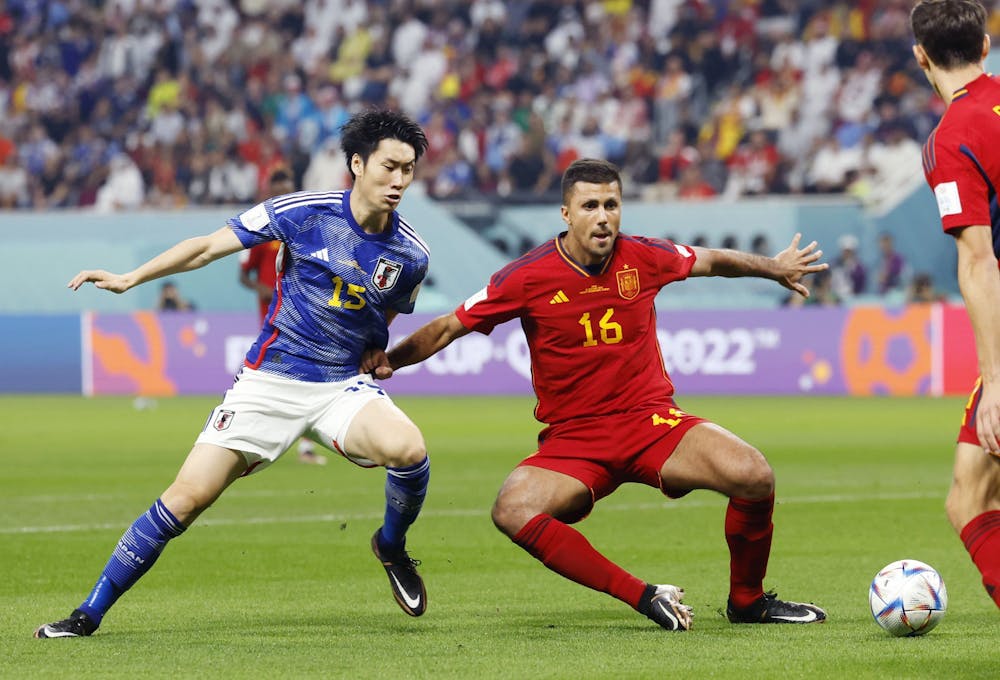
Midfielders, on the other hand, head the ball less often but need a lot of agility and to run astonishing distances in the game - most will cover more than 10 kilometres, with sprints and direction changes common. That’s where having lighter body mass really helps, and that means not being too tall. When you are tall – even if you are skinny – you weigh more, so being very tall can be a disadvantage for these players.
And being shorter means that our centre of mass is lower, so we have more stability and better balance. That makes technical skills with the ball easier to perform and it makes swiftly changing direction easier too.
There is one fairly consistent physical feature across footballers, which seems to be similar across male and female players: an ability to run and run.
They need to have a big engine, so they are physiologically strong in terms of heart and lungs. In a running test, these players will show up with a very high VO₂ max (a measure of the maximum amount of oxygen your body can use while exercising). They will also have a high lactate threshold, which means their bodies can cope with high intensity effort for long periods of time.
All this adds up to what we call good repeat sprint ability. That means they can run, then recover, then run, then recover, and so on and so on. Don’t forget, they do spend some time standing or walking, so it’s the repeated effort to go from low intensity to maximum intensity over and over that necessitates this big engine.
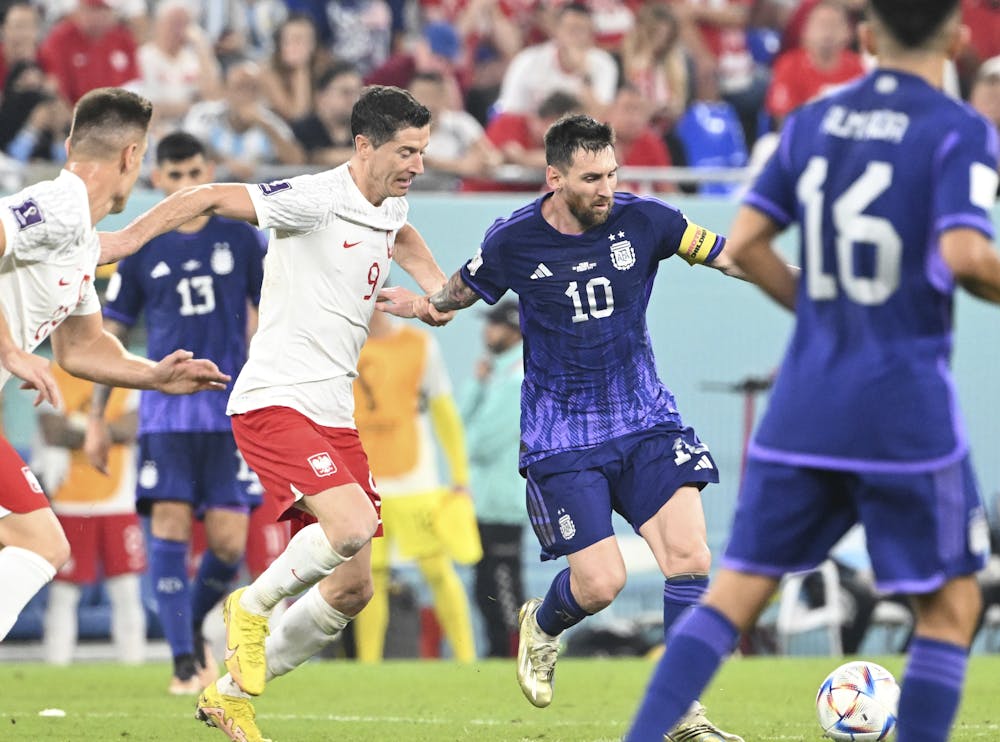 Poland’s Robert Lewandowski struggles to stop Argentina’s Lionel Messi during a World Cup match. Having a low centre of gravity can help.
The Yomiuri Shimbun via AP Images
Poland’s Robert Lewandowski struggles to stop Argentina’s Lionel Messi during a World Cup match. Having a low centre of gravity can help.
The Yomiuri Shimbun via AP Images
Lighter upper body, strong lower body
Football players in general are not stocky like, say, rugby players. But while the upper body tends to be fairly light (which saves on mass and helps with speed), they do generally have quite big, strong legs.
That’s because changing direction rapidly – and to accelerate and decelerate almost instantly – takes quite a lot of force. You need muscly legs to do that.
Having a large upper body, on the other hand, would be mostly downside with little upside. There’s no significant requirement for upper body strength in this sport, so if want to increase speed and endurance, you need to maintain a lighter upper body mass. They are not training to get really big in the upper body.
They also generally have very low body fat levels as they need a lighter body mass to run, jump and accelerate.
 Goalkeeper Andries Noppert of the Netherlands saves a ball during the World Cup group A soccer match between the Netherlands and Qatar.
AP Photo/Moises Castillo
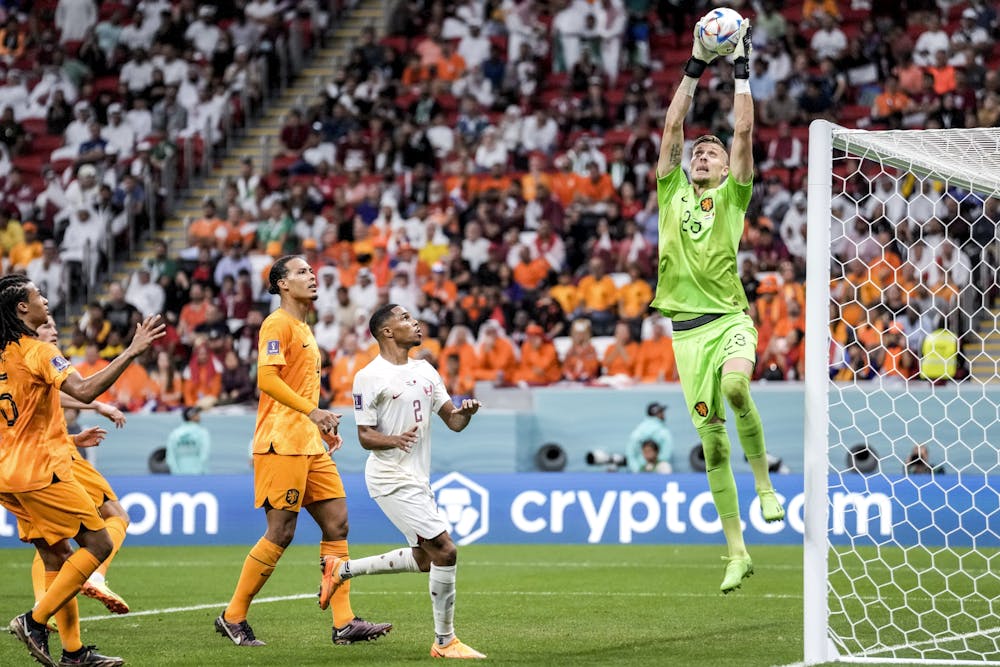
Goalkeeper Andries Noppert of the Netherlands saves a ball during the World Cup group A soccer match between the Netherlands and Qatar.
AP Photo/Moises Castillo
What about the goalkeeper?
One position that does benefit greatly from height is the goalkeeper. The Australian goalkeeper, Mark Schwarzer, used his 1.95 metres frame to great advantage. And most elite goalkeepers stand taller than 1.85 metres.
The job of the ‘keeper is to leap vertically and laterally. Having long legs can help the 'keeper to jump higher and further because they can push off over a larger distance during the jump. And having long arms helps with reach to tip or catch the ball. So being tall can be a real advantage.
All in all, these players are well built to produce elite performances at the highest levels of the game. While years of hard training has surely contributed to their success, they might also thank their parents for the genes they received too.
Read more: Why Maradona's 'Hand of God' goal is priceless -- and unforgettable
Authors: Anthony Blazevich, Professor of Biomechanics, Edith Cowan University

















