

In 2022, Australia's governments finally got moving on climate. Here's how
- Written by Alison Cleary, Sustainable Economies Lead, Climateworks Centre, Monash University
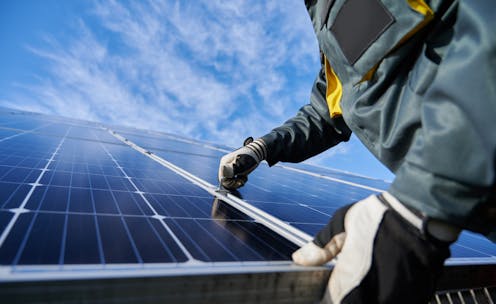
We might look back on 2022 as the year when Australian governments finally started taking climate change as seriously as it needs to be.
Our new report shows federal, state and territory governments all substantially improved their climate action goals this year. But we’re not home and hosed yet – there’s more to do, especially if we are to hold global warming under 1.5℃.
Most of us know the federal government improved Australia’s emission reduction targets, legislating a 43% cut on 2005 levels by 2030 and net-zero emissions by 2050. But states and territories have been forging ahead too. For the first time, the federal government and all states and territories are committed to net-zero by 2050.
That’s promising. Just last week, climate change minister Chris Bowen announced the last six months of policy announcements mean our emissions are now on track to fall 40% below 2005 levels by 2030.
Read more: Labor's climate change bill is set to become law – but 3 important measures are missing
How did we make such rapid progress?
A change of government makes a difference – but it’s by no means the only factor.
Policymakers have been pressing forward on many fronts for years now, often under the radar. Our national construction code now has a seven star minimum energy rating for new houses. The Australian Capital Territory and Queensland have set new electric vehicle uptake goals.
Federal and state governments are funding hydrogen hubs while the federal government will spend billions on decarbonising existing industries and developing new low-carbon industries. The federal government is planning new fuel efficiency standards, meaning Australia’s reputation as a dumping ground for high-polluting cars may end.
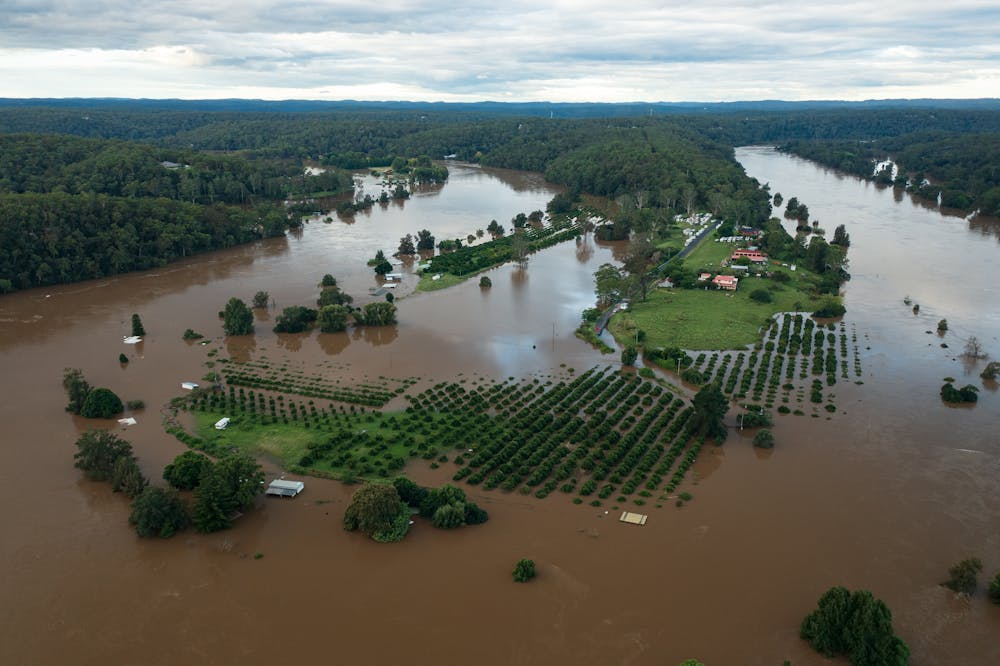
Electricity is where change is happening fastest
In 2022, the electricity sector saw the most change as state and territory governments invested heavily in renewables and grid capacity.
Queensland has set a renewable generation target of 70% by 2032, plans for two enormous pumped hydro schemes and A$280 million for better transmission infrastructure linking cities and industrial regions with new renewable energy zones.
Victoria, has also increased its ambition on renewable electricity. It’s aiming for 65% renewables by 2030 and 95% by 2035, and has plans for nine gigawatts of offshore wind by 2040.
New South Wales is accelerating plans to connect its renewable energy zones with cities and industrial regions, allocating $1.2 billion for transmission.
Western Australia will phase out state-owned coal-fired power by 2030. Tasmania is powering ahead with plans to export its abundant hydroelectricity via seabed cable to the national market.
Early mover South Australia will soon be the first gigawatt scale grid in the world. It went from 1% renewables to 65% renewable in just 15 years, and is aiming for 100% net renewables by 2030.
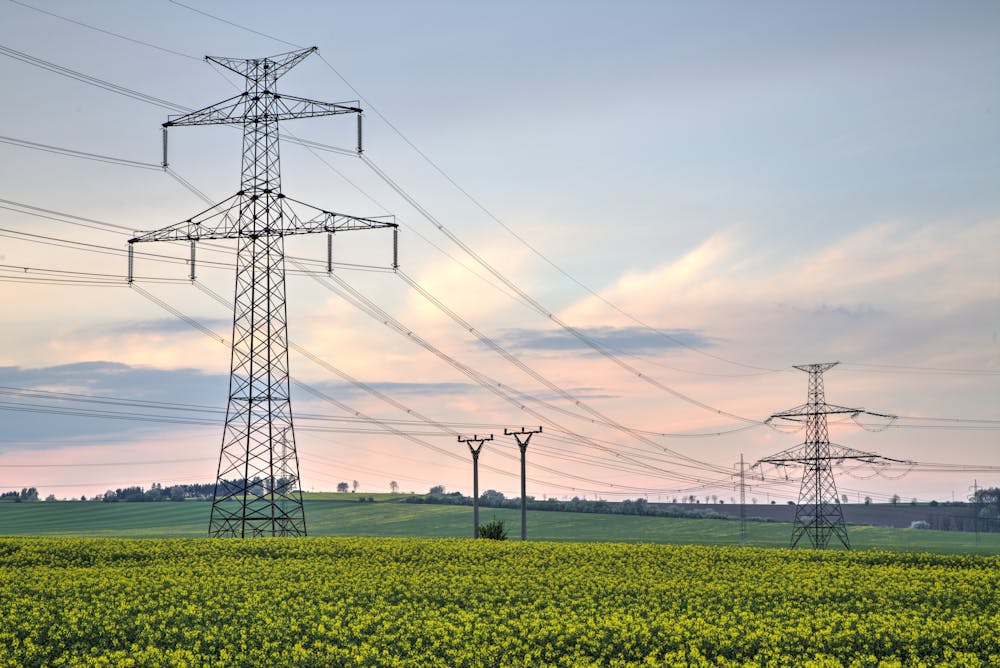 New transmission lines are a key part of the clean energy shift.
Shutterstock
New transmission lines are a key part of the clean energy shift.
Shutterstock
As state and territory initiatives set the pace, the federal government is helping coordinate and accelerate the shift to clean energy.
Importantly, the federal government is planning to spend $20 billion to make our old grid ready for a renewable future, through low-cost financing for the new transmission projects vital to connect Renewable Energy Zones with cities and industrial regions in need of power.
So far, this has included $2.25 billion committed to Victorian renewable energy zone projects and a new connection between NSW and Victoria, as well as joint funding for the Tasmania-Victoria undersea link and pumped hydro projects in Tasmania.
Federal support for six offshore wind zones will also give essential certainty for renewable developers to begin the long process of building our first offshore windfarms, where the winds are stronger and more constant.
Our analysis shows the collective impact of state and territory commitments and action represents the equivalent of an Australia-wide 2030 renewable target of 69%. The federal government wants even more than that – 82% by 2030.
These figures approach what’s compatible to keeping warming to the internationally agreed goal of 1.5℃ or less, according to our analysis and the energy market operator’s long-term plan. But right now, they’re targets. It will take serious groundwork to make them reality.
Renewables unlock progress elsewhere – but we still need action on demand
Good news – investment in renewables will enable the decarbonisation of a large proportion of the rest of the economy. Once our electricity is clean, we can electrify everything else that uses fossil fuels, from transport to industry.
Even with these tailwinds, we’ll still need to push in one other key area: demand. Using energy efficiently will be essential as energy demand grows alongside electrification.
What would that look like? Think more efficient appliances, better energy performance in industry and encouraging public and active transport.
There are promising signs. The federal government is consulting on a new strategy to give energy efficiency a boost. And building ministers have signed off on stronger requirements to ensure new houses use energy more efficiently.
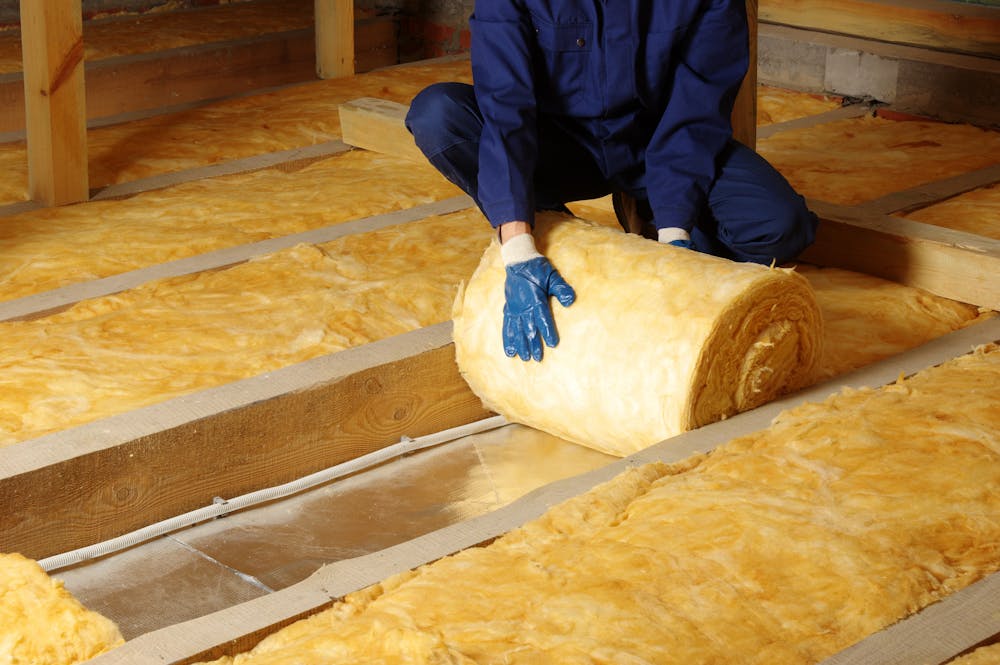 Retrofitting existing homes with insulation, heat pumps and other energy efficiency measures could help us shake our reputation for owning glorified tents.
Shutterstock
Retrofitting existing homes with insulation, heat pumps and other energy efficiency measures could help us shake our reputation for owning glorified tents.
Shutterstock
What else do we need?
Electric vehicles are finally starting to get traction, helped by stamp duty cuts and registration fee reductions in most states and territories. But we’ll also need to reduce demand by encouraging more people to use public transport, walk, cycle or use electric scooters or e-bikes.
Smart urban planning is needed too, to ensure non-car options are possible.
We still need to improve energy efficiency for existing homes, particularly for renters, as well as in new and existing commercial buildings. Retrofitting insulation and other energy-saving technologies can help cut emissions while boosting human health and comfort, and lowering bills.
Tough sectors such as heavy industry can look to ways to reduce energy demand to help manage the load on our grid.
So, as 2022 races to a close, it’s worth taking stock of our accomplishments. This year, the large-scale changes we need are beginning to happen.
In 2023, our governments should tackle the less visible but just as important question of demand, to ensure our path to a future without carbon emissions is as smooth as possible.
Read more: Against the odds, South Australia is a renewable energy powerhouse. How on Earth did they do it?
Authors: Alison Cleary, Sustainable Economies Lead, Climateworks Centre, Monash University

















