

DNA from elusive human relatives the Denisovans has left a curious mark on modern people in New Guinea
- Written by Irene Gallego Romero, Senior Lecturer in Human Genetics, The University of Melbourne
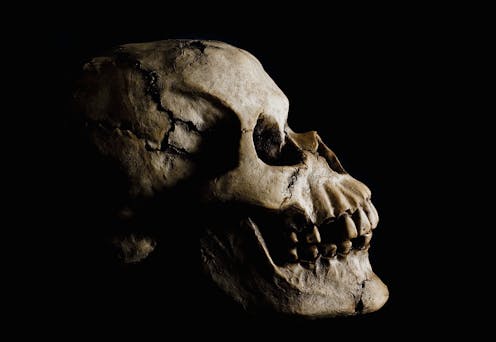
An encounter with a mysterious and extinct human relative – the Denisovans – has left a mark on the immune traits of modern Papuans, in particular those living on New Guinea Island.
This is a new discovery we describe in a study published in PLoS Genetics today. It further suggests that our modern human diversity didn’t just evolve – some parts of it we got from other, extinct human groups.
DNA from our evolutionary cousins
Humans are the only living species of the Homo genus. But until 50,000 years ago, our ancestors coexisted – and sometimes interacted – with multiple other Homo groups across the globe. Most of them we know only by sparse archaeological remains, which offer tantalising glimpses of our evolutionary cousins.
But for two groups there is something else: DNA. Thanks to technological advances, scientists have retrieved DNA from fossils and sequenced it. As a result, we now have complete genome sequences of the best-known archaic hominins, the Neanderthals, and a far more elusive group, Denisovans.
Read more: Fresh clues to the life and times of the Denisovans, a little-known ancient group of humans
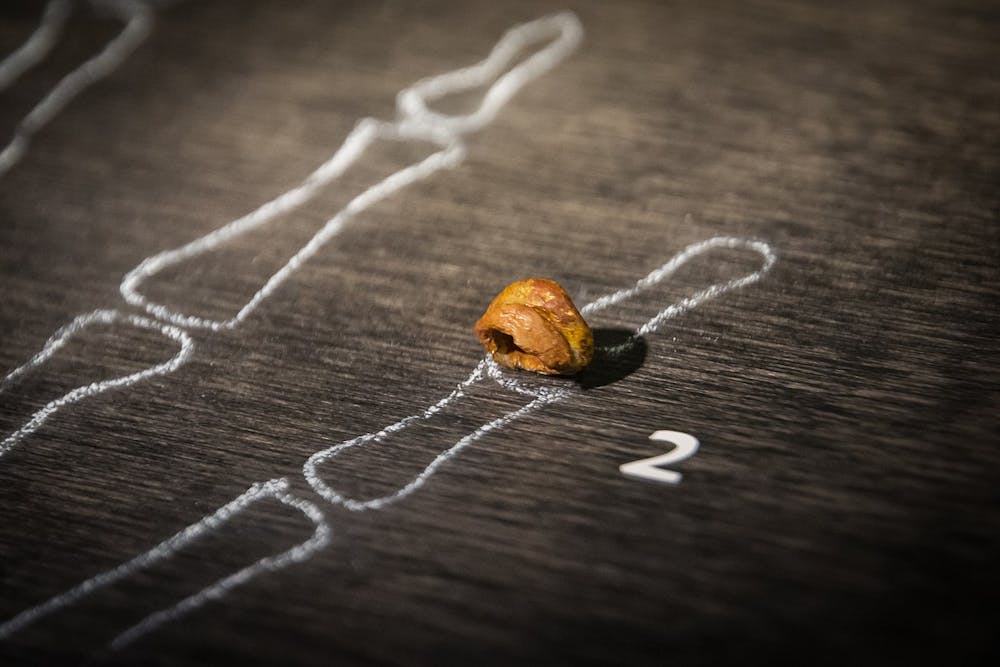
Although many Neanderthal fossils have been unearthed all over Europe since they were first identified in the 1860s, the number of known Denisovan fossils fits in the palm of a hand – literally!
The genome sequence we have comes from the smallest bone of a pinky finger. It belonged to the 60,000-year-old remains of a teenage girl from a cave in Siberia, the largest known Denisovan fossil until recently.
Traces of ancestors
These genome sequences have transformed the way we think about our extinct relatives. For one, they quickly demonstrated that as humans expanded outside Africa, we had sex – and children – with these other populations.
Traces of their genomes linger in individuals alive today, transmitted across hundreds of generations.
Read more: Evolutionary study suggests prehistoric human fossils 'hiding in plain sight' in Southeast Asia
In the case of Neanderthals, these traces are in all individuals of non-African ancestry today. In the case of Denisovans, we find small traces of their genome in people from all over Asia – especially in Papua New Guinea, and in the island nations of Southeast Asia, where individuals may owe up to 4–5% of their genome to these ancestors.
But identifying these fragments of DNA in our genomes is only the beginning.
The DNA makes a difference
The real challenge is to find the biological consequences of this DNA for the people who carry it – which, it bears remembering, is the vast majority of humans. Our specific research question was to pinpoint the molecular processes that might be affected by its presence.
Studies of Neanderthal DNA have shown that genetic variants inherited from them can alter the levels at which some human genes are expressed, for example. We also know Neanderthals have contributed to our immune systems (including differences in how people respond to infection with COVID-19), and to variation in skin and hair colour.
Read more: What teeth can tell about the lives and environments of ancient humans and Neanderthals
But it has never been clear whether Denisovan DNA has left similar trends in modern humans.
In 2019, a study revealed the genomic coordinates where Denisovan DNA might be found within the genome of Papuan individuals – that is, the indigenous people of New Guinea Island – alive today.
This led us to begin looking into these regions, to understand the cellular and biological processes that might be affected by Denisovan DNA. We took a hybrid approach to this question, making computational predictions first, and following up with laboratory-based experiments to validate our findings.
In addition, we took advantage of the known Neanderthal DNA within these people to highlight any Denisovan-specific contribution. This gave us a more integrated understanding of how encounters with these relatives left potential biological and evolutionary consequences in modern humans.
A unique Denisovan contribution
We noticed that in Papuans, Denisovan and Neanderthal genetic variants both occasionally occur within parts of the genome responsible for modulating the expression levels of nearby genes.
However, only Denisovan variants are consistently predicted to occur and affect elements controlling the expression levels of immune-related genes.
So, these different sources of DNA might contribute to the genetic and phenotypic diversity within Papuans in different ways.
To validate our predictions, we designed an experiment comparing five Denisovan sequences against their modern human counterpart, and tested their ability to actually affect gene expression levels inside a particular kind of immune cell known as a lymphocyte.
In two of the five cases, the Denisovan variants did have a measurably different impact on the gene expression levels than their modern human counterpart. And they impact genes known to be important players in the response to infectious microbes, including viruses.
The fact that Denisovans, but not Neanderthals, seem to have contributed to the immune systems of present-day Papuans, tells us something about these ancient people, too.
Although little is known about how widely through Asia Denisovans lived, it suggests their immune system changed to adapt to the infectious diseases of their environment.
When humans moved in 60,000 years ago, these bits of DNA likely contributed to our success in settling this part of the world.
While our study is the first to elucidate the contribution of Denisovan DNA within modern human genetic diversity, there are still exciting questions to address. In particular, it is not clear whether the overall contributions of Denisovan and Neanderthal genetic variants consistently differ from each other.
It is also important to note we tested genetic variants in immune cells under resting conditions. This means the same or other genetic variants might have different effects out in the environment – this will be an important question for studies in the future.
Authors: Irene Gallego Romero, Senior Lecturer in Human Genetics, The University of Melbourne


















