

the magic of arts and health
- Written by Tully Barnett, Senior lecturer, Flinders University
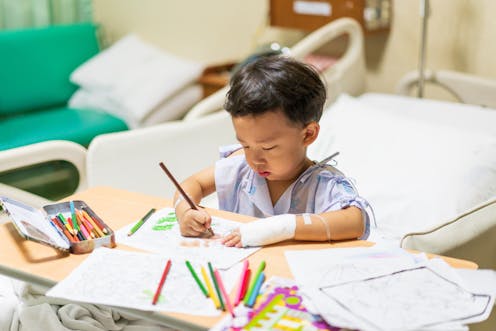
In 2007, a life-changing encounter at South Australia’s Flinders Medical Centre became the catalyst and symbol for a national arts and health movement.
A young woman, Becky Corlett, was being transported through the hospital where an artist-in-residence, Rebecca Cambrell, was painting a mural. Becky had suffered a stroke and cardiac failure. She had stopped eating and was non-responsive even to family. When Becky passed the mural, however, she made a noise of interest.
Cambrell instinctively drew Becky closer and gave her a paint brush. To everyone’s surprise, Becky started adding dabs of paint to the canvas, and then she smiled. The wonder of this moment only dawned on Cambrell when she turned around.
“Her parents were convinced that the moment she touched that paintbrush, something was triggered inside Becky that made her want to live”, remembers Cambrell.
Becky’s story is just one of many collected in our new report Telling the Story of Arts in Health in South Australia.
What is ‘arts and health’?
Arts and health is broadly defined as using arts practice to deliver health outcomes, be they specifically targeted interventions or general wellbeing benefits.
Arts and health work comes in many forms. It can be play about mental health issues in rural areas. It can be a university competition to design solutions to community wellbeing challenges. It can be the integration of art throughout an entire hospital to create a calming environment.
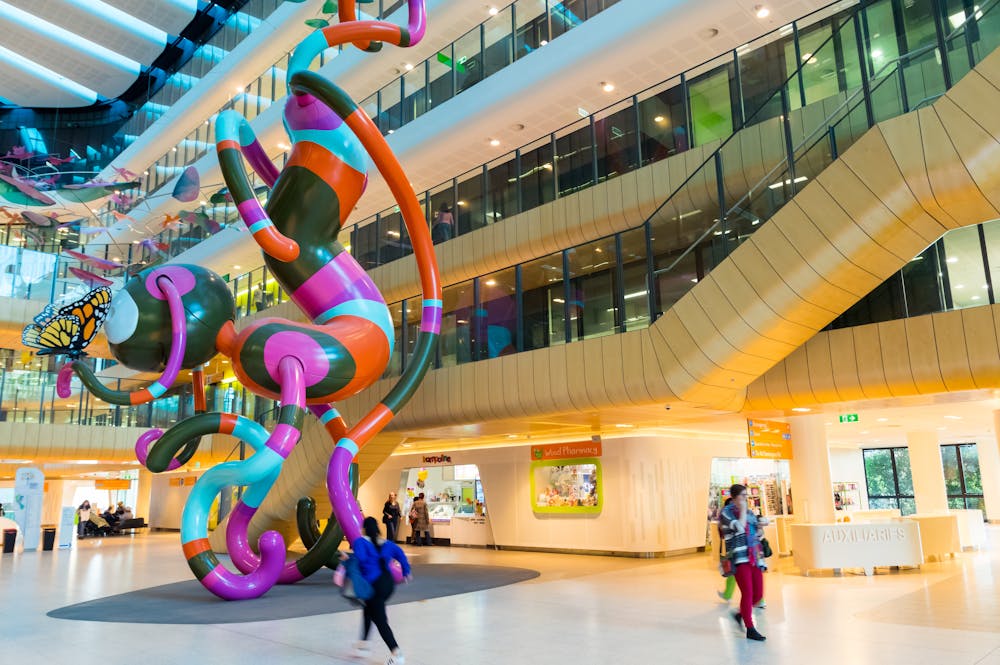
In an interview with us, design researcher Jane Andrew said the breadth of arts and health work means participant involvement can range “from passively viewing to making to being in the environment”.
The benefits are diverse. A 2019 World Health Organisation study looking at over 900 peer-reviewed publications found arts and health can do everything from encouraging health-promoting behaviours to supporting end-of-life care.
The diversity of the arts and health field is represented by the perspectives of our report’s 47 interviewees. We spoke to arts therapists, managers of hospital-based arts and health programs, government arts agency staff, CEOs of local health networks and former ministers. We asked them about their past experiences with arts and health, the present challenges and opportunities for the field, and how best to advance this work in the future.
Read more: How psychological aspects of healing are important for hospital design
Art and health in Australia
Although benefits of the arts to health have been recognised for millennia, the formal field of arts and health work first emerged across South Australia and the rest of the nation through the community arts movement of the 1970s and the rise of health promotion in the 1980s.
The establishment of the Flinders Medical Centre’s Arts in Health program in the late 1990s provided a major step for the field into health settings, and the program remains an innovative leader today.
The former director of the program, Sally Francis, recalled how, “on a regular basis” the program would have “three, four, five stories of someone who has been critically ill and had an arts engagement that’s changed their life.”
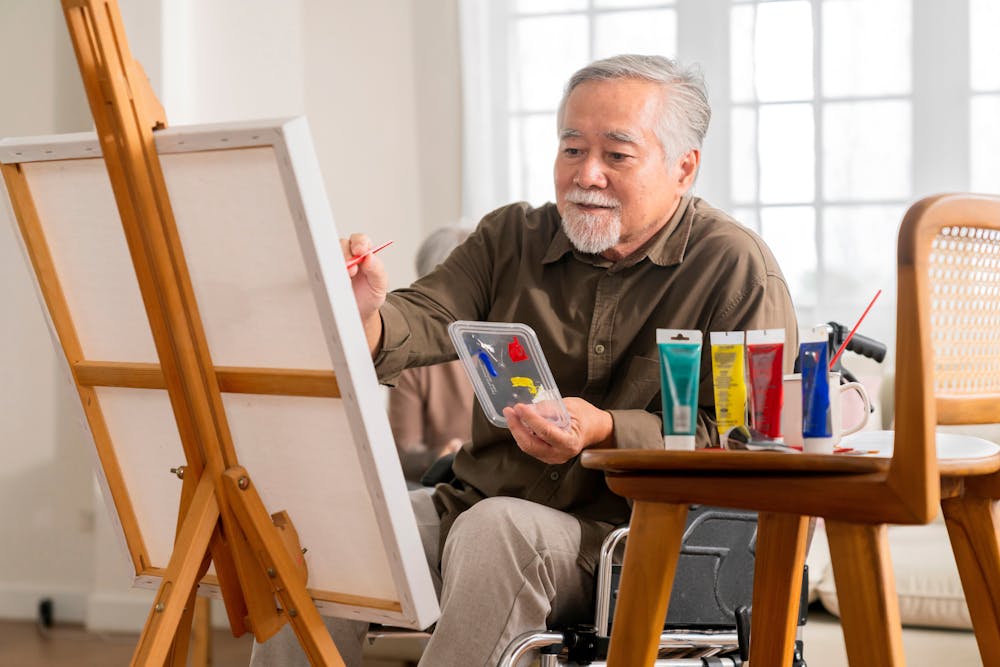 Engaging with art and health can be a life-changing experience.
Shutterstock
Engaging with art and health can be a life-changing experience.
Shutterstock
But Becky Corlett’s story had, as Francis describes it, a “huge and far-reaching effect” on arts and health in Australia. Days after Becky’s first painting experience, former South Australian Minister of Health and Assistant Arts Minister, John Hill, visited the hospital:
I was just walking along, and I saw the painting going on and there was this little girl busily doing art. […] Her parents came up to me and had tears in their eyes. […] She was reconnected with life.
Inspired by this encounter, Hill and Francis led a push to have arts and health formally recognised by the state and then federal government. The National Arts and Health Framework was officially endorsed in 2014.
This historic statement declared the Australian federal, state and territory governments’ recognition of and support for the field. The framework aimed to raise awareness of arts and health, and to encourage government departments and agencies across the country to integrate arts and health work into their services.
However, it did not make any funding or legislative requests, meaning no permanent arts and health policy followed its endorsement.
Read more: Brain research shows the arts promote mental health
What next for arts and health?
Next year marks ten years since the framework’s endorsement.
While there is continuing good work in this space across the country, our interviewees believe arts and health remains underutilised. Community artist Lisa Philip-Harbutt told us there is a lack of “connection between all the various things that people are doing” – different arts and health projects often aren’t speaking to each other.
To regain momentum for the field, interviewees recommend developing educational pathways for prospective arts and health workers, conducting a review and update of the National Arts and Health Framework to embed it in policy, and establishing research partnerships between universities and arts and health programs.
The hope is that the next generation of leaders will be inspired by witnessing arts and health’s life-changing power.
According to Deborah Mills, a key driver of the National Arts and Health Framework:
If you want passionate advocates, they have to have a visceral understanding of what creative activity does.
Read more: Online arts programming improves quality of life for isolated seniors
Authors: Tully Barnett, Senior lecturer, Flinders University

















